
Asian palm civet
Paradoxurus hermaphroditus
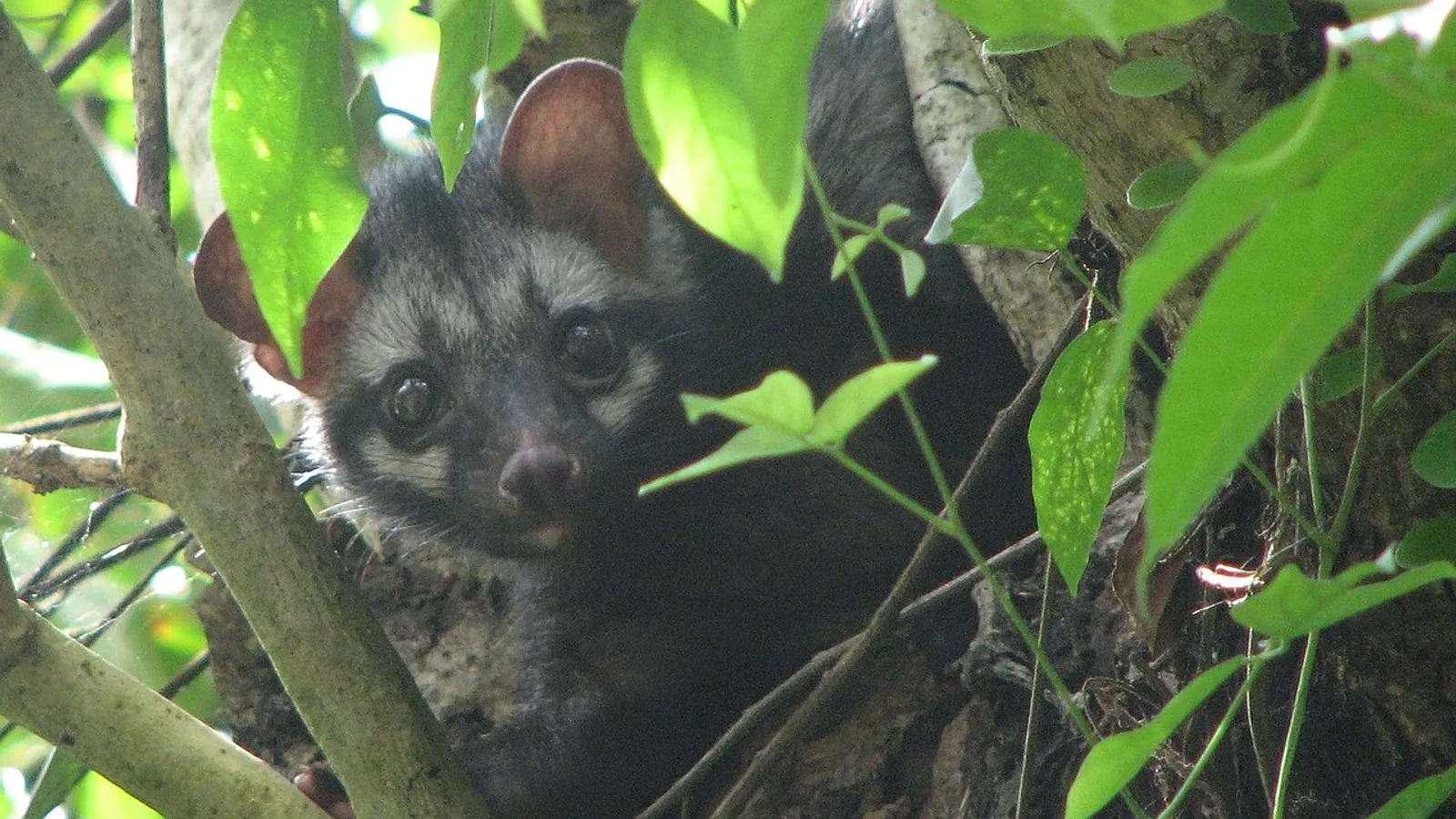
— Where the name comes from
Paradoxurus is “paradoxical tail”, from parádoxos and ourá: the first describer believed the animal could coil its tail like a monkey, which in fact it cannot. The epithet hermaphroditus comes of a second blunder — the female’s scent glands resemble testicles, and a hermaphrodite animal was assumed. Two mistakes in two words, both preserved for ever by the rules of nomenclature.
— Facts
- Group
- Mammals · Mammalia
- Order
- Carnivores
- Habitat
- Forests, plantations, city parks and the roof spaces of houses
- Range
- South and South-East Asia, from India to the Philippines and Java
- Size
- 43–71 cm long plus as much again of tail, 2–5 kg
- Diet
- Omnivore — ripe fruit, figs and coffee above all, plus insects and small vertebrates
- Lifespan
- 15–20 years
— Characteristics
- 01
It is nocturnal and arboreal, and in many Asian cities lives permanently on the rooftops.
- 02
It picks fruit at the exact peak of ripeness, better than any human harvester.
- 03
It is neither cat nor mustelid: it belongs to the viverrids, an ancient and little-known family.
— What sets it apart
Kopi luwak, the most expensive coffee in the world, is made from its droppings: the animal picks the best cherries, the pulp is digested and gut enzymes alter the proteins of the bean, reducing the bitterness. Begun as the occasional gathering of droppings found in Indonesian plantations, the trade then turned industrial — thousands of animals caged and force-fed nothing but cherries. What made that coffee special, namely the free choice of fruit by a wild animal, is exactly what the farming has removed.
