
Brown fur seal
Arctocephalus pusillus
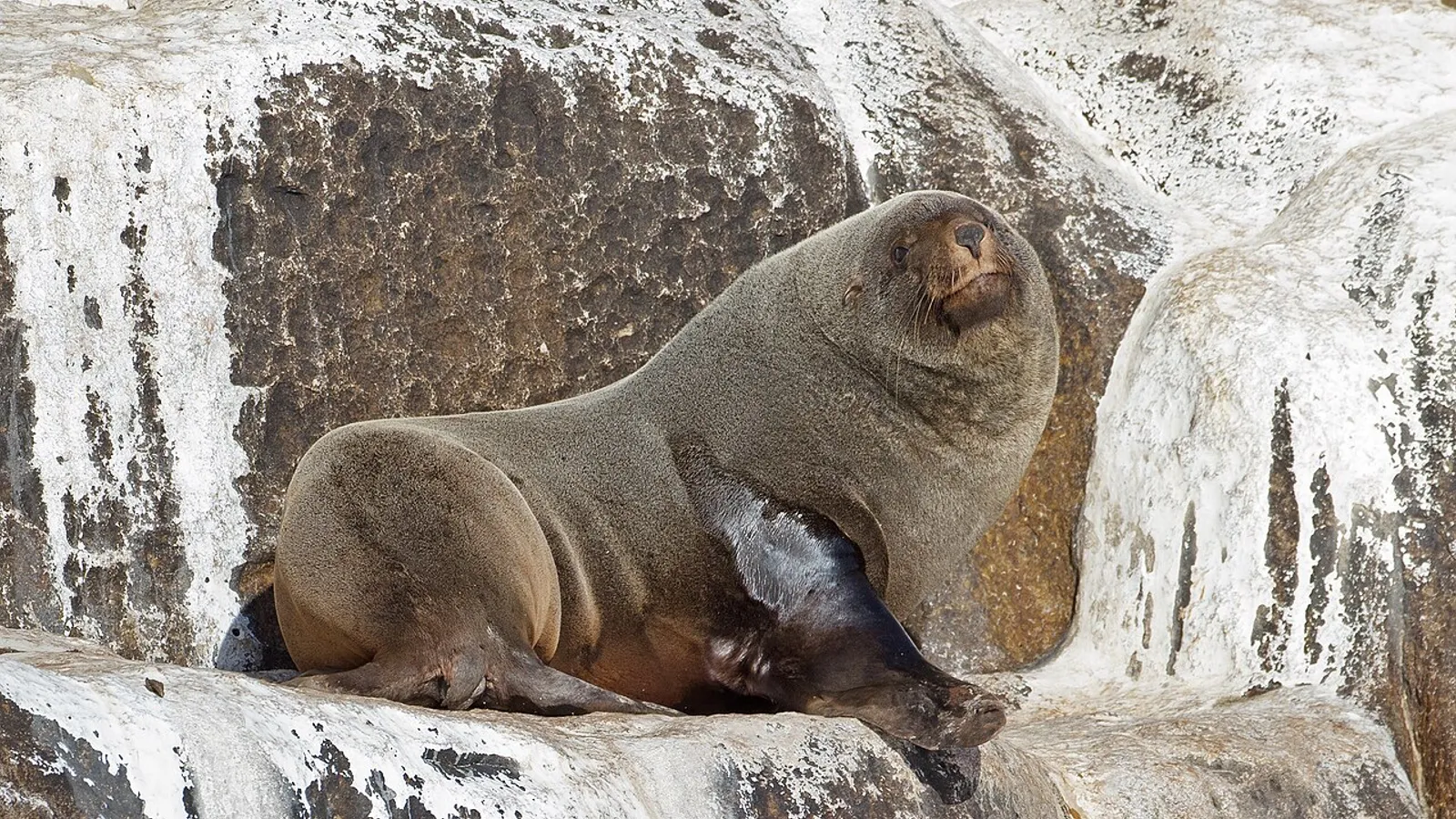
— Where the name comes from
Arctocephalus is “bear head”, from the Greek árktos and kephalḗ, for the blunt muzzle. Pusillus is Latin and means “very small”, which is comical: it is the largest fur seal in the world. The name was given by Schreber in 1775 from a young specimen, and the rule of nomenclatural priority has made it impossible ever to correct — the giant of the family is officially called “tiny”.
— Facts
- Group
- Mammals · Mammalia
- Order
- Carnivores
- Habitat
- Rocky coasts, islands and beaches of South Africa and southern Australia
- Range
- Southern Africa from Cape Cross to Port Elizabeth; Bass Strait and Tasmania
- Size
- 1.6–2.3 m, 40–360 kg
- Diet
- Carnivore — shoaling fish, squid, occasionally seabirds
- Lifespan
- About 20 years
— Characteristics
- 01
The colony at Cape Cross, in Namibia, reaches over 200,000 animals.
- 02
The male weighs up to nine times as much as the female.
- 03
Unlike true seals it walks on all four flippers and has visible ear flaps.
— What sets it apart
At Seal Island, off Cape Town, the young of this species have turned white sharks into a tourist attraction: it is there that the breaching leaps with prey in the jaws are filmed, the most reproduced shark image in the world. But the relationship is not one-way. Adult seals, in groups, harry and chase sharks until they move off, and have been filmed eating small ones. The most photographed prey in the ocean, once it is large enough, hunts its own predator.
