
Ringtail
Bassariscus astutus
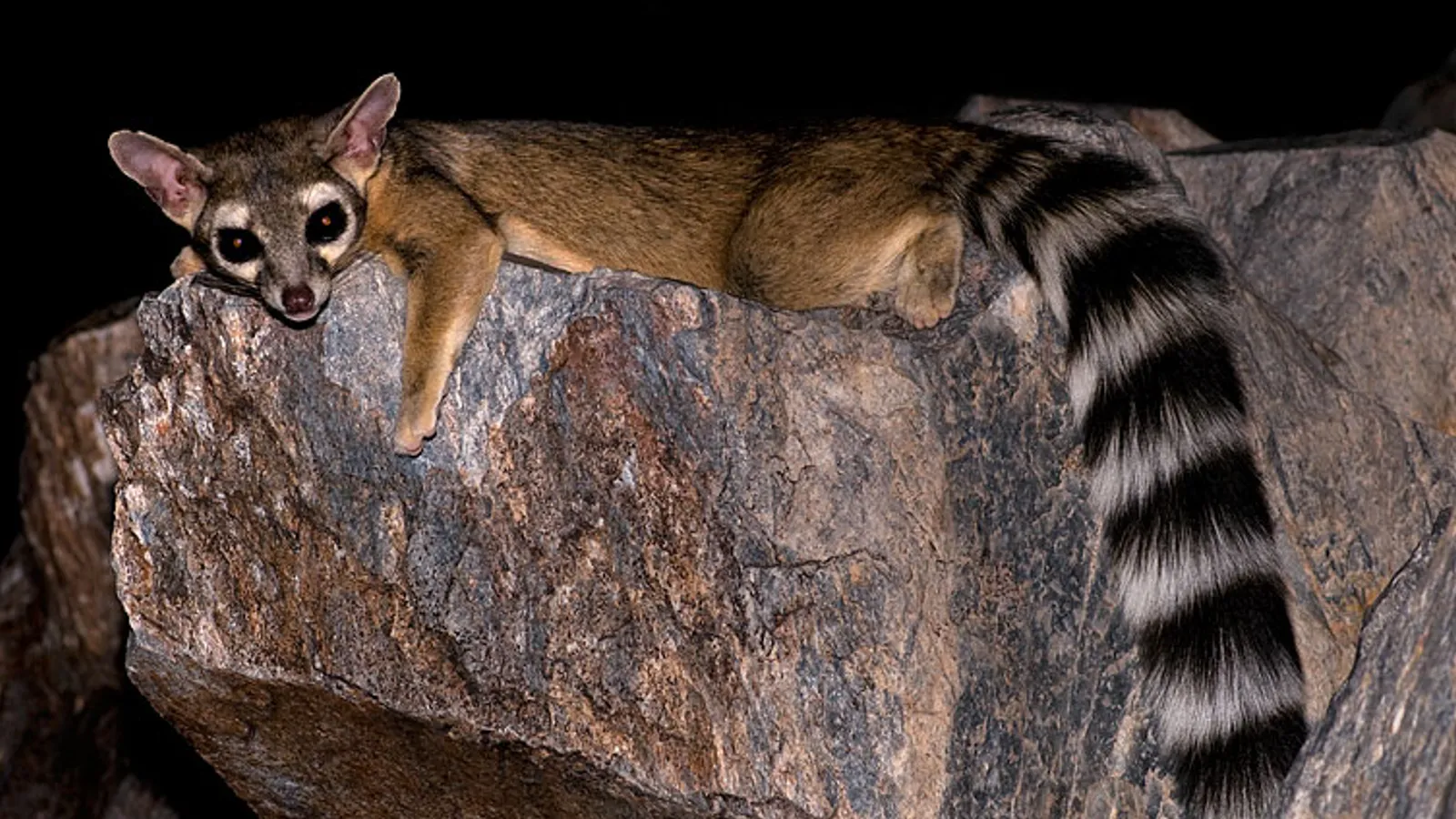
— Where the name comes from
Bassariscus is “little fox”, from the Greek bassarís — a word for the fox and, by extension, for the bacchantes dressed in fox skins — with the diminutive -iskos. Astutus is Latin, “cunning”. In English it is the ringtail, for the banded tail, but also the miner’s cat: the miners of the Old West let it into their cabins to keep the mice down, and that is the closest thing to domestication it has ever known.
— Facts
- Group
- Mammals · Mammalia
- Order
- Carnivores
- Habitat
- Rocky canyons, desert, scrub, oak woodland, always near cliffs and crevices
- Range
- The south-western United States and Mexico
- Size
- 30–42 cm of body plus a tail nearly as long, 0.8–1.5 kg
- Diet
- Omnivore — rodents, insects, cactus fruit, birds
- Lifespan
- 7 years in the wild, up to 16 in captivity
— Characteristics
- 01
It rotates its hind feet through 180 degrees and comes down vertical walls head first.
- 02
It climbs rock chimneys by bracing its legs against opposite walls, like a mountaineer.
- 03
It is the state animal of Arizona.
— What sets it apart
It climbs like a climber, not like an animal. To go up a vertical crack it uses what mountaineers call opposition — bracing the legs of one side against one wall and those of the other against the opposite wall and pushing itself up — and to get round an outside corner it does a backward somersault. These are movements described one by one by naturalists, because they resemble nothing else the other procyonids do.
