
European flat oyster
Ostrea edulis
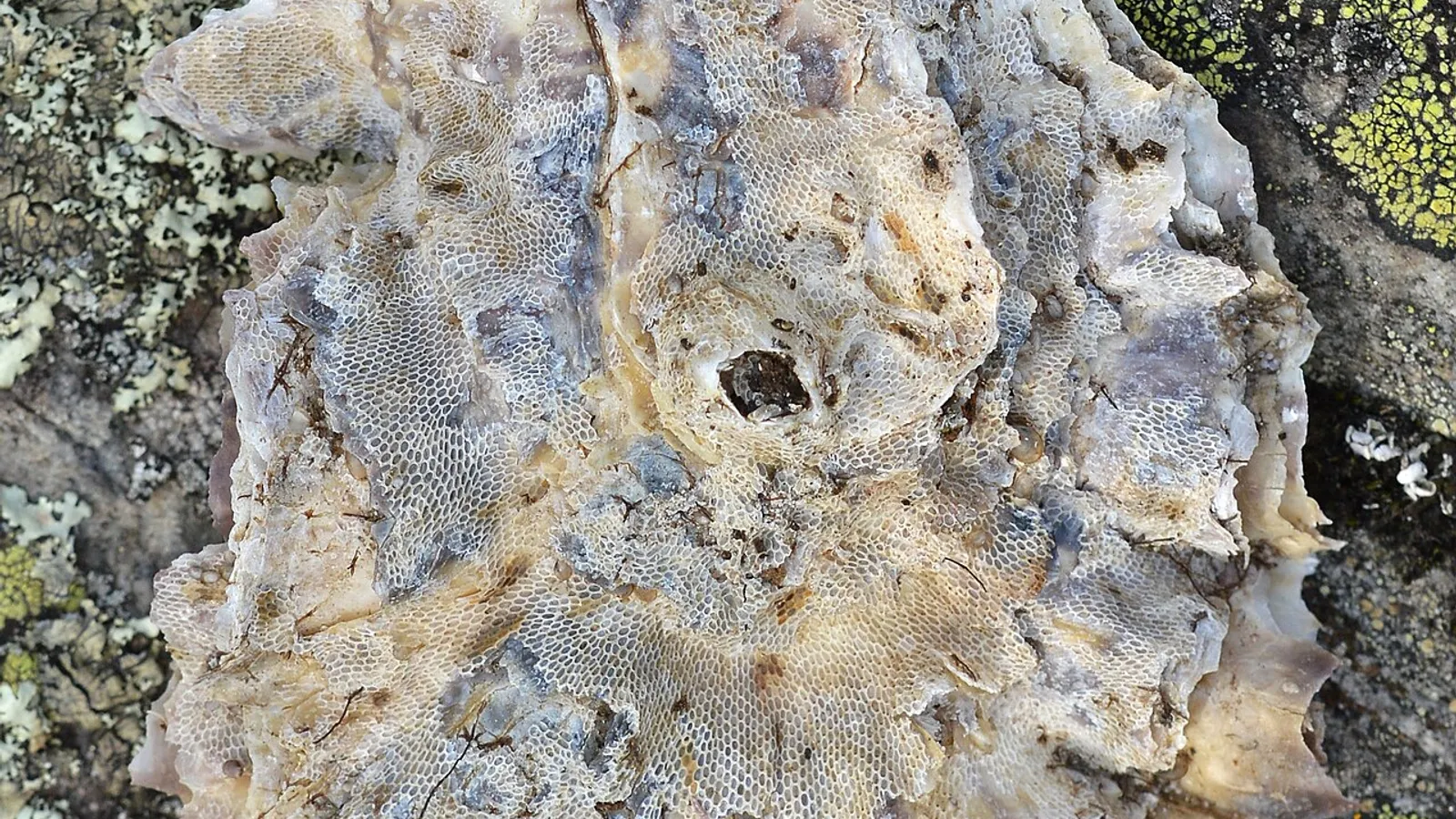
— Where the name comes from
Ostrea comes from the Greek óstreon, which itself grows out of ostéon, bone, for the hardness of the shell. From the same root comes óstrakon, the potsherd — and with it ostracism: in Athens a citizen’s exile was voted by writing his name on a fragment of pottery, so called because it resembled an oyster valve. Edulis means edible. An oyster therefore lies behind the word for sending someone away from the city.
— Facts
- Group
- Molluscs · Mollusca
- Order
- Oysters and pen shells
- Habitat
- Hard coastal bottoms between 0 and 80 metres
- Range
- Eastern Atlantic from Norway to Morocco, Mediterranean
- Size
- 6–12 cm, up to 20
- Diet
- Filtered phytoplankton
- Lifespan
- 10–20 years
— Characteristics
- 01
It changes sex several times in life, alternating male and female.
- 02
It broods its larvae inside the shell for about ten days.
- 03
A hectare of bed filters millions of litres of water a day.
— What sets it apart
It changes sex repeatedly. It is born male, becomes female, turns male again: the alternation depends on temperature and on accumulated reserves, because producing eggs costs far more than producing sperm, and the animal takes the role it can afford. Its larvae, unlike the Pacific oyster’s, stay inside the mother’s shell for days before being released. Europe’s natural beds have all but vanished between overfishing and two protozoan epidemics in the twentieth century, and reintroduction programmes are under way in England, the Netherlands and the Wadden Sea: not to eat them, but because a bed of oysters filters and structures the seabed like a reef.
