Noble pen shell
Pinna nobilis
— Where the name comes from
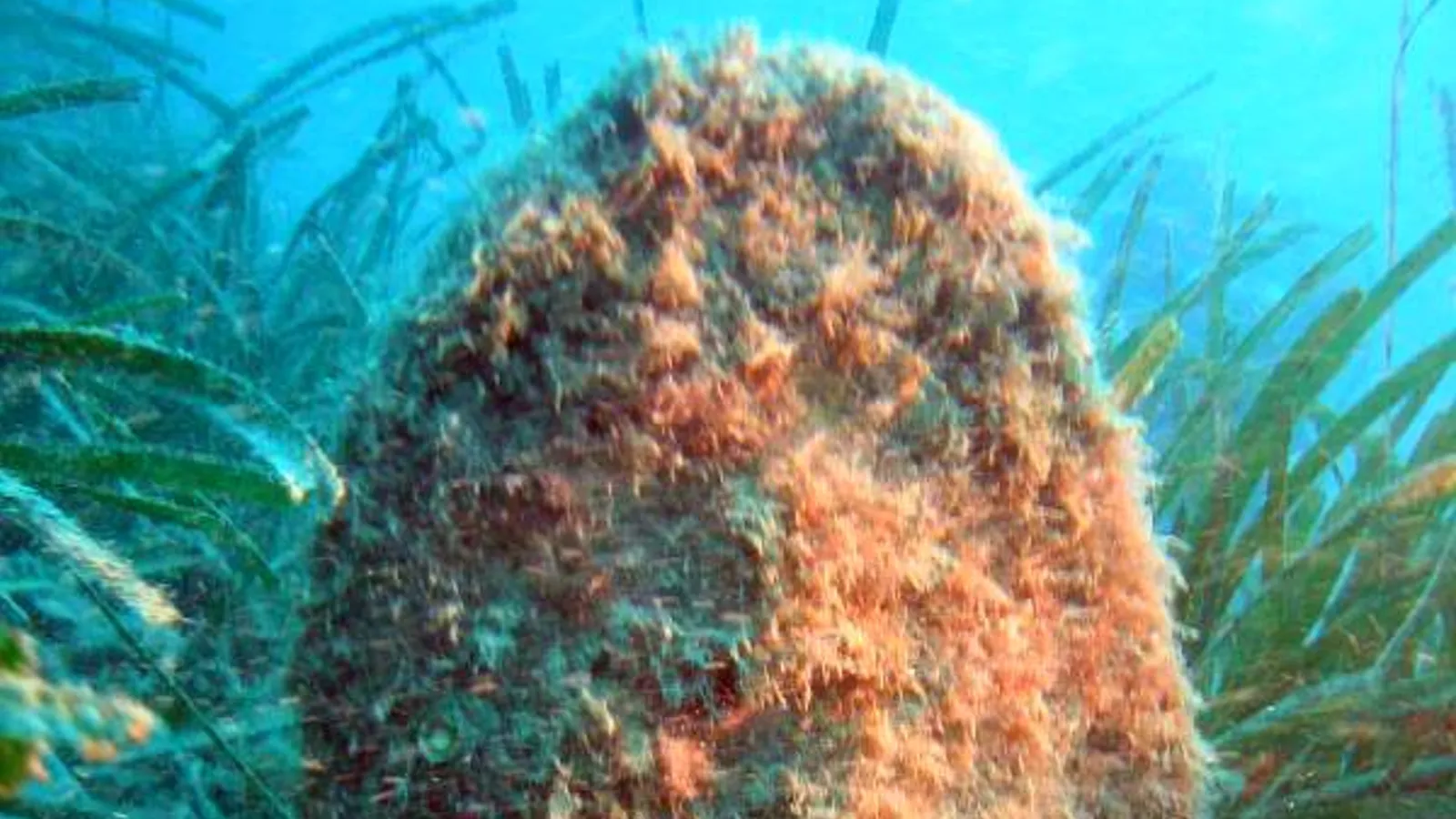
Pinna in Latin is both the feather and the fin, and among the Romans it already named this mollusc, for the triangular shell planted in the bottom like a blade. Nobilis says the regard in which it was held. The Italian name comes from the sound: two empty valves knocked together make the noise of castanets.
— Facts
- Group
- Molluscs · Mollusca
- Order
- Oysters and pen shells
- Habitat
- Posidonia meadows, driven vertically into the sediment
- Range
- Endemic to the Mediterranean
- Size
- Up to 120 cm, the largest bivalve in the Mediterranean
- Diet
- Filtered plankton and particles
- Lifespan
- Up to 50 years
— Characteristics
- 01
It lives buried for a third of its length, motionless for decades.
- 02
It permanently houses a pair of small shrimps that act as lookouts.
- 03
Its byssus is a golden silk once woven into gloves and cloaks.
— What sets it apart
From its byssus came sea silk: golden filaments that anchor the shell underwater and that, gathered, washed and spun, gave a very light warm fabric, mentioned by Aristotle and Pliny and worked in Sardinia and Apulia into the twentieth century. Today only a handful of people in the world know how to spin it, and the raw material is no longer collected: since 2016 a parasite has killed over ninety per cent of the Mediterranean population, and the species has gone in a few years from common to critically endangered. It is the most severe die-off of an invertebrate ever recorded in our sea.