
Green ormer
Haliotis tuberculata
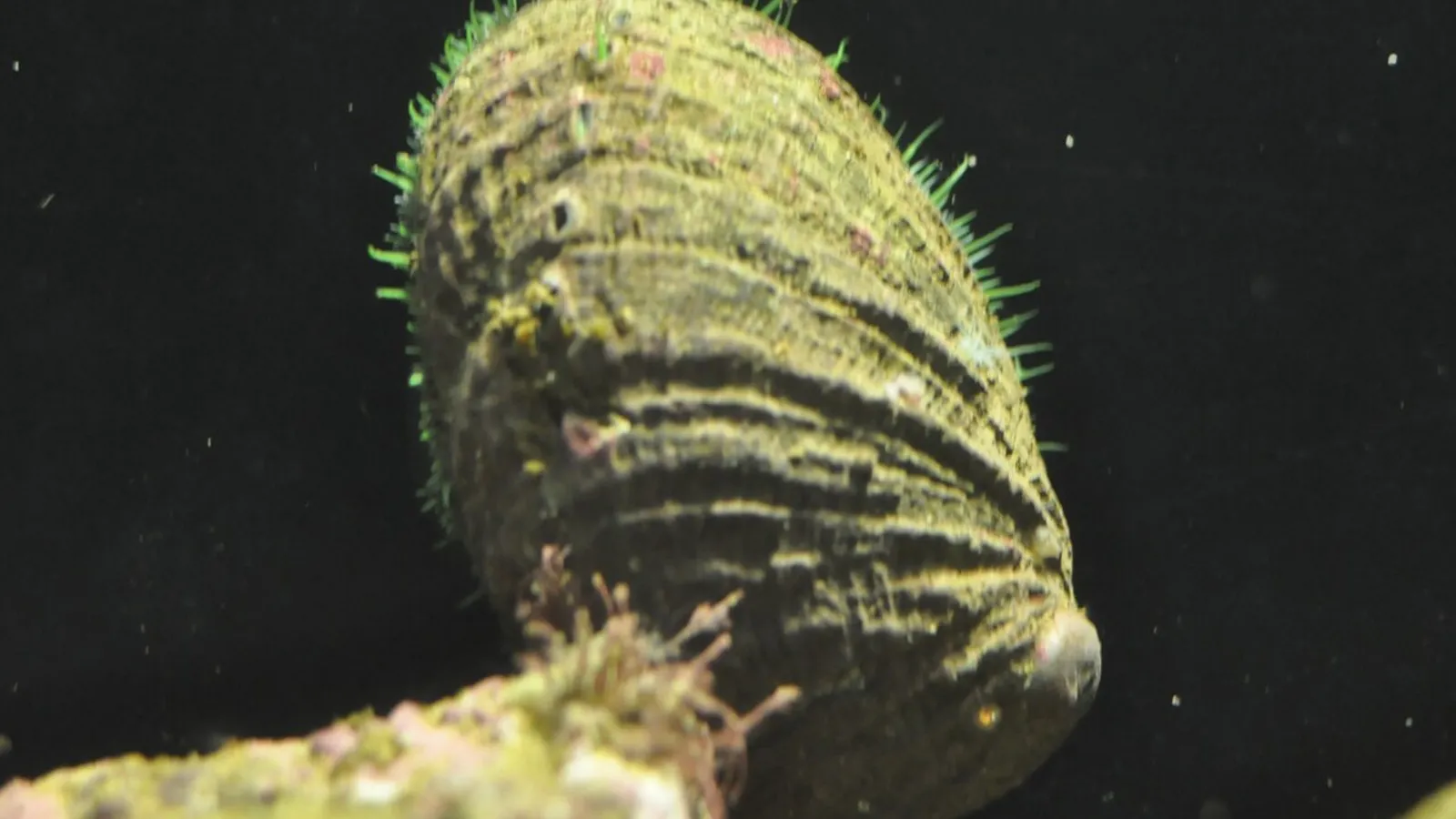
— Where the name comes from
Haliotis is “sea ear”, from háls, the sea, and oûs, ōtós, the ear: the flattened shell, with its spiral squashed to one side and the row of holes along the edge, really has the shape of an ear. The Italian name is an exact translation of the Greek, and so are the French ormeau and the English ear shell: four languages, one image.
— Facts
- Group
- Molluscs · Mollusca
- Order
- Abalones
- Habitat
- Rocks and crevices in the intertidal zone and just below
- Range
- Eastern Atlantic, English Channel, Mediterranean
- Size
- 8–12 cm
- Diet
- Algae rasped from the rock
- Lifespan
- 10–15 years
— Characteristics
- 01
The row of holes along the rim expels breathed water and waste.
- 02
The inside of the shell is iridescent mother-of-pearl.
- 03
It clamps to the rock with a force two hundred times its own weight.
— What sets it apart
The nacre lining the inside is one of the most studied materials in engineering: it is ninety-five per cent calcium carbonate — that is, a very brittle mineral — arranged in microscopic tiles glued by a thin layer of protein, and this architecture makes it three thousand times more fracture-resistant than the pure mineral. When a crack advances, it must go round every tile and exhausts itself. Composite materials for armour and prosthetics have been copying the structure for decades, and nobody has yet matched it.
