
Polar bear
Ursus maritimus
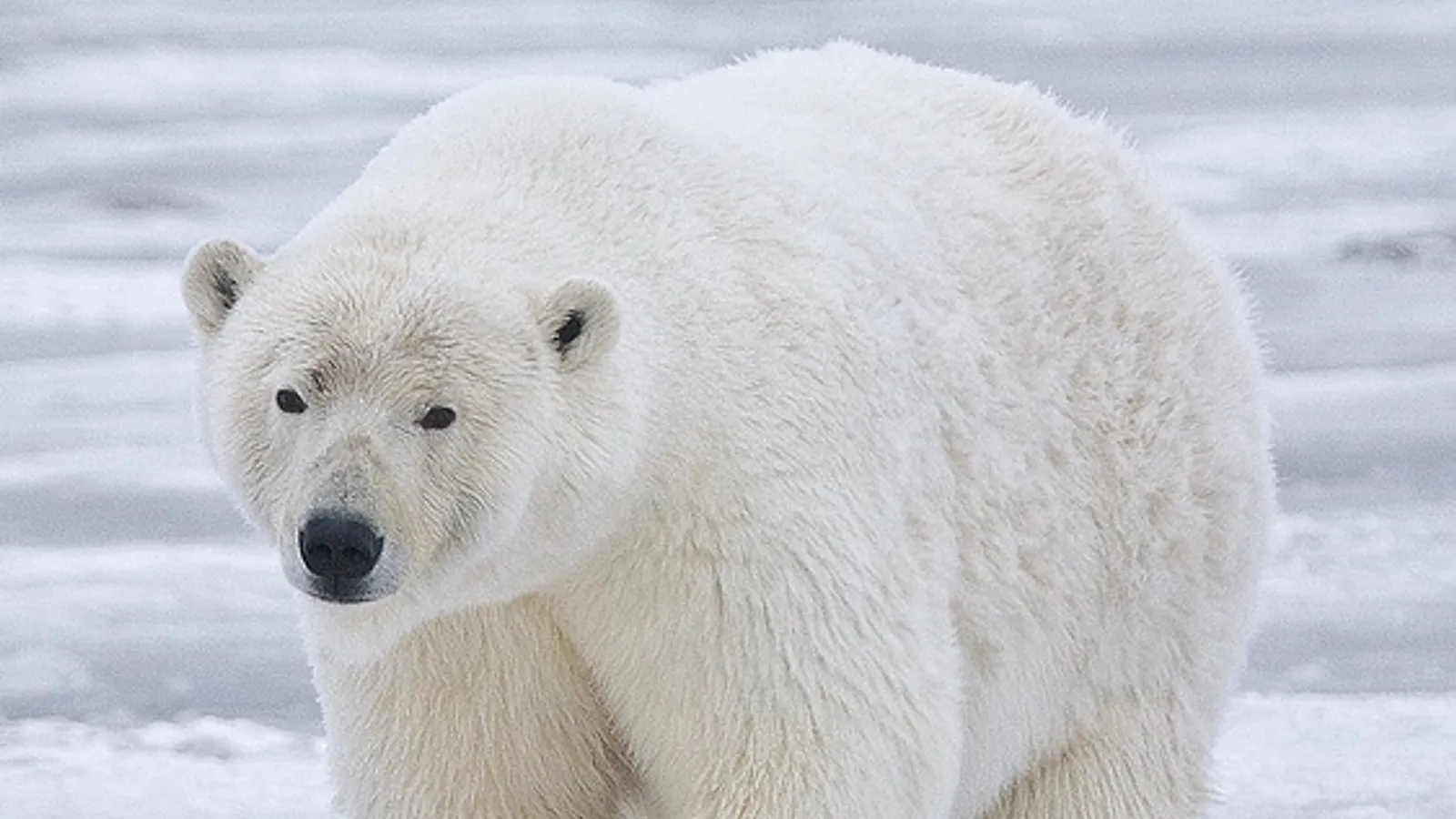
— Where the name comes from
The Latin ursus maritimus, “sea bear”, catches the essential thing: it is the only bear counted as a marine mammal, because it lives and hunts on floating ice. The Inuit call it nanook. The scientific name sets it apart from the brown cousin it split from less than half a million years ago.
— Facts
- Group
- Mammals · Mammalia
- Order
- Carnivores
- Habitat
- Arctic pack ice, frozen coasts, frozen open sea
- Range
- The Arctic regions of Canada, Greenland, Russia, Alaska and Norway
- Size
- 200–250 cm, 350–700 kg for the male
- Diet
- Carnivore — mostly seals, hunted at breathing holes in the ice
- Lifespan
- 20–25 years
— Characteristics
- 01
The skin beneath the fur is black, to soak up heat; the hairs are hollow and colourless, not white.
- 02
Its nose finds a seal under a metre of snow, or thirty kilometres away.
- 03
It swims for days without stopping: crossings of over 600 km in open water are on record.
— What sets it apart
A polar bear’s fur is not white: every hair is a hollow, transparent tube, and the colour we see is only scattered light, as in snow. In damp zoos microscopic algae sometimes colonise the inside of those tubes and the bear turns green. Underneath it all, the skin is pitch black — built to catch every ray of a sun that, in the far north, is in short supply.
