
Sun bear
Helarctos malayanus
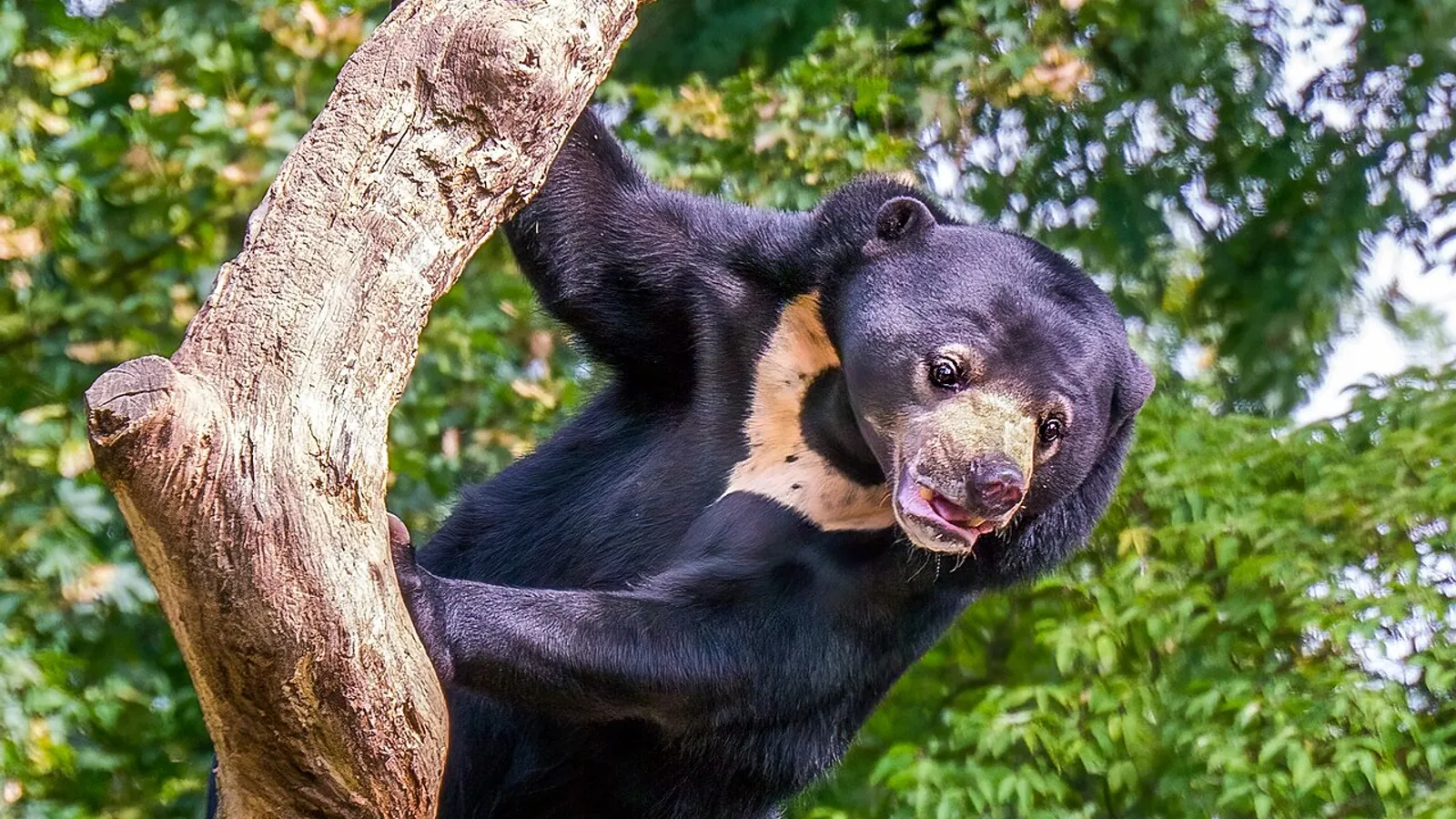
— Where the name comes from
Helarctos is Greek: hḗlios, “sun”, and árktos, “bear” — the sun bear, for the pale horseshoe-shaped patch on its chest, which the first observers read as a rising sun. Malayanus points to the Malay peninsula. It is the smallest of living bears, and the only one whose scientific name contains a star.
— Facts
- Group
- Mammals · Mammalia
- Order
- Carnivores
- Habitat
- Lowland and hill tropical rainforest
- Range
- South-East Asia: Myanmar, Thailand, Malaysia, Indonesia, Borneo
- Size
- 100–140 cm long, 27–65 kg
- Diet
- Omnivore — termites, grubs, honey, fruit, shoots
- Lifespan
- About 25 years
— Characteristics
- 01
It has the longest tongue of any bear, up to twenty-five centimetres, for drawing out honey and insects.
- 02
The skin of its neck is so loose that, if seized, it can turn round inside its own hide and bite.
- 03
Its curved claws make it an excellent climber: it sleeps in trees, not in a den.
— What sets it apart
It is one of the gardeners of the rainforest. Opening trunks in search of termites and honey it creates cavities that become nests for birds and squirrels, and by scattering undigested seeds it carries plants far from the parent tree. Where the sun bear disappears, some fruit trees stop dispersing and certain birds lose their nesting sites. An animal the size of a medium dog holds together, without knowing it, a piece of forest architecture.
