
Bobcat
Lynx rufus
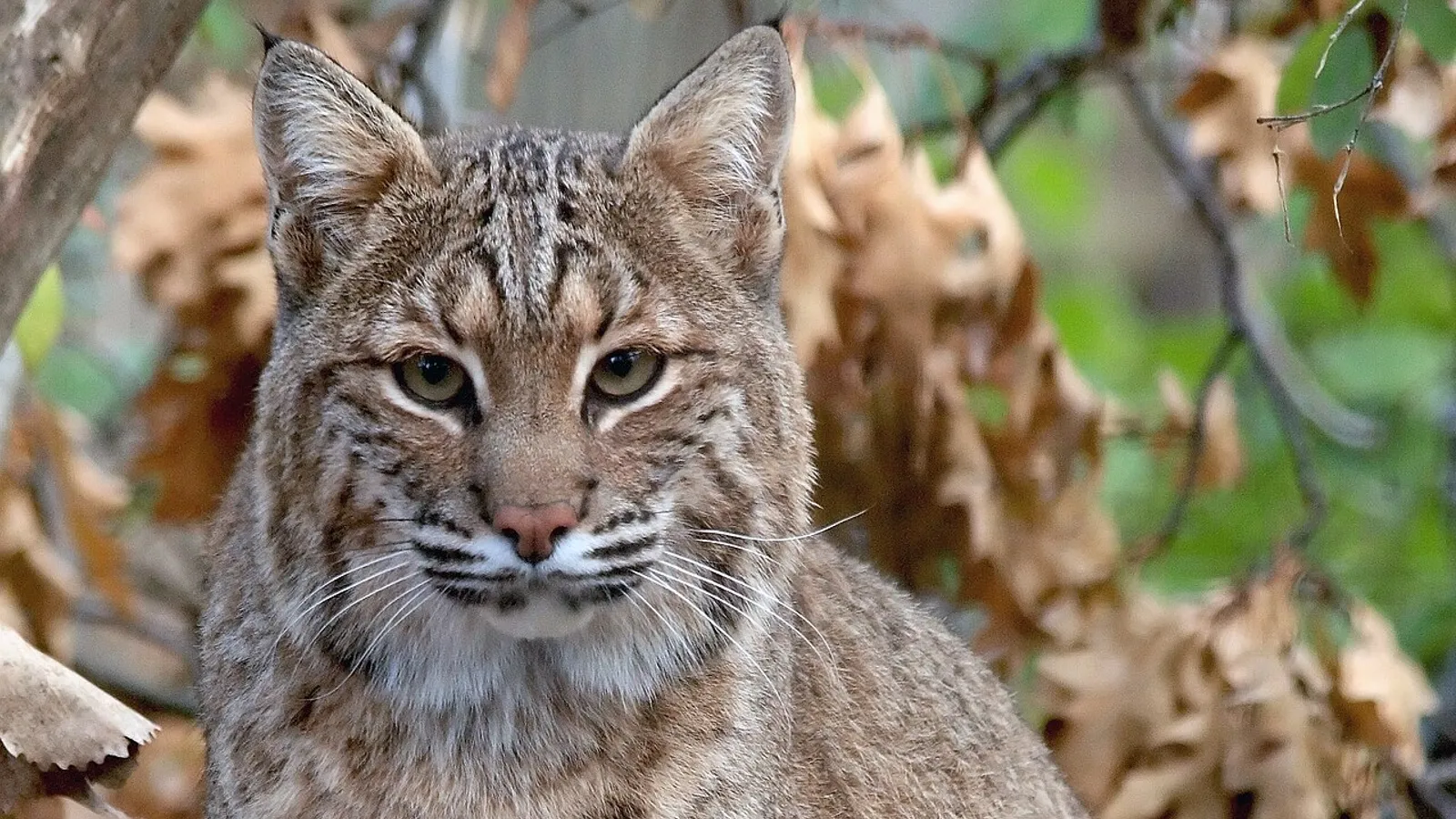
— Where the name comes from
Lynx goes back to the Greek lýnx and to the Indo-European root *leuk-, “light, brightness”, the same as lucid: the name states the eye, the flash of the tapetum in the dark. From that reputation comes the phrase “lynx-eyed”, and in the 17th century the Accademia dei Lincei took the name to declare that it would look at nature with the same sharpness. Rufus is Latin, “reddish”.
— Facts
- Group
- Mammals · Mammalia
- Order
- Carnivores
- Habitat
- Woodland, scrub, semi-desert, swamp, wooded suburbs
- Range
- North America, from southern Canada to Mexico
- Size
- 65–105 cm long, 6–18 kg
- Diet
- Carnivore — rabbits and hares above all, rodents, birds
- Lifespan
- 10–12 years in the wild
— Characteristics
- 01
It has a stub tail, barely fifteen centimetres, which gives it the English name bobcat.
- 02
It is the most widespread and adaptable lynx: it lives from the Arizona desert to the forests of Quebec.
- 03
It kills prey as large as a young deer, five times its own weight, when it must.
— What sets it apart
While almost every medium and large carnivore on the planet is retreating, this lynx has done the opposite: from the barely one million estimated in the mid-20th century it has passed three million, reclaiming American states it had vanished from. The reason is not any special protection but its flexibility — it lives on rabbits in a canyon, on rats in a suburb, on birds in a marsh. In a century that rewards specialists only while their habitat stays intact, it won because it was not one.
