
Ocelot
Leopardus pardalis
— Where the name comes from
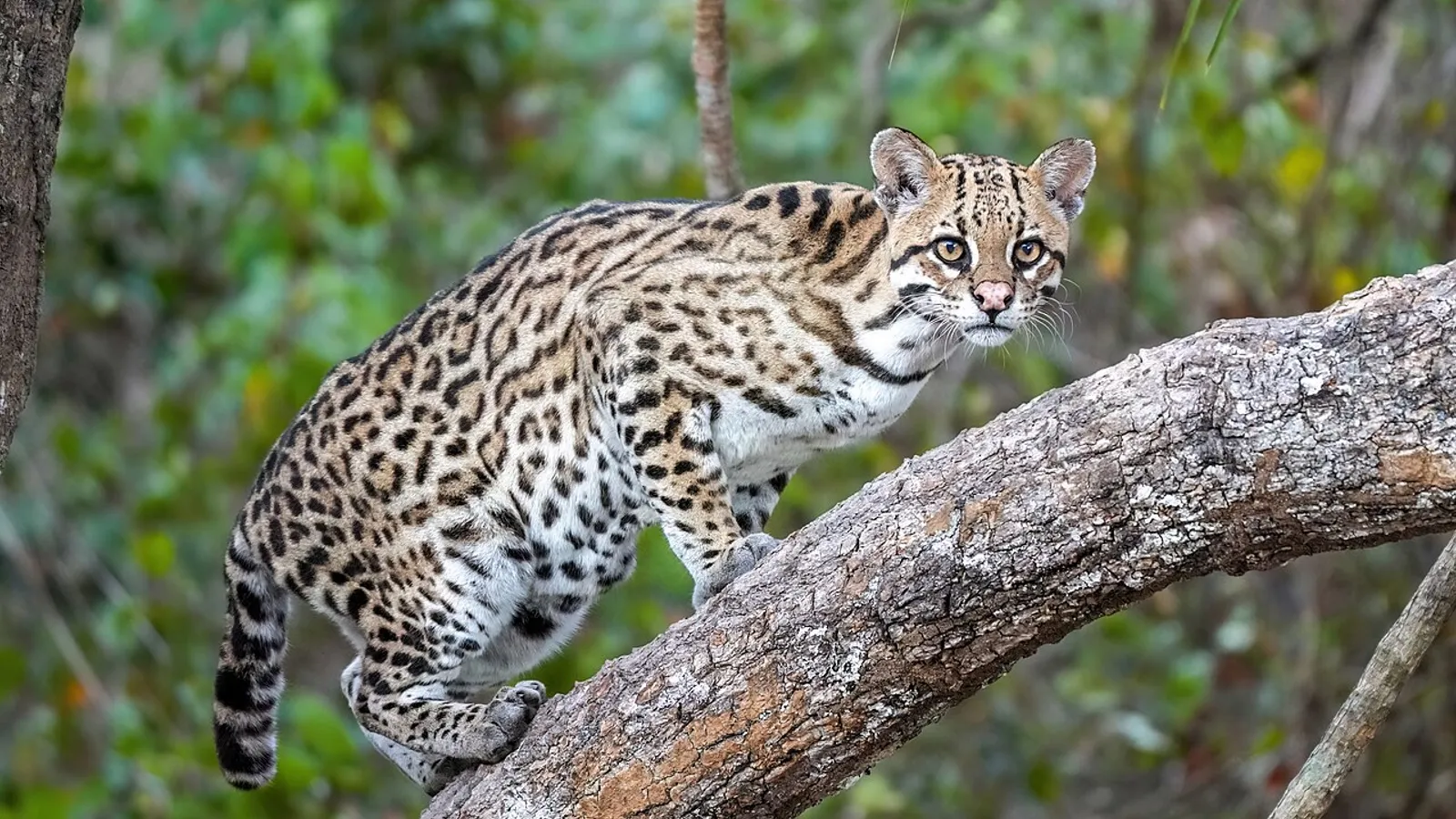
Ocelot comes from the Nahuatl ōcēlōtl — which in the Aztec language, however, named the jaguar, not this smaller cat. European naturalists took the word and applied it to the wrong animal, and so the Aztecs’ jaguar-warrior, the ōcēlōtl, now names a ten-kilo cat. Pardalis is Greek and Latin and means “leopard-like”, for the rosettes of the coat.
— Facts
- Group
- Mammals · Mammalia
- Order
- Carnivores
- Habitat
- Rainforest, dense scrub, mangroves, wooded savannah
- Range
- From southern Texas to northern Argentina
- Size
- 70–100 cm long, 8–16 kg
- Diet
- Carnivore — rodents, opossums, iguanas, birds, fish
- Lifespan
- 13–20 years
— Characteristics
- 01
Every individual has an unrepeatable pattern of rosettes, used for camera-trap censuses.
- 02
It is nocturnal and spends up to twelve hours a day motionless, hidden in vegetation.
- 03
It swims readily, unlike most cats.
— What sets it apart
In the 1960s and 1970s the fur trade killed hundreds of thousands of them — in 1970 alone the United States imported over one hundred and forty thousand skins — and the species seemed headed for collapse. The closing of the markets and CITES turned it round almost everywhere, so that today it is classed as of least concern. The border populations remain a problem, though: fewer than a hundred survive in Texas, cut off by roads, and underpasses have been built for them.
