
Spectacled bear
Tremarctos ornatus
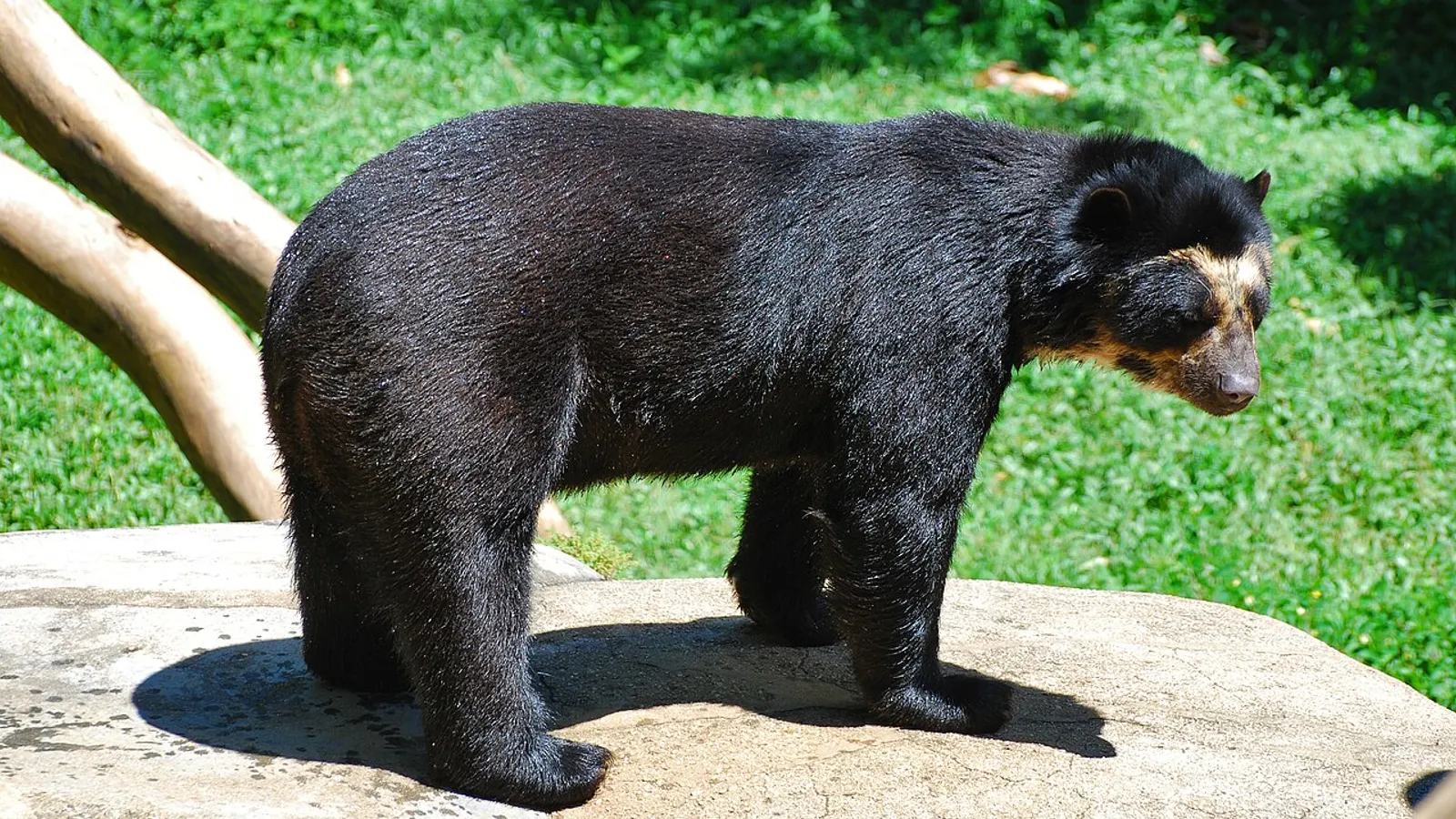
— Where the name comes from
Tremarctos puts together the Greek trêma, “hole”, and árktos, “bear”: the bear with a hole, after a small opening in the arm bone which this animal keeps and the other bears have lost. Ornatus is Latin, “adorned”, and refers to the pale rings around the eyes that give it its common name — a pair of spectacles different in every individual, and in some missing altogether.
— Facts
- Group
- Mammals · Mammalia
- Order
- Carnivores
- Habitat
- Andean cloud forest, high-altitude páramo, dry woodland
- Range
- The Andes, from Venezuela to Bolivia
- Size
- 150–200 cm long, 60–175 kg
- Diet
- Omnivore — bromeliads, fruit, bark, palms; meat under 5 per cent
- Lifespan
- 20–25 years
— Characteristics
- 01
It is the only bear left in South America and the sole survivor of the short-faced bear subfamily.
- 02
It builds platforms of branches in trees, where it eats and sleeps tens of metres above the ground.
- 03
Its diet is over ninety per cent vegetarian, the most herbivorous of any bear.
— What sets it apart
Its close relatives were giants: Arctotherium angustidens, of the same short-faced branch, passed a tonne and is probably the largest land carnivore that ever lived. Of that South American dynasty only this animal is left, a shy creature of a hundred and fifty kilos that spends its days chewing bromeliads in the trees of the Andes. The same evolutionary line that produced the most massive predator in history has withdrawn into a plant-eater that hides in the fog.
