
Aardvark
Orycteropus afer
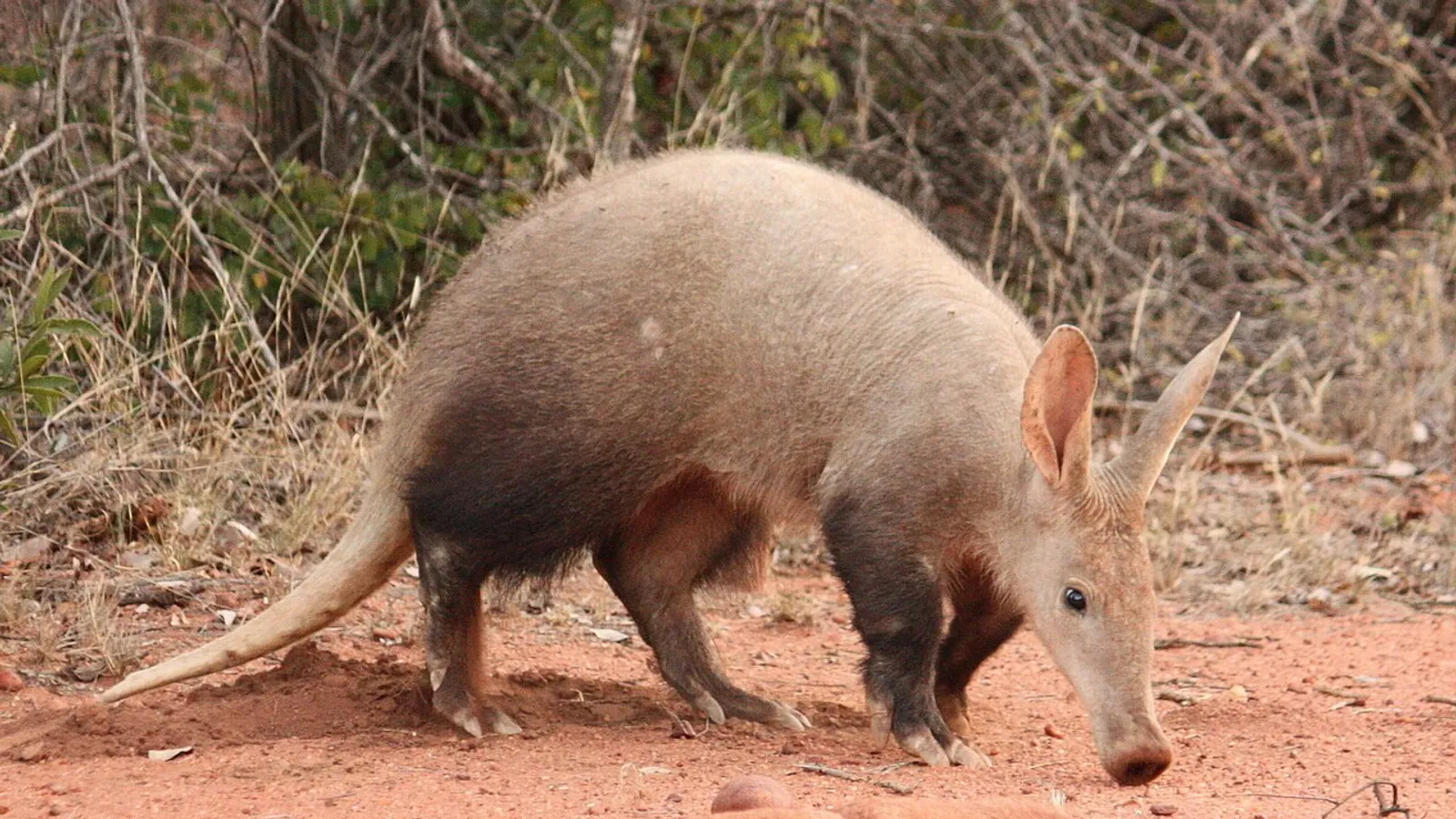
— Where the name comes from
Orycteropus comes from the Greek oryktér, “digger”, and poús, “foot”: “the one with digging feet”. Afer is Latin for “African”. Its most widespread international name, aardvark, is Afrikaans and means “earth pig”, for the long snout and burrowing habits, though the animal has no kinship with pigs. The order it belongs to, Tubulidentata, takes its name from teeth without enamel, run through by thousands of fine tubules of dentine: a structure unique among all living mammals.
— Facts
- Group
- Mammals · Mammalia
- Order
- Aardvarks
- Habitat
- Savannah, bushland and grassland with abundant termite mounds
- Range
- Sub-Saharan Africa, from Senegal to Ethiopia and down to South Africa
- Size
- 105–130 cm of body plus 55–70 cm of tail, 40–65 kg
- Diet
- Insectivore — termites and ants, with the seasonal addition of the aardvark cucumber
- Lifespan
- about 18 years in the wild, up to 24 in captivity
— Characteristics
- 01
It is the only living species of an entire order of mammals, with no close surviving relatives.
- 02
It digs a tunnel over a metre long in minutes, faster than several men with spades.
- 03
It can close its nostrils with dense bristles to keep dust and insects out while digging.
— What sets it apart
The aardvark’s abandoned burrows are the hidden infrastructure of the African savannah: hyenas, warthogs, porcupines, mongooses, wild dogs and dozens of species of birds and reptiles occupy them to breed or to escape the heat and the fires. A single animal may dig dozens over its lifetime, and their absence collapses the supply of shelter for a whole community. There is even a plant, Cucumis humifructus, that ripens its fruit underground and depends almost entirely on the aardvark to unearth and disperse it. A nocturnal loner almost nobody sees holds up, without knowing it, the roof over half the savannah.
