
Bornean orangutan
Pongo pygmaeus
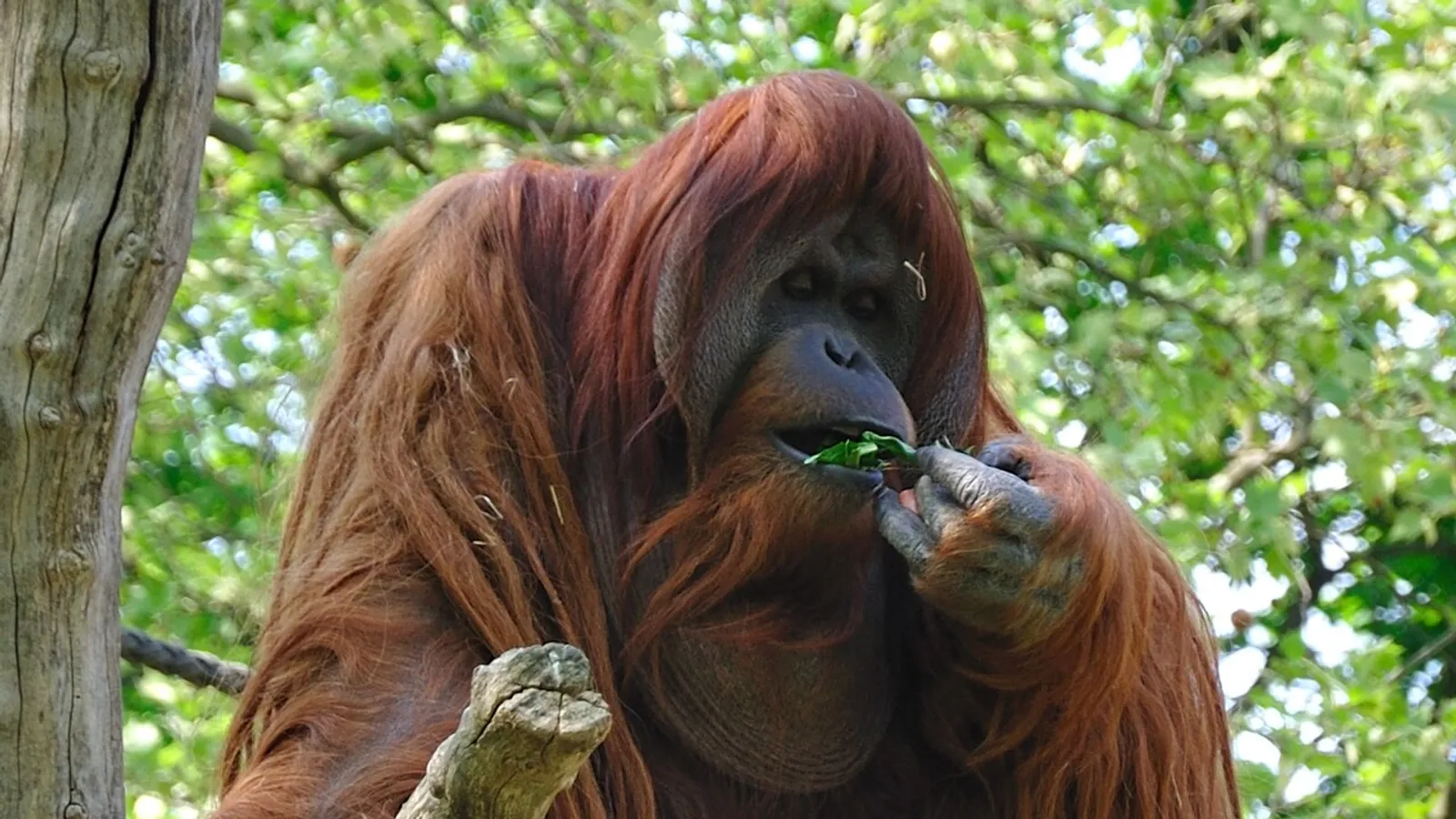
— Where the name comes from
Orangutan comes from the Malay orang hutan, “man of the forest”, from orang, man, and hutan, forest. Pongo is a 16th-century African name for an ape, applied by mistake to the Asian one; pygmaeus, “pygmy”, for the compact build. No other great ape has a name that states its likeness to us so plainly.
— Facts
- Group
- Mammals · Mammalia
- Order
- Primates
- Habitat
- Tropical rainforest, forested peat swamp
- Range
- The island of Borneo
- Size
- 110–140 cm, 30–90 kg
- Diet
- Omnivore — mostly fruit, then leaves, bark, insects
- Lifespan
- 35–45 years
— Characteristics
- 01
It is the largest tree-dwelling animal in the world: it spends nearly all its life in the branches.
- 02
Adult males develop wide fleshy cheek flanges, a sign of dominance.
- 03
It builds a fresh nest of woven branches to sleep in every night.
— What sets it apart
Orangutans pass on culture: different groups use different tools, give different calls and eat in different ways, and these behaviours are learnt by imitation, not by instinct. A young orangutan spends up to eight years at its mother’s side — the longest childhood apprenticeship of any animal after us — learning which of the forest’s hundreds of fruits are edible and when they ripen. To lose a population is to lose its knowledge as well.
