
Mandrill
Mandrillus sphinx
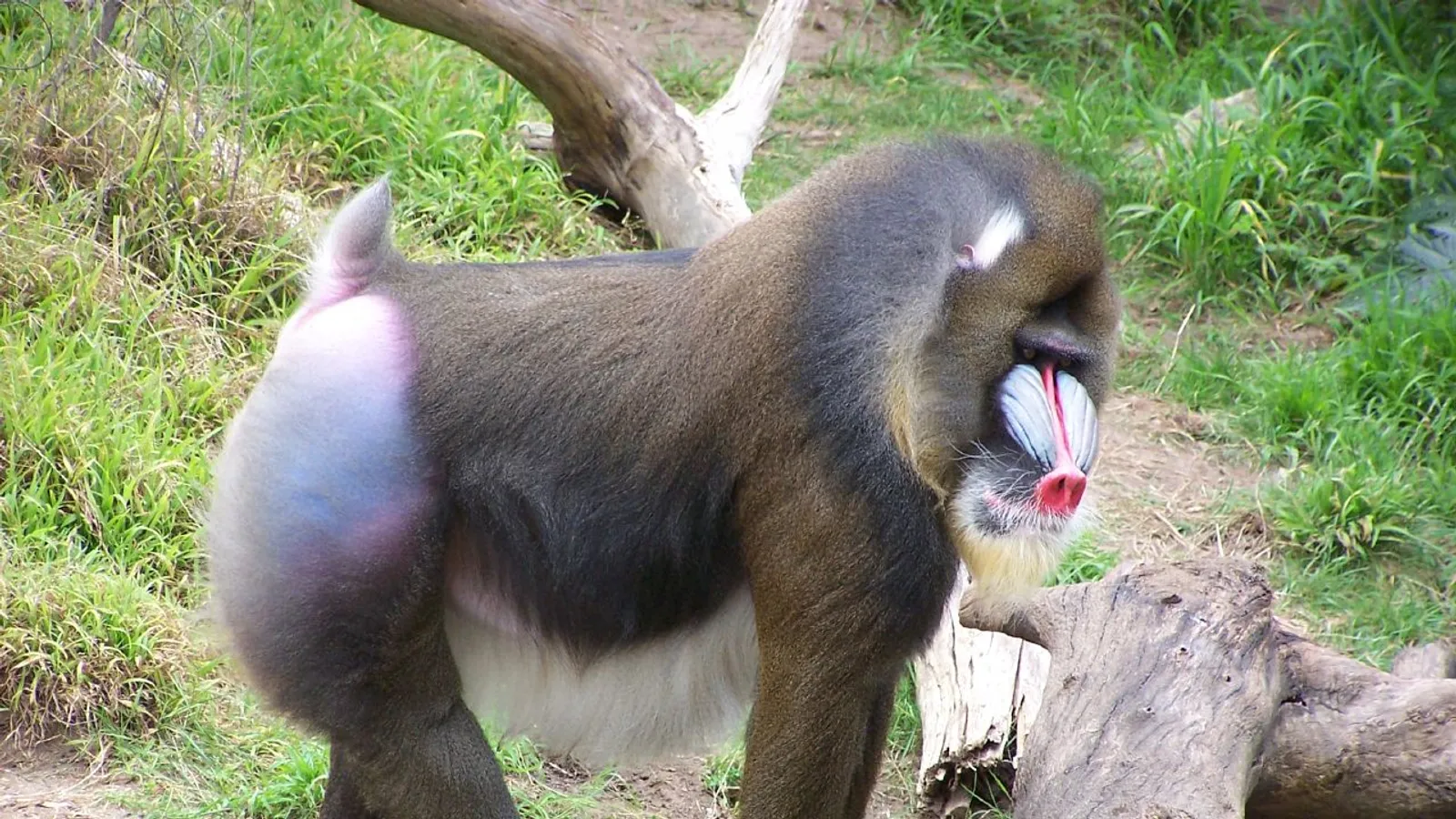
— Where the name comes from
Mandrill is made of “man” and “drill”, an African name for a baboon: “man-ape”. The genus Mandrillus latinises it; sphinx recalls the sphinx, for the solemn, masculine face. It is the largest of the baboon-like primates.
— Facts
- Group
- Mammals · Mammalia
- Order
- Primates
- Habitat
- Tropical rainforest and gallery forest
- Range
- West-central Africa: Cameroon, Gabon, Equatorial Guinea, Congo
- Size
- 55–95 cm of body, 10–35 kg for the male
- Diet
- Omnivore — fruit, seeds, fungi, invertebrates, small vertebrates
- Lifespan
- 20–30 years
— Characteristics
- 01
The dominant male has a face of blazing colours: a red nose and ridged blue cheeks.
- 02
It lives in enormous “hordes”, among the largest primate gatherings anywhere: over 800 animals.
- 03
The face colours brighten with rank: the higher the male, the more vivid his reds and blues.
— What sets it apart
The mandrill’s garish face is a badge of social standing: the intensity of the red and blue signals testosterone level and position in the hierarchy in real time, and fades when a male loses rank. The same colours are repeated, in a lower key, on the rump, so that the signal stays legible whether the animal is facing you or turning away. It is one of the brightest liveries among mammals, and it exists to avoid fights rather than to start them.
