
Common brushtail possum
Trichosurus vulpecula
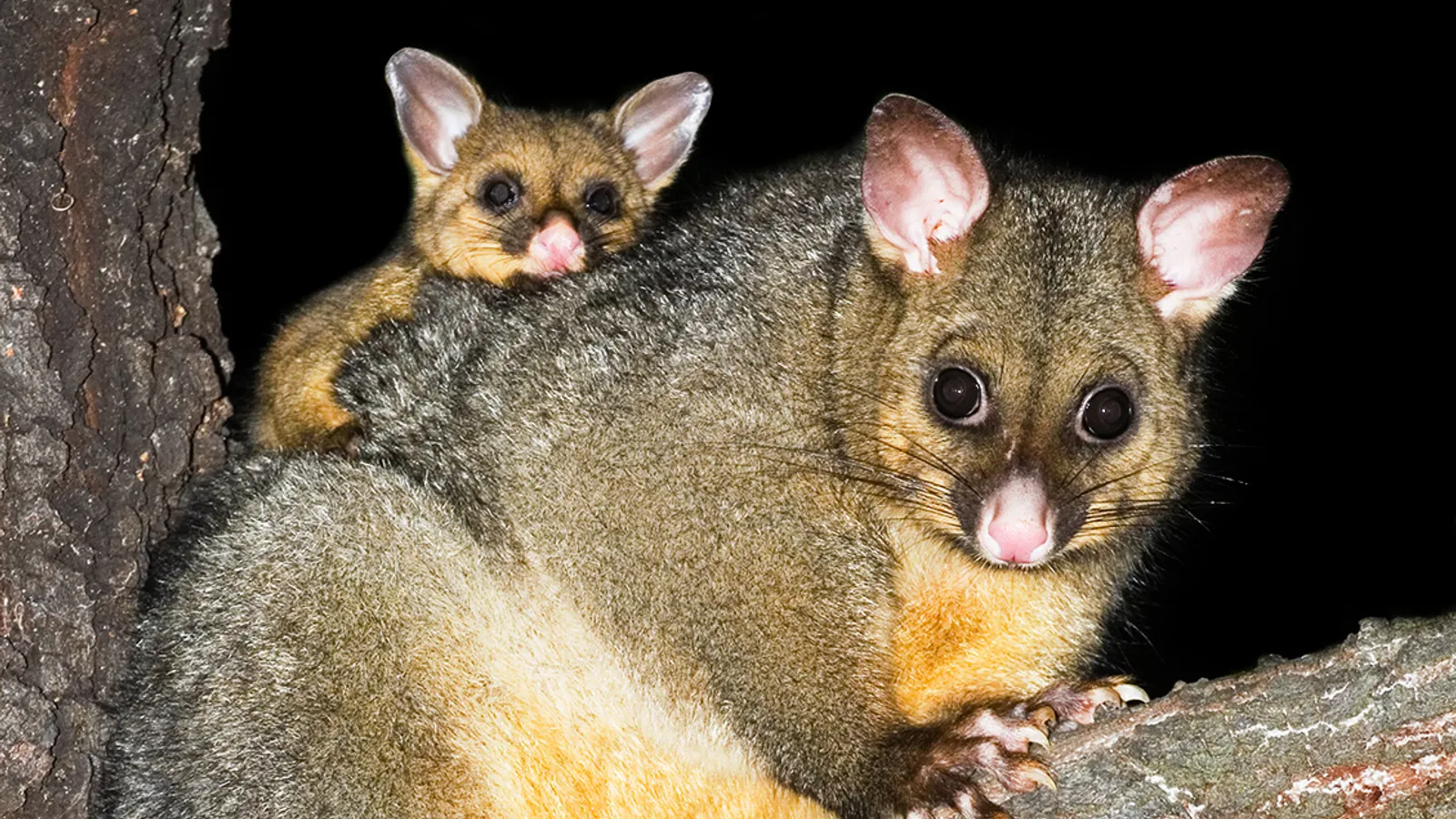
— Where the name comes from
Trichosurus is “hairy tail”, from the Greek thríx, trikhós, and ourá; vulpecula is the Latin “little fox”, for the pointed face. The common name hides a colonial confusion: Joseph Banks, seeing these animals in Australia, called them “possums” because they reminded him of the American opossums already known to Europeans. They are not close relatives — the two lines parted when America and Australia were still joined — but the name stuck to both.
— Facts
- Group
- Mammals · Mammalia
- Order
- Diprotodont marsupials
- Habitat
- Eucalyptus woodland, scrub, city parks, attics
- Range
- Australia and Tasmania; introduced to New Zealand in 1837
- Size
- 32–58 cm of body, 1.2–4.5 kg
- Diet
- Omnivore — eucalyptus leaves, fruit, flowers, eggs, nestlings
- Lifespan
- 11 years in the wild
— Characteristics
- 01
It has a prehensile tail with the underside of the tip bare.
- 02
It digests eucalyptus leaves that are toxic to almost every other mammal.
- 03
In New Zealand it is estimated at over thirty million.
— What sets it apart
In Australia it is protected by law; in New Zealand it is public enemy number one. Introduced in 1837 for its fur, in a country with no native land mammals and with birds that nest on the ground, it has multiplied into tens of millions and eats thirty million birds and eggs a year, besides stripping whole forests. New Zealand spends tens of millions a year eliminating it, while a few thousand kilometres away, at home, killing it is an offence.
