
Eastern quoll
Dasyurus viverrinus
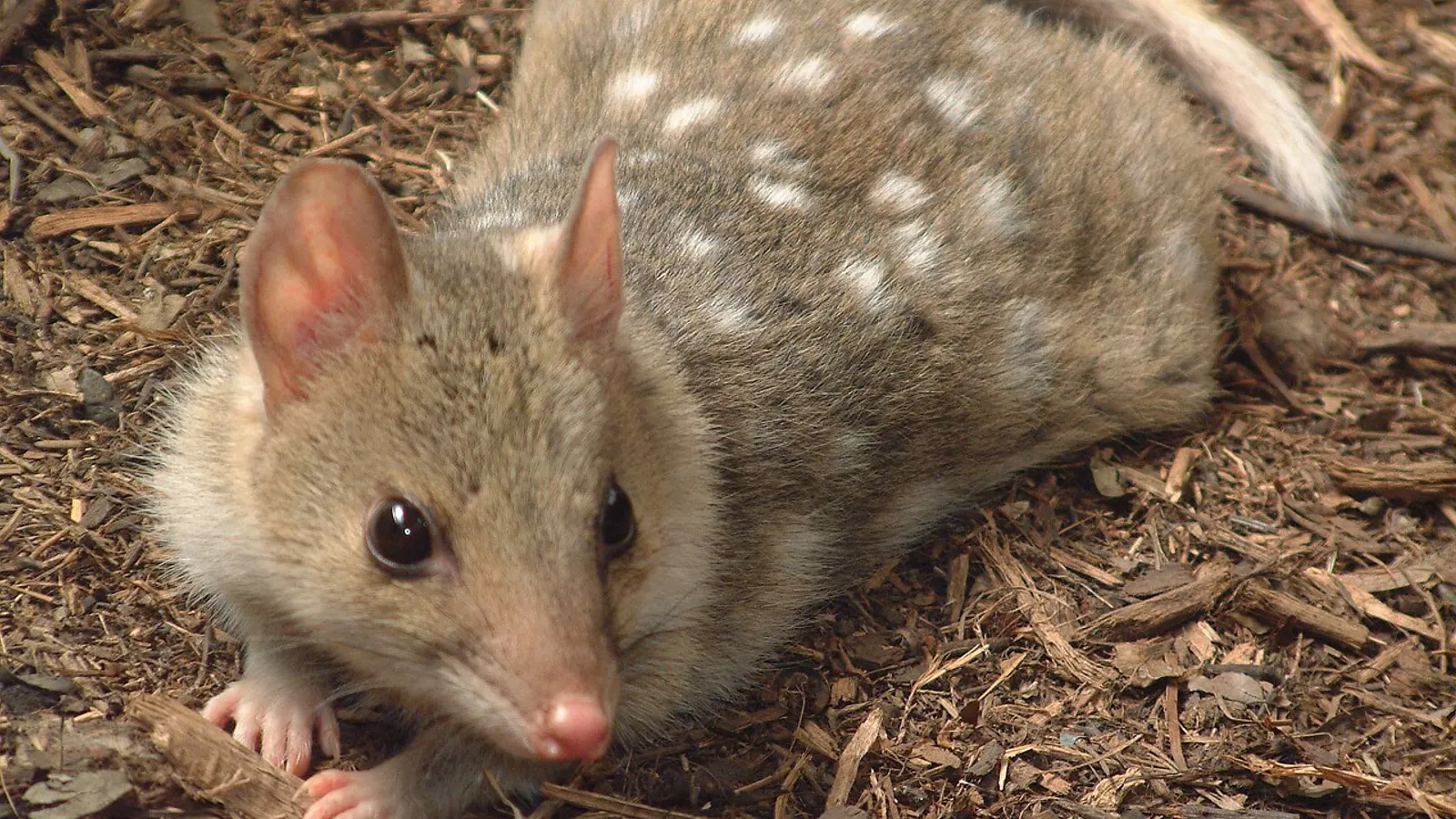
— Where the name comes from
Dasyurus is “hairy tail”, from the Greek dasýs and ourá; viverrinus is Latin, “civet-like”, that is like a civet or a ferret. Quoll is instead an Australian Aboriginal word: James Cook noted it in 1770 in the form “je-quoll”, taking it from the Guugu Yimithirr language of Queensland. It is one of the very few Aboriginal names to enter zoological English permanently.
— Facts
- Group
- Mammals · Mammalia
- Order
- Carnivorous marsupials
- Habitat
- Dry eucalyptus woodland, heath, grassland and pasture
- Range
- Tasmania; extinct on the Australian mainland since the 1960s
- Size
- 32–45 cm of body, 0.7–2 kg
- Diet
- Carnivore — insects, small mammals, birds, carrion
- Lifespan
- 3–4 years in the wild
— Characteristics
- 01
It has white spots on the body but never on the tail: that is how it is told from other quolls.
- 02
Two colour forms exist, fawn and black, which can appear in the same litter.
- 03
The female has six teats but gives birth to as many as thirty young.
— What sets it apart
It is born in surplus and the selection happens in the first minutes of life. The female gives birth to as many as thirty embryos the size of grains of rice, and they must climb her belly unaided to the pouch, where six teats are available: the first six to latch on live, the rest die within hours. It is a brutal lottery that offsets another number — on the Australian mainland the species is already gone, killed off by introduced foxes and cats, and it survives only in Tasmania.
