
Common brittle star
Ophiothrix fragilis
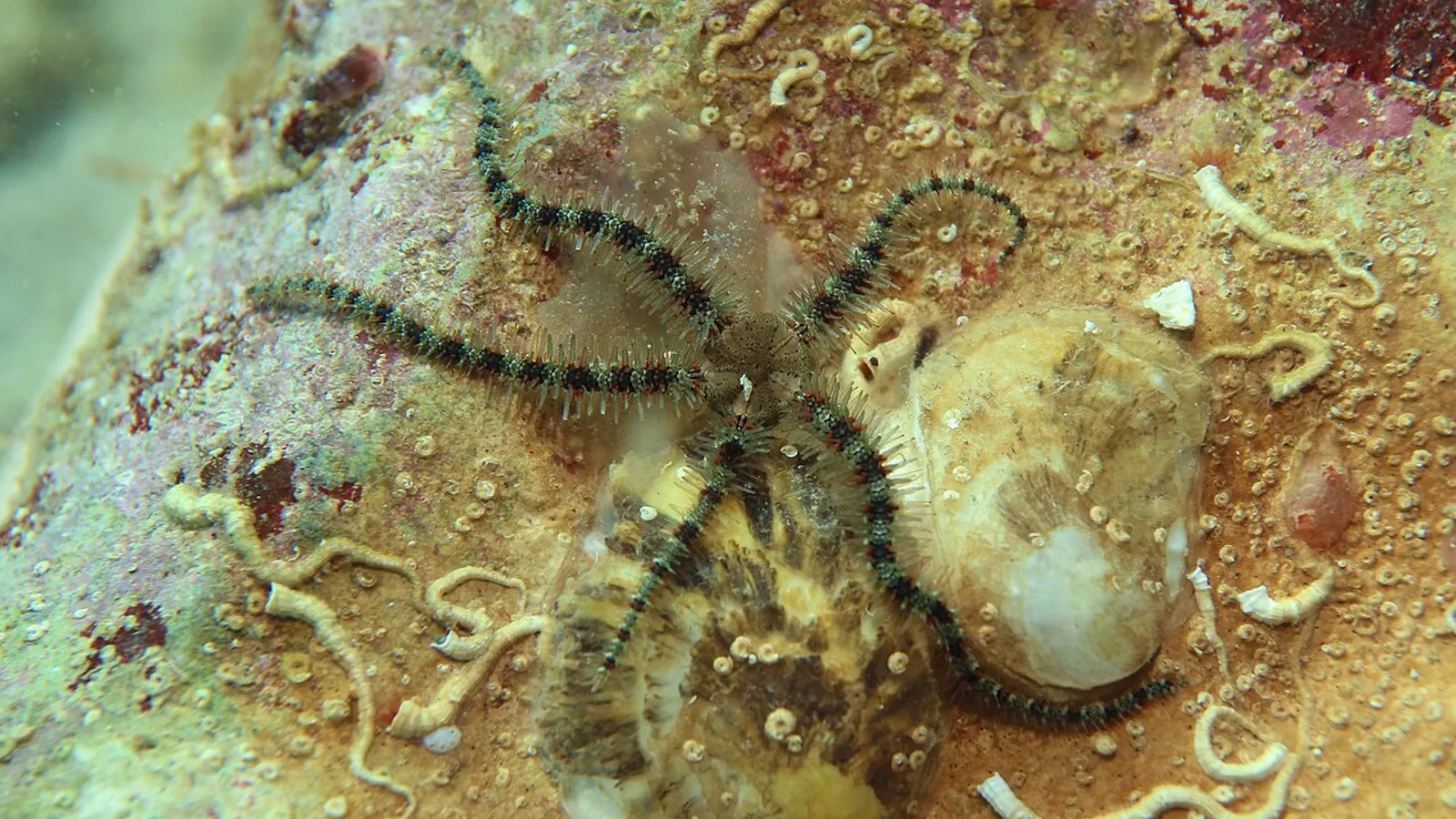
— Where the name comes from
Ophiothrix is “snake hair”, from óphis, the snake, and thríx, the hair: the five slender spiny arms move with a serpentine motion, and it is from there that the class name Ophiuroidea, “snake tails”, also comes. Fragilis is no exaggeration: merely picking one up is enough for an arm or several to come away.
— Facts
- Group
- Echinoderms · Echinodermata
- Order
- Brittle stars
- Habitat
- Gravel and rocky bottoms, in very dense carpets
- Range
- North-eastern Atlantic and Mediterranean
- Size
- Disc 2 cm; arms up to 10 cm
- Diet
- Suspended particles caught with raised arms
- Lifespan
- 5–10 years
— Characteristics
- 01
It moves by crawling with its arms, not on tube feet like sea stars.
- 02
It forms beds of hundreds of individuals per square metre.
- 03
It sheds arms at the slightest disturbance and regrows them.
— What sets it apart
It forms living carpets covering square kilometres of seabed: in the Channel and the North Sea there are beds with over two thousand individuals per square metre, arms raised into the current filtering plankton, side by side like a swaying meadow. It is one of the densest biomasses on the European seabed and is able to alter the flow of water above it. The fragility of its name is a genuine defence: a shed arm goes on writhing and keeps a predator occupied while the rest of the animal moves off and starts growing it back.
