Bar-headed goose
Anser indicus
— Where the name comes from
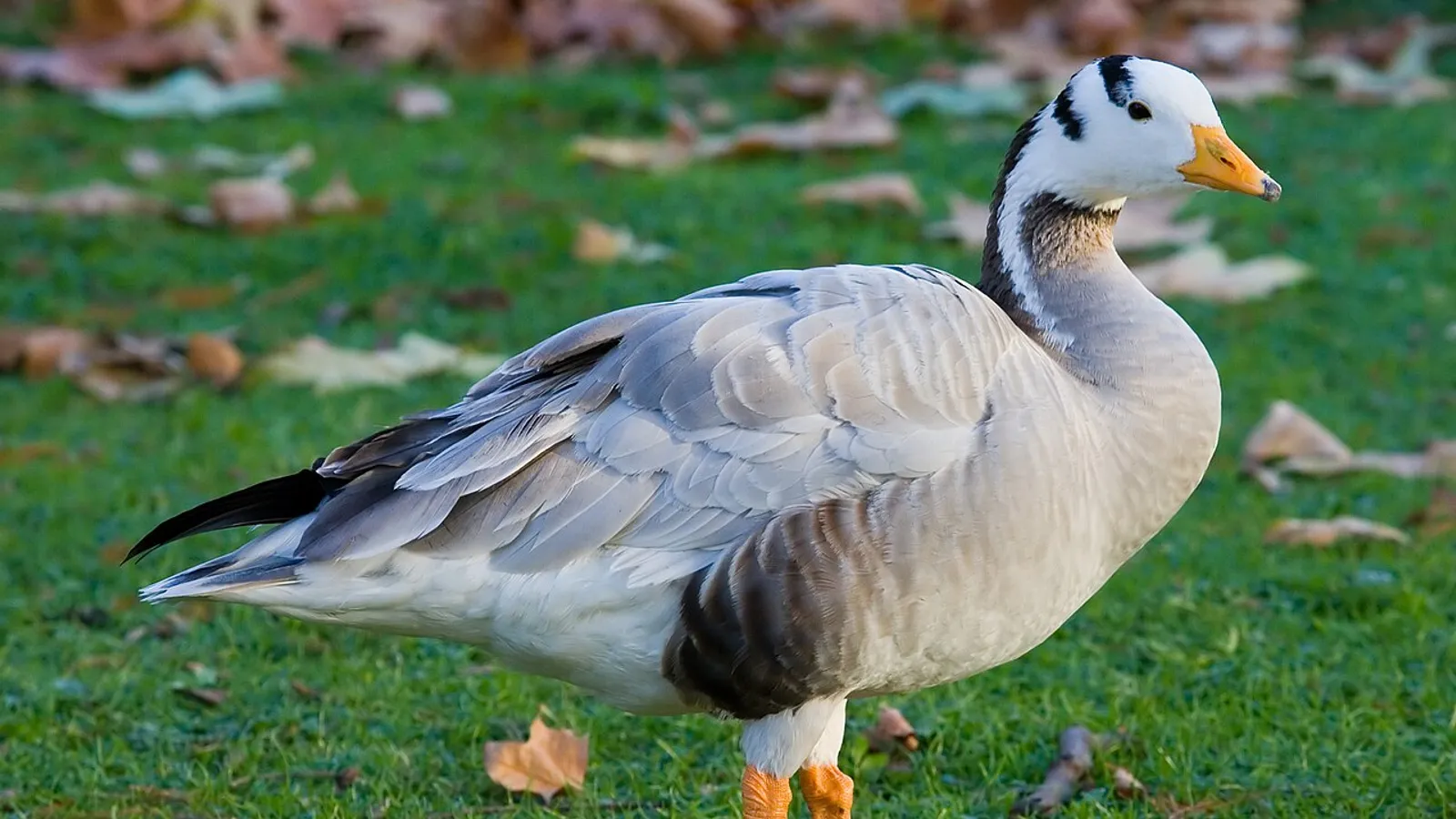
Anser is the Latin word for goose, from the same Indo-European root as the German Gans and the English goose. Indicus means “of India”, where the species spends the winter and where Europeans came to know it. In English it is the bar-headed goose, for the two black bars on its white head.
— Facts
- Group
- Birds · Aves
- Order
- Waterfowl
- Habitat
- High lakes of Central Asia; lowland rivers and fields in winter
- Range
- Breeds on the plateaus of Tibet, Mongolia and Kyrgyzstan; winters in India and Myanmar
- Size
- 71–76 cm, wingspan 140–160 cm, 1.9–3.2 kg
- Diet
- Grasses, roots, grain
- Lifespan
- Up to 20 years
— Characteristics
- 01
It has a white head crossed by two black bars.
- 02
It nests in colonies of thousands on the shores of mountain lakes.
- 03
It often flies by night, when the air is colder and denser.
— What sets it apart
It crosses the Himalaya. The flight that carries it from India to Tibet passes peaks of over six thousand metres, where the air holds less than half the oxygen found at sea level, and it does it by flapping, without riding air currents. Its body is equipped for this: its haemoglobin, thanks to a change in a single amino acid, binds oxygen better than other geese’s, its lungs are larger and its flight muscles richer in blood vessels. Satellite data show, though, that it does not always fly at extreme height: it follows the terrain like a roller coaster, rising and falling with the valleys to save effort.