Little egret
Egretta garzetta
— Where the name comes from
Garzetta is the diminutive of garza, an old Italian name for the heron, and Linnaeus adopted it unchanged as the species name. Egretta comes from the Provençal aigreta, “little heron”, which also gave the French aigrette, a word that came to mean the long ornamental plumes worn on hats and helmets.
— Facts
- Group
- Birds · Aves
- Order
- Pelicans and allies
- Habitat
- Lagoons, salt pans, rice fields, marshes and riverbanks
- Range
- Southern and central Europe, Africa, southern Asia, Australia
- Size
- 55–65 cm, wingspan 88–106 cm, 350–550 g
- Diet
- Small fish, amphibians, crustaceans, insects
- Lifespan
- Up to 22 years
— Characteristics
- 01
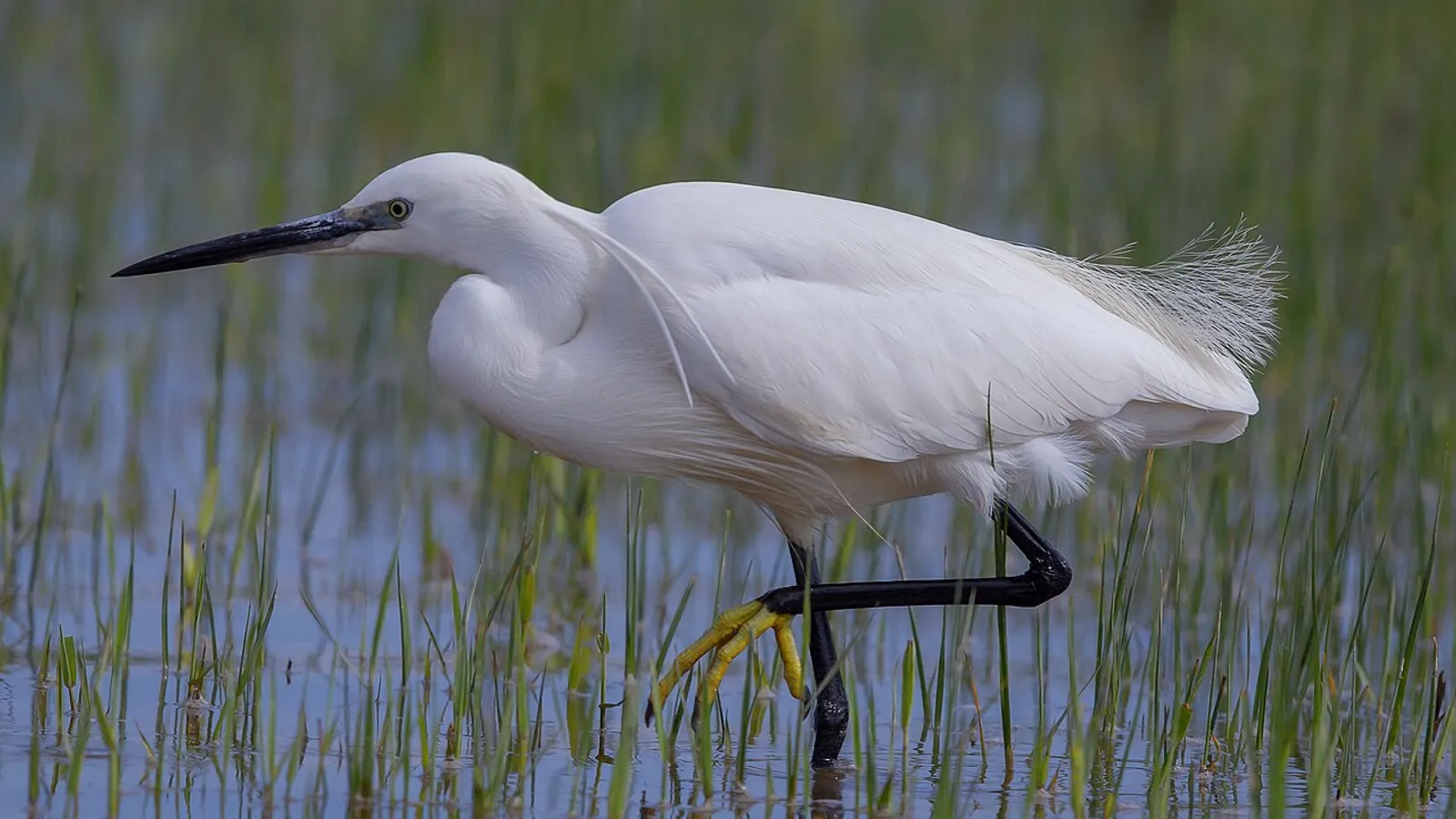
It is white with black bill and legs, and yellow feet.
- 02
It stirs the bottom with one foot to flush out prey.
- 03
In spring it carries two long plumes on its nape and a veil of fine feathers on its back.
— What sets it apart
At the end of the nineteenth century little egrets’ breeding plumes, the aigrettes, were worth more than gold by weight, and to get them hunters slaughtered adults in the colonies during nesting, leaving the chicks to starve. The first bird protection movements were born in opposition to that trade: in 1889 a group of Englishwomen founded the society that would become the RSPB, pledging not to wear feathers, and in America the first Audubon societies did the same. Protected, the little egret has become common again everywhere, and for some decades has bred in England too.