
Canada goose
Branta canadensis
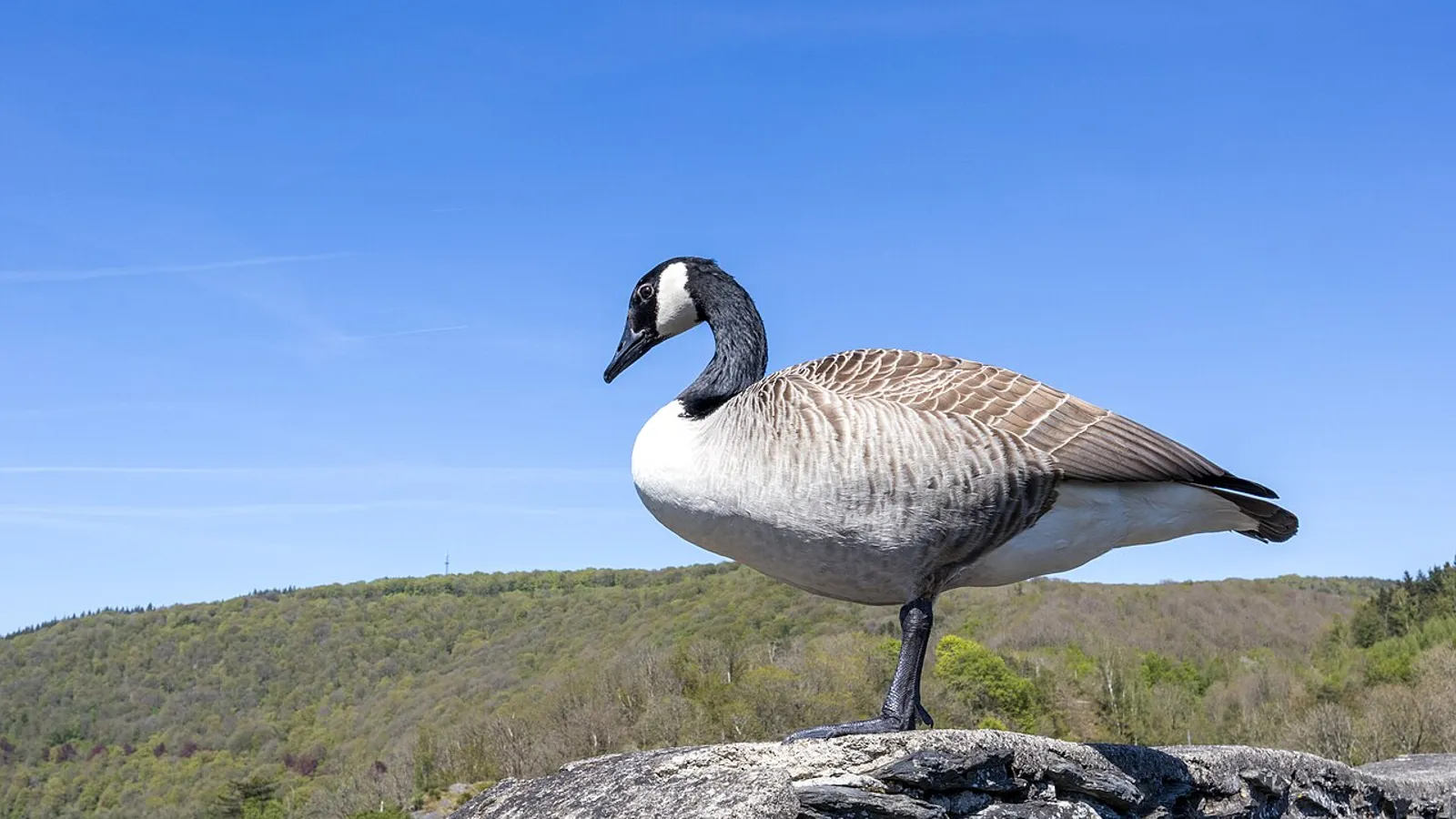
— Where the name comes from
Branta comes from the Old Norse brandgás, “burnt goose”, for the dark colouring that separates this group from the grey geese of the genus Anser; it is the same word behind the English brent. Canadensis names the continent it came from, although today the species nests quite happily in the parks of half of Europe.
— Facts
- Group
- Birds · Aves
- Order
- Waterfowl
- Habitat
- Lakes, ponds, mown grass, town parks, golf courses
- Range
- North America; introduced to northern Europe and New Zealand
- Size
- 75–110 cm, wingspan 127–185 cm, 3–6.5 kg
- Diet
- Grass, shoots, cereals, water plants
- Lifespan
- 24 years in the wild
— Characteristics
- 01
It has a black head with a white chinstrap.
- 02
It defends its goslings by attacking dogs, people and cars.
- 03
Many introduced populations have stopped migrating altogether.
— What sets it apart
On 15 January 2009 a flock of these geese went into both engines of an Airbus that had just taken off from New York, and the captain set the aircraft down on the Hudson without loss of life. The feathers recovered from the engines were analysed, and the chemical signatures of the isotopes showed they were not resident city geese but migrants arrived from Labrador: a distinction that matters, because the first can be managed and the second cannot. It is probably the only air accident in which the victim was identified from its down.
