
Common eider
Somateria mollissima
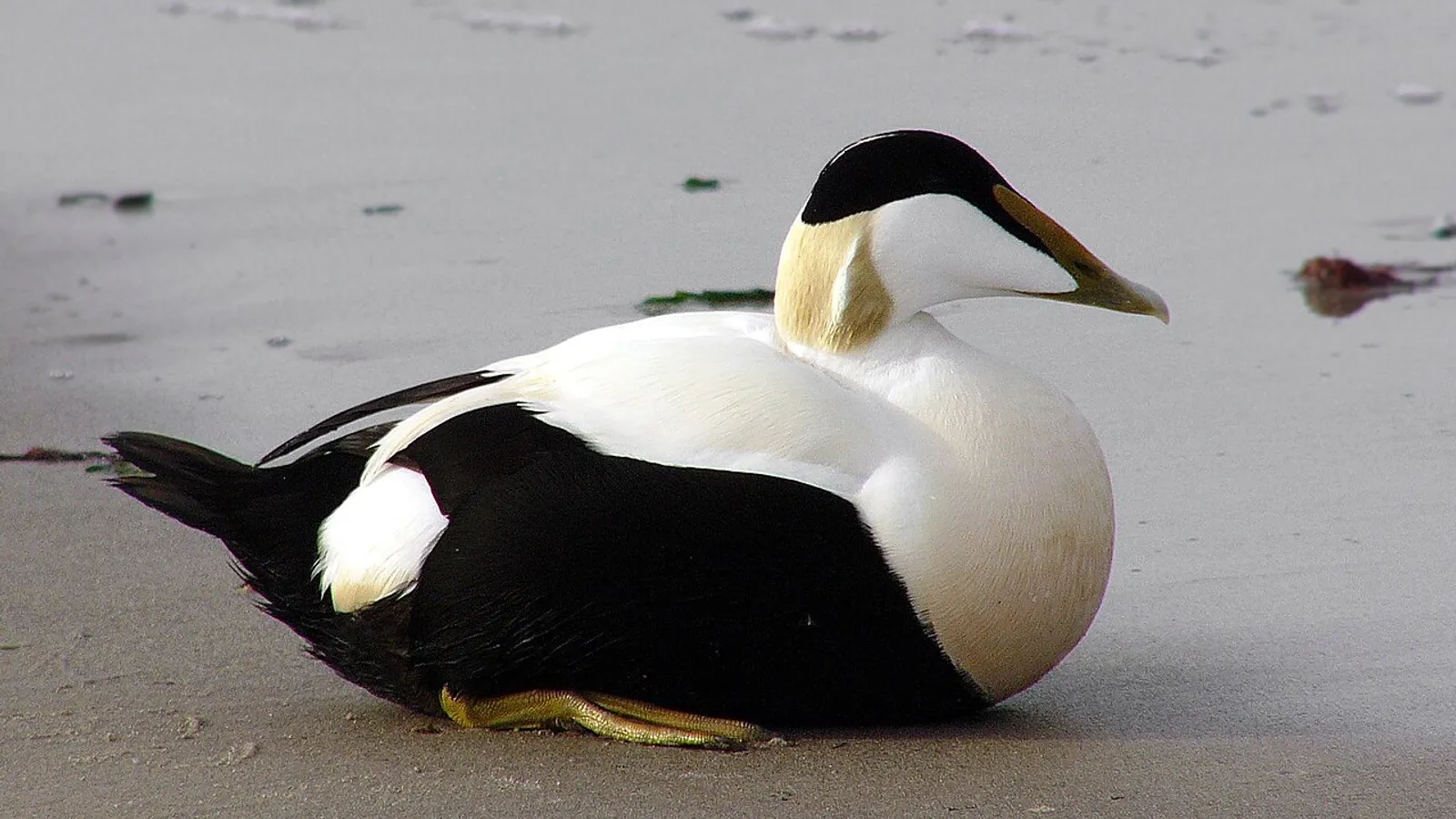
— Where the name comes from
Somateria is “wool body”, from sôma and érion, and mollissima is the superlative of “soft”: two different ways of saying the same thing, namely that this animal produces the best natural insulation known. The English eider comes from the Icelandic æðar, and the commercial name of the down became the name of the species.
— Facts
- Group
- Birds · Aves
- Order
- Waterfowl
- Habitat
- Rocky sea coasts and islets; open sea in winter
- Range
- Arctic and subarctic coasts of Europe, Asia and North America
- Size
- 50–71 cm, wingspan 80–108 cm, 1.2–2.8 kg
- Diet
- Mussels and other molluscs, swallowed whole and crushed in the gizzard
- Lifespan
- 21 years in the wild
— Characteristics
- 01
It swallows mussels whole and crushes them in its gizzard, spitting out the shell.
- 02
Females raise the ducklings in communal crèches watched by a few adults.
- 03
The female plucks down from her own breast to line the nest.
— What sets it apart
In Iceland its down has been collected for a thousand years without harming anyone: the females nest inside shelters the farmers prepare for them, and the down is taken once the young have gone, or replaced with hay while the clutch is still being brooded. A kilo takes the contents of about sixty nests and is worth as much as a small household appliance. In 676 the monk Cuthbert, on the island of Lindisfarne, forbade anyone to disturb the eiders nesting around his cell: it is reckoned the oldest bird protection law on record.
