
Greater noctule bat
Nyctalus lasiopterus
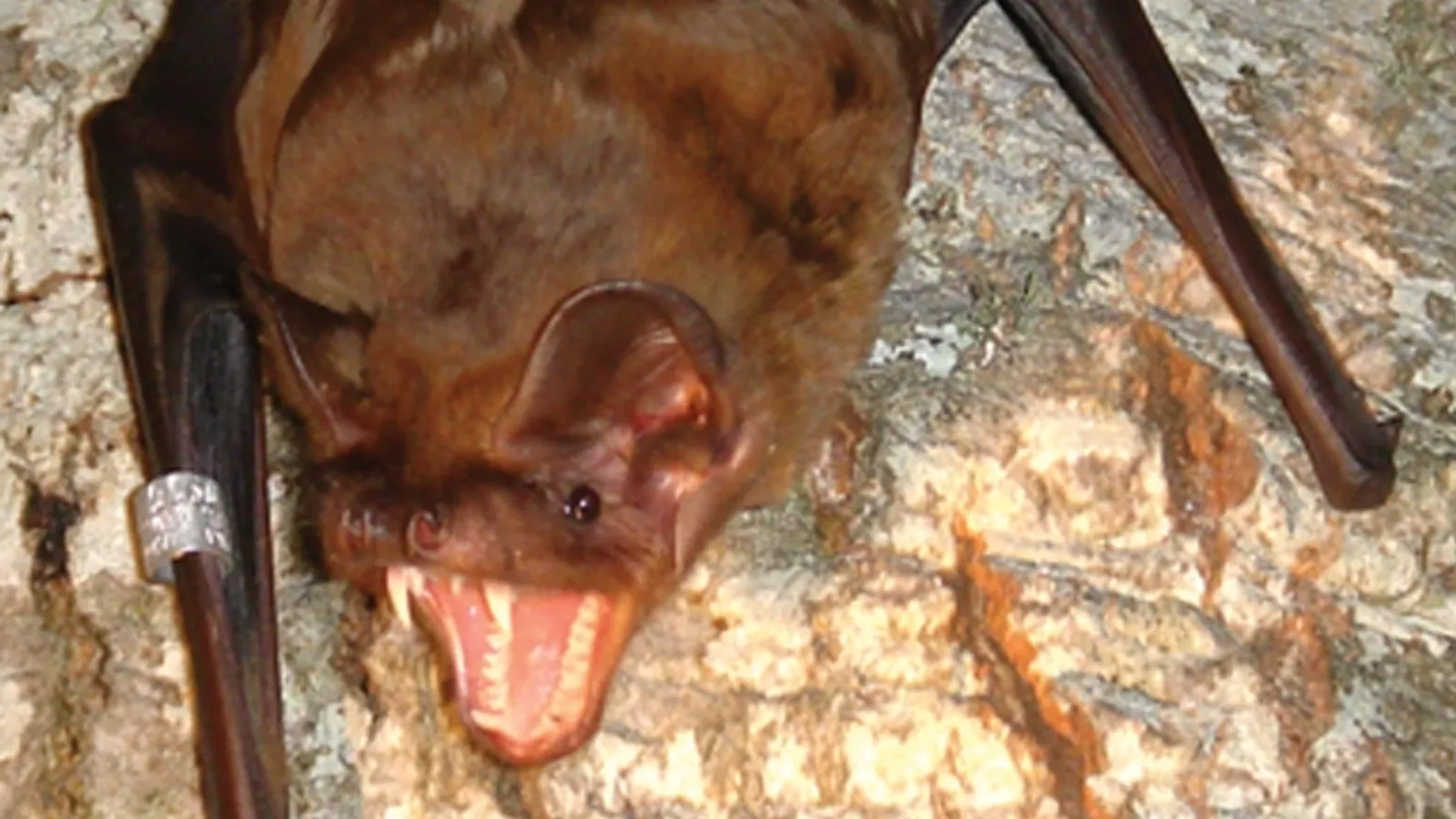
— Where the name comes from
Lasiopterus is “hairy wing”, from the Greek lásios, “shaggy”, and pterón: along the forearm and at the base of the membranes the fur continues, unusual in a wing that is normally bare. Nyctalus points to the night, from nýx. It is the largest bat in Europe by weight, and what it eats remained unknown until very recently.
— Facts
- Group
- Mammals · Mammalia
- Order
- Bats
- Habitat
- Hollows of old trees in mature forest and historic urban parks
- Range
- Southern and eastern Europe, North Africa, Asia Minor; rare everywhere
- Size
- 8.4–10.4 cm of body, 46 cm wingspan, 41–76 g
- Diet
- Insectivore and, seasonally, birds caught in flight
- Lifespan
- Little known
— Characteristics
- 01
It is the largest European bat by body mass.
- 02
On migration nights it hunts small songbirds in mid-air.
- 03
It flies very high, often above a thousand metres, where the migrants pass.
— What sets it apart
It is the only bat in the world that hunts birds in flight, and proving it took years of argument. Droppings collected in Spain contained the feathers of migrating songbirds, and the obvious explanation was that the animal was scavenging carcasses; then stable isotope analysis of the blood and high-altitude tracking showed that it climbs to intercept nocturnal migration routes and takes its prey in the air. It is a niche no other bat occupies, open only a few weeks a year, when millions of birds cross the Mediterranean in the dark.
