
Common noctule
Nyctalus noctula
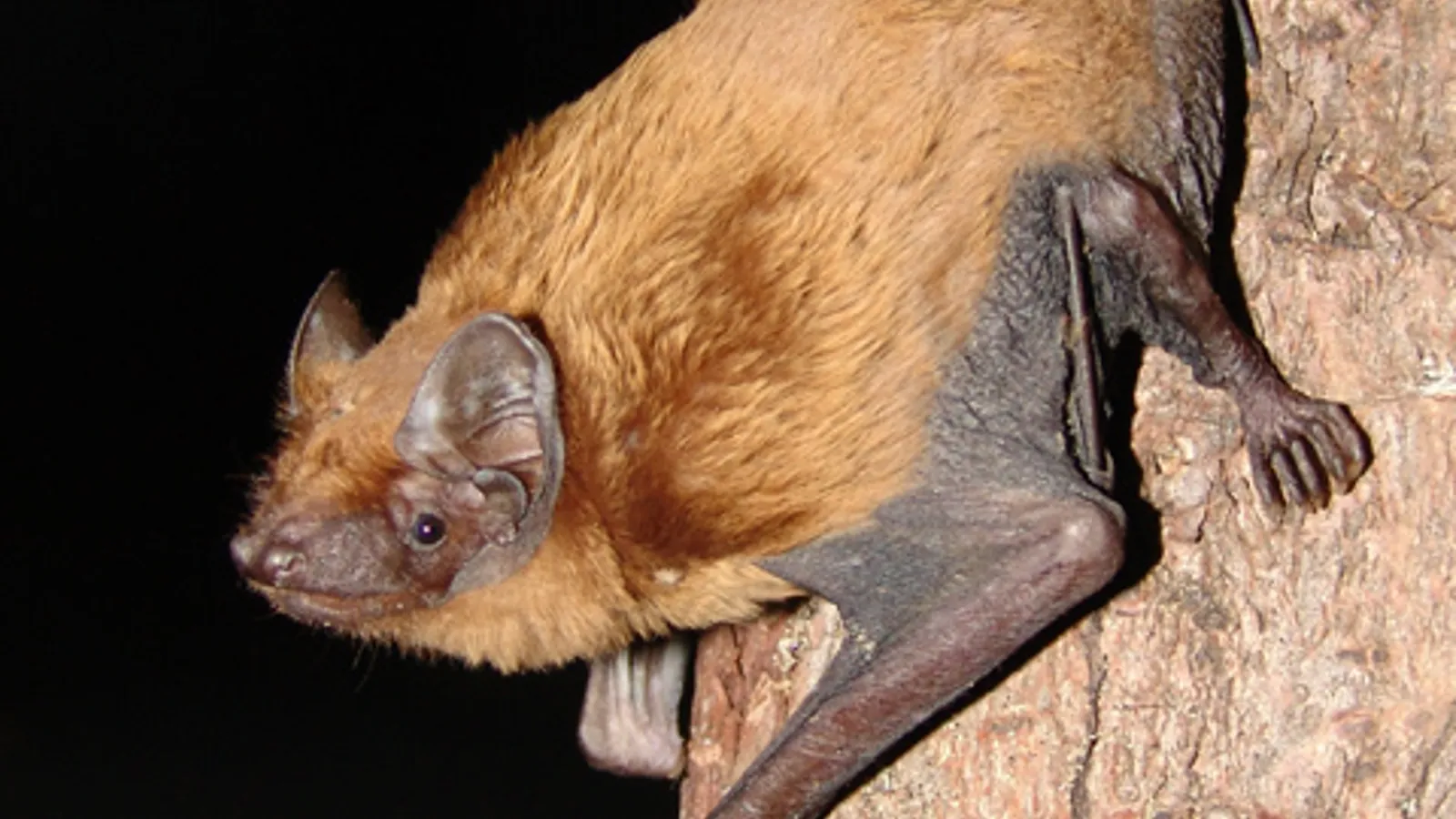
— Where the name comes from
Nyctalus comes from the Greek nyktalos, tied to nýx, “night”; noctula is the diminutive of the Latin nox and lies behind the Italian nottola, which named bats generally and the little owl as well. The name says “nocturnal” twice in two languages, which for a bat is tautologous — but it is among the first out in the evening, often while it is still full daylight.
— Facts
- Group
- Mammals · Mammalia
- Order
- Bats
- Habitat
- Mature woodland with hollow trees, hunting in open air and over water
- Range
- Europe, North Africa, Asia as far as Japan
- Size
- 6–8 cm of body, 17–45 g, wingspan up to 40 cm
- Diet
- Insectivore — beetles, moths, caddisflies taken on the wing
- Lifespan
- 12 years, with a record of 16
— Characteristics
- 01
It flies at over 50 km/h, among the fastest of European bats.
- 02
It makes documented seasonal migrations of more than 1,500 kilometres.
- 03
It hunts high, often above fifty metres, in completely open air.
— What sets it apart
It is one of the few European mammals that migrates like a bird. Individuals ringed in Russia and the Baltic states have been recovered in Italy, Switzerland and France, after journeys of over fifteen hundred kilometres flown at night. That ability is also its greatest hazard: the migration routes coincide with the areas where wind farms are built, and the noctule is among the species hardest hit by turbines — less from collisions than from barotrauma, the pressure drop behind the blade that ruptures its lungs.
