
Red kite
Milvus milvus
— Where the name comes from
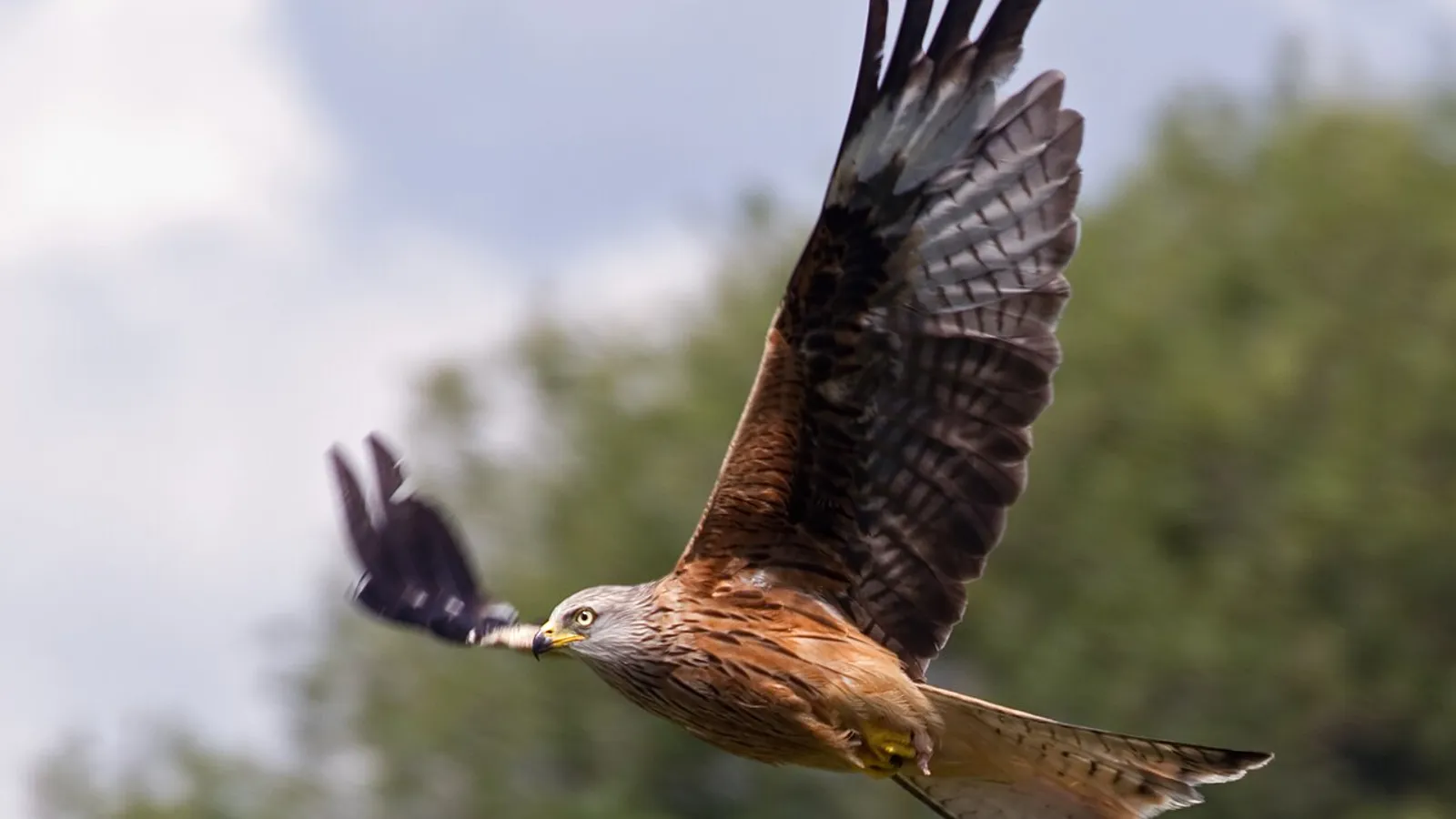
Milvus is the kite in Latin, and it is the word from which Italian arrived, through popular corruption, at its nibbio. The binomial repeats it twice, as often happens with species Linnaeus regarded as typical of their genus. “Red” separates it from the black kite and is an aesthetic judgement: the forked rust-coloured tail, which the bird uses as a continuous rudder, is one of the most elegant shapes in European skies.
— Facts
- Group
- Birds · Aves
- Order
- Diurnal birds of prey
- Habitat
- Wooded farmland, hills, refuse tips, pasture
- Range
- Western and central Europe, North Africa
- Size
- 60–70 cm, wingspan 175–195 cm, 0.8–1.3 kg
- Diet
- Carrion, small mammals, birds, earthworms, refuse
- Lifespan
- 26 years in the wild
— Characteristics
- 01
The deeply forked tail twists in flight like a rudder.
- 02
It lines the nest with rags, plastic bags and stolen cloth.
- 03
In winter it gathers in communal roosts in stands of trees.
— What sets it apart
Shakespeare warns his audience to mind the washing when the kite is building, and it was not a joke: the species lined its nests with laundry left out to dry, and modern nests hold bags and strips of plastic instead. In the twentieth century it had gone from England and Scotland, reduced to a handful of pairs in one Welsh valley all descended from a single female; the reintroduction begun in 1989 with Spanish and Swedish birds has brought it back to thousands of pairs, and it counts as one of the great successes of European conservation.
