
African fish eagle
Haliaeetus vocifer
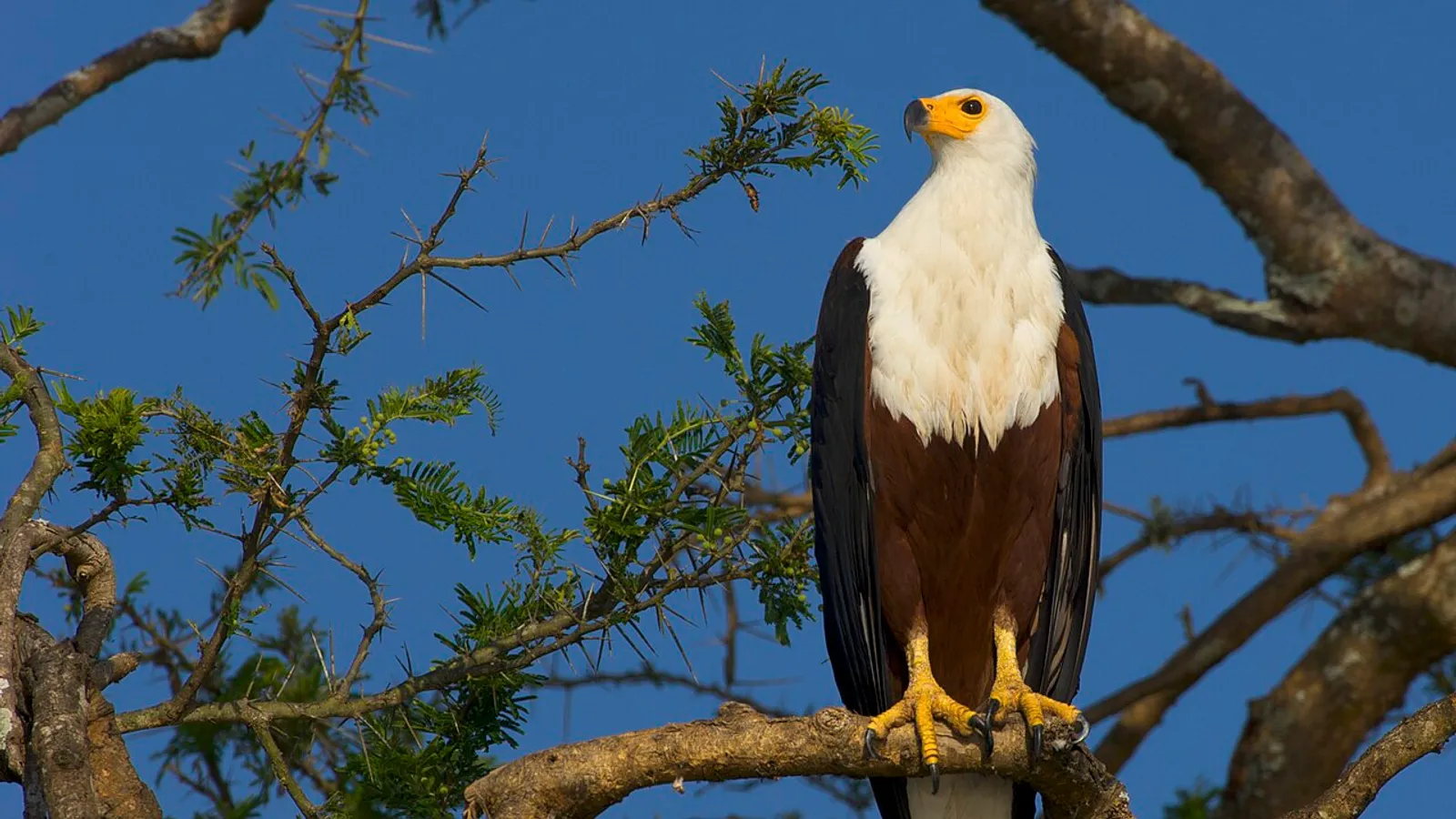
— Where the name comes from
Haliaeetus is “sea eagle”, from háls, salt, and aetós; vocifer means “loud-voiced”, and it is the aptest name in African ornithology. The call — two long notes thrown out with the head flung back — is the sound behind every documentary filmed in Africa, and it is frequently laid over footage of places where this species has never lived.
— Facts
- Group
- Birds · Aves
- Order
- Diurnal birds of prey
- Habitat
- Lakes, great rivers, lagoons, estuaries with tall trees
- Range
- Sub-Saharan Africa
- Size
- 63–75 cm, wingspan 190–240 cm, 2–3.6 kg
- Diet
- Fish, waterbirds, carrion, food robbed from others
- Lifespan
- 24 years in the wild
— Characteristics
- 01
It drops onto the water and takes the fish without submerging.
- 02
Its toes are covered in rough spicules that grip slippery prey.
- 03
The pair calls in duet, alternating, audible for kilometres.
— What sets it apart
It is the national bird of four countries — Zambia, Zimbabwe, Namibia and South Sudan — and its cry has become the official sound of an entire continent: recorded in East Africa in the 1950s, it has ended up in the soundtracks of hundreds of films and is laid by habit over scenes of deserts, of savannahs, even of American landscapes. If an eagle screams in a film, it is almost certainly this one, even when a different bird is on the screen.
