
Tawny owl
Strix aluco
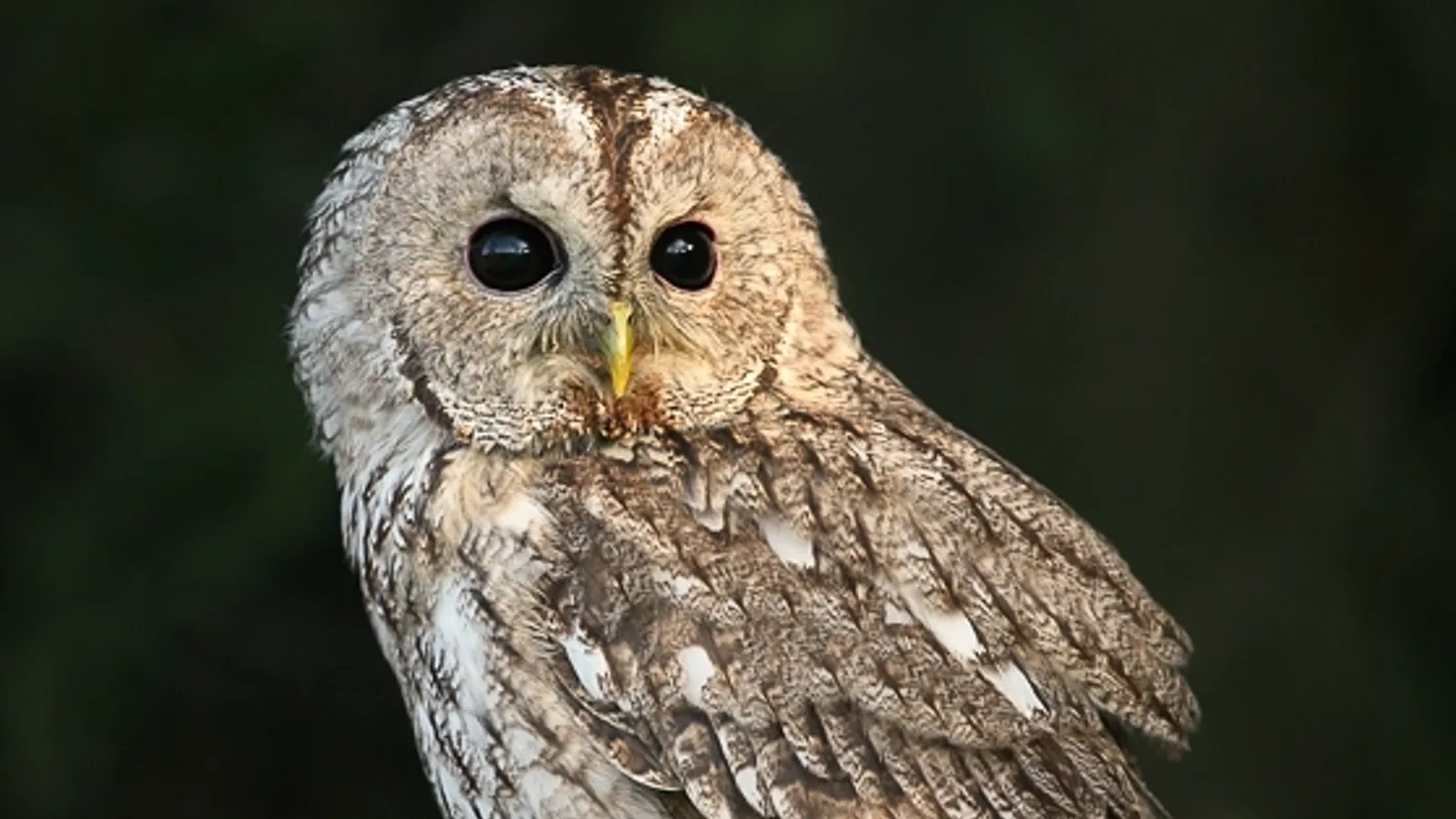
— Where the name comes from
Strix was for the Romans a night bird that entered houses to suck the blood of infants, and from that word come the strige and the Italian strega, the witch: the scientific name of the owls preserves a Roman superstition intact. Aluco is the Italian vernacular name latinised by Linnaeus, and allocco in the sense of “fool” comes from the blank face with which the bird stares at whoever finds it by day.
— Facts
- Group
- Birds · Aves
- Order
- Owls
- Habitat
- Mature woodland, town parks, gardens with hollow trees
- Range
- Europe, North Africa, western and eastern Asia
- Size
- 37–46 cm, wingspan 81–105 cm, 385–800 g
- Diet
- Mice, voles, birds, frogs, insects
- Lifespan
- 19 years in the wild
— Characteristics
- 01
The call everyone knows is a duet: the female calls, the male hoots.
- 02
It spends its whole life in the same territory, often for more than ten years.
- 03
It attacks anyone approaching the nest, and has blinded more than one photographer.
— What sets it apart
It comes in two colours, grey and rufous, and the ratio between them is changing before our eyes. In Finland the data on this species have been kept for forty years: grey birds survived snowy winters better, rufous ones mild winters, and as Finnish winters have softened the proportion of rufous tawny owls has risen sharply. It is one of the best documented cases of natural selection acting on a vertebrate population, and the variable driving it is how many days a year the wood stays white.
