
King ragworm
Alitta virens
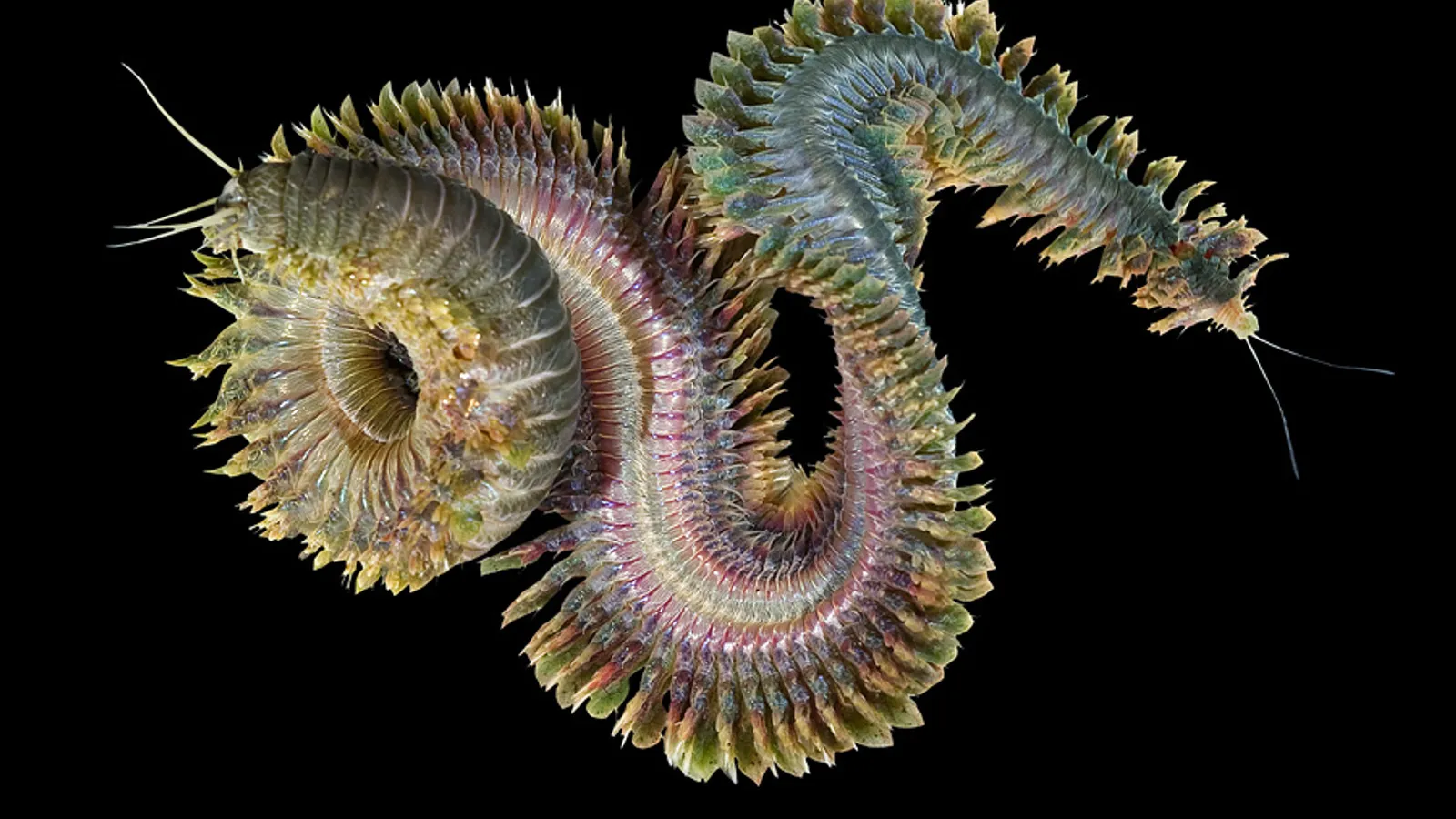
— Where the name comes from
The common name comes from the Nereids, the fifty sea nymphs daughters of Nereus, who in the Iliad rise from the waves to comfort Achilles: the old genus name was in fact Nereis. Virens is Latin, “greening”, and it is exact — the animal is iridescent, with green and bronze glints that shift with every movement. Rarely does so little-known a creature carry so mythological a name.
— Facts
- Group
- Annelids · Annelida
- Order
- Ragworms
- Habitat
- Intertidal sand and mud, in burrows
- Range
- North Atlantic, European and North American coasts
- Size
- 20–40 cm, up to 90 cm
- Diet
- Algae, detritus, small invertebrates
- Lifespan
- 2–3 years
— Characteristics
- 01
It has two chitinous jaws that shoot out to seize prey.
- 02
Every segment carries a pair of flat appendages for swimming and breathing.
- 03
It is the favourite bait of northern European anglers.
— What sets it apart
It dies in order to breed, and does so in a single night. At the right moment — set by the phases of the moon — the body transforms: the muscles dissolve, the eyes enlarge, the lateral appendages broaden into paddles, and the animal, which has spent its life in a burrow, leaves the bottom and rises to the surface to swarm. Males and females release their gametes into the water and die within hours. The phenomenon is called epitoky, and in the Pacific its most famous version — the Samoan palolo — is so punctual that local people have made a calendar festival of it for centuries.
