
Burying beetle
Nicrophorus vespilloides
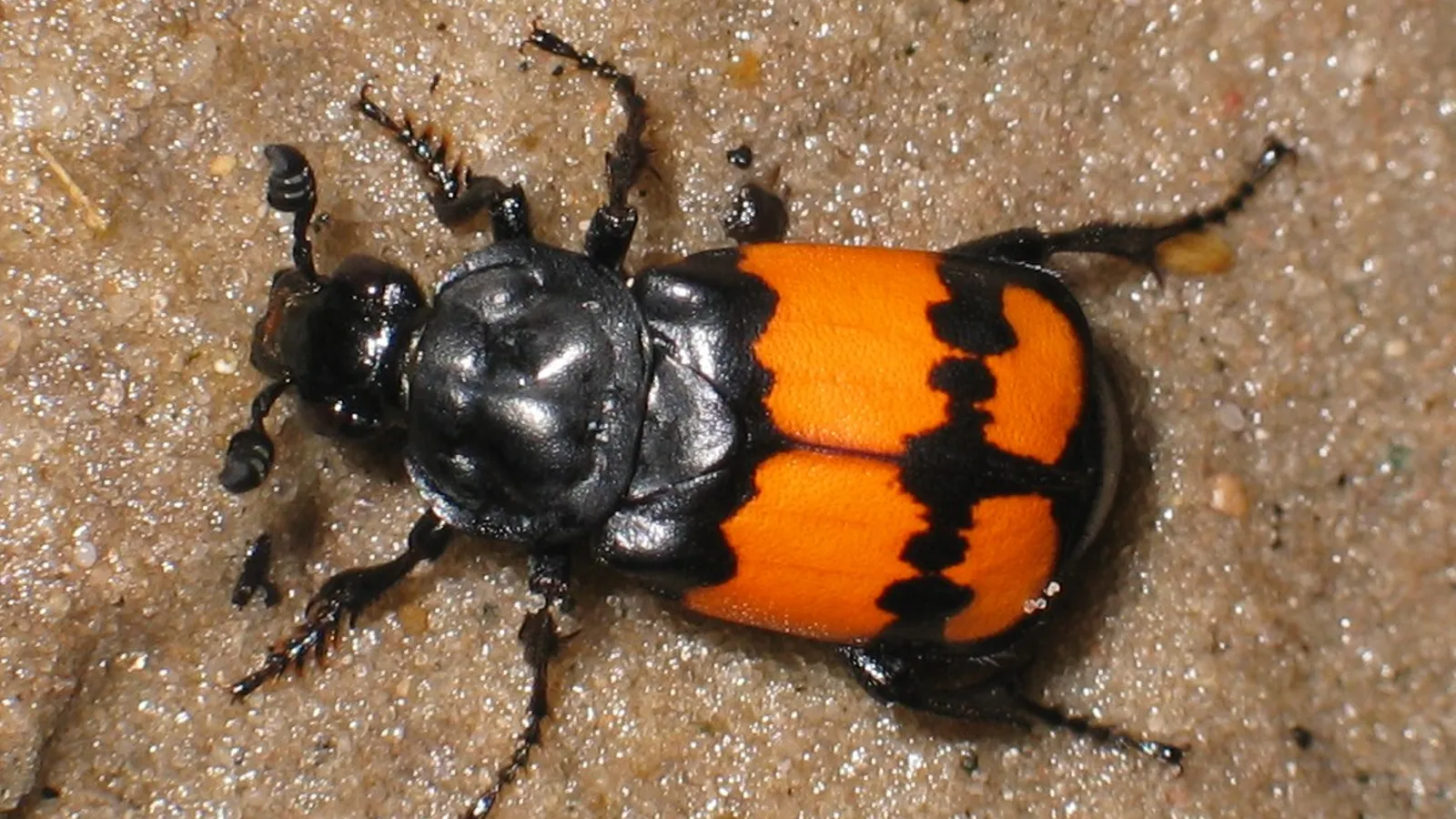
— Where the name comes from
The correct name would be Necrophorus, “corpse-bearer”, from nekrós and phérō. Fabricius in 1775 printed it with an i in place of the e, and the rules of nomenclature, which keep the first published spelling even when it is a typographical error, have made that slip official for ever. Vespilloides refers to the vespillo, the undertaker who in ancient Rome carried away the corpses of the poor by night.
— Facts
- Group
- Insects · Insecta
- Order
- Beetles
- Habitat
- Woods and meadows, wherever small animals fall dead
- Range
- Europe and northern Asia
- Size
- 12–18 mm
- Diet
- Carcasses of small vertebrates
- Lifespan
- 1 year
— Characteristics
- 01
It finds a carcass kilometres away by scent.
- 02
It buries the corpse by digging the ground out from under it.
- 03
Male and female raise the young together and feed them mouth to mouth.
— What sets it apart
It holds the funeral and then starts the family. A pair finds a dead mouse, digs beneath it until the body sinks, strips it of fur, works it into a ball and coats it with antibacterial and antifungal secretions that slow the decay. In that larder the female lays her eggs, and then both parents stay to tend the larvae, regurgitating predigested food and answering their calls: biparental care that among non-social insects is close to unique. The parents also regulate the number of offspring, eating some if the carcass is too small for all.
