
Red palm weevil
Rhynchophorus ferrugineus
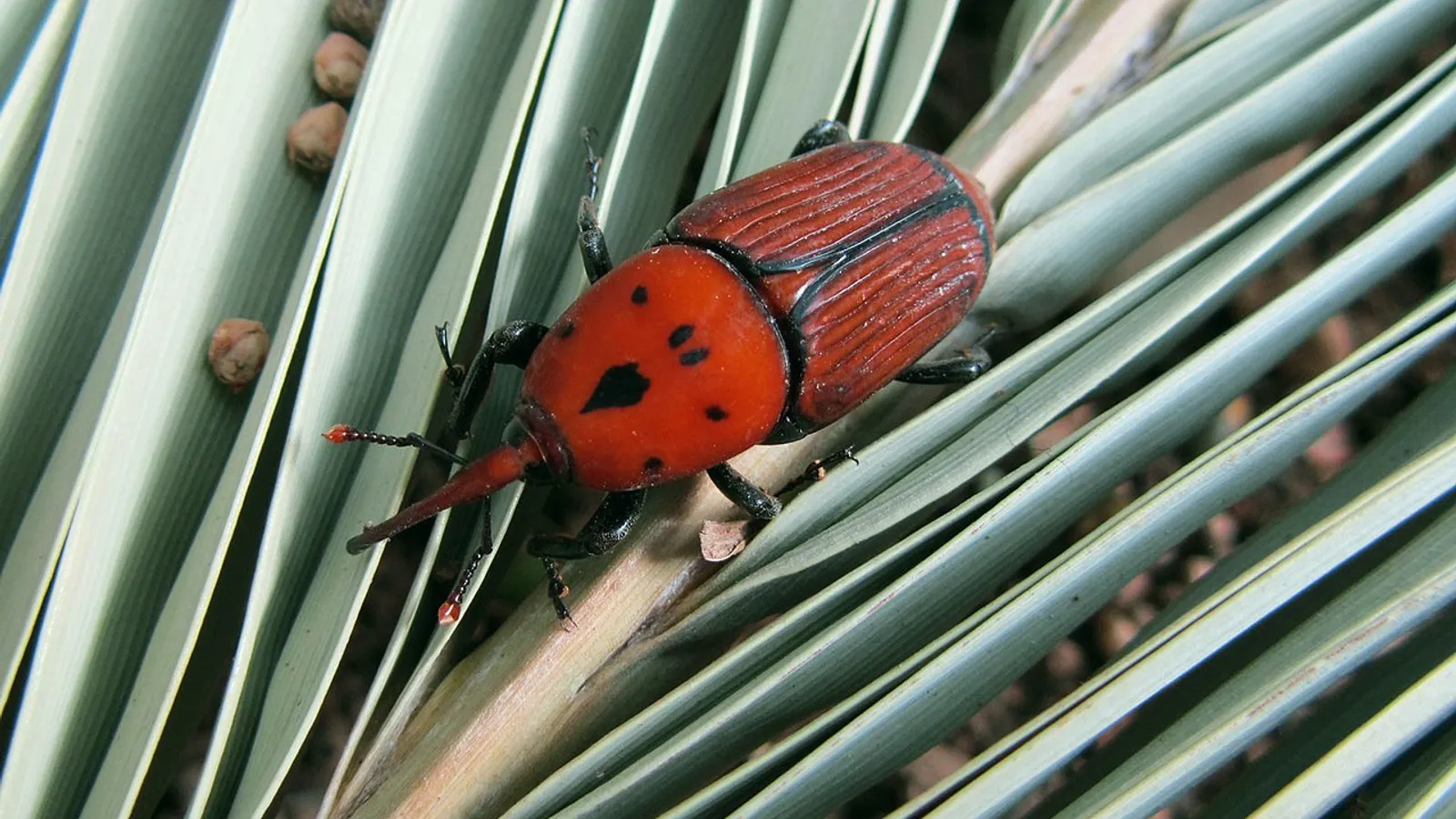
— Where the name comes from
Rhynchophorus means “beak-bearer”, from rhýnchos, the snout or beak, and phérō: the head is drawn out into a rigid proboscis with mandibles at the tip, which the female uses as a drill to pierce the plant and lay her eggs in it. Ferrugineus is the colour of rust. The Italian name comes from the shoemaker’s awl, the punteruolo, which that rostrum resembles.
— Facts
- Group
- Insects · Insecta
- Order
- Beetles
- Habitat
- Living palms, inside the trunk and the crown
- Range
- Asian in origin; today the Mediterranean, the Middle East, the Caribbean
- Size
- 25–40 mm
- Diet
- The inner tissues of palms
- Lifespan
- 2–3 months as an adult; the full cycle about 4 months
— Characteristics
- 01
The larvae bore inside the trunk and the palm dies from within.
- 02
A single palm can hold hundreds of larvae at once.
- 03
It flies up to seven kilometres to reach a new plant.
— What sets it apart
It kills unseen. The female lays her eggs in wounds in the crown, and the larvae bore downwards devouring the apical bud — the only point from which a palm can grow, because unlike a tree it has no spare branches. By the time the central leaves droop it is already over. In twenty years it has erased historic palm groves from Alicante to Sanremo, and the paradox is that it spread precisely through the trade in mature ornamental palms: big, expensive plants moved from country to country with the larvae inside.
