
Narwhal
Monodon monoceros
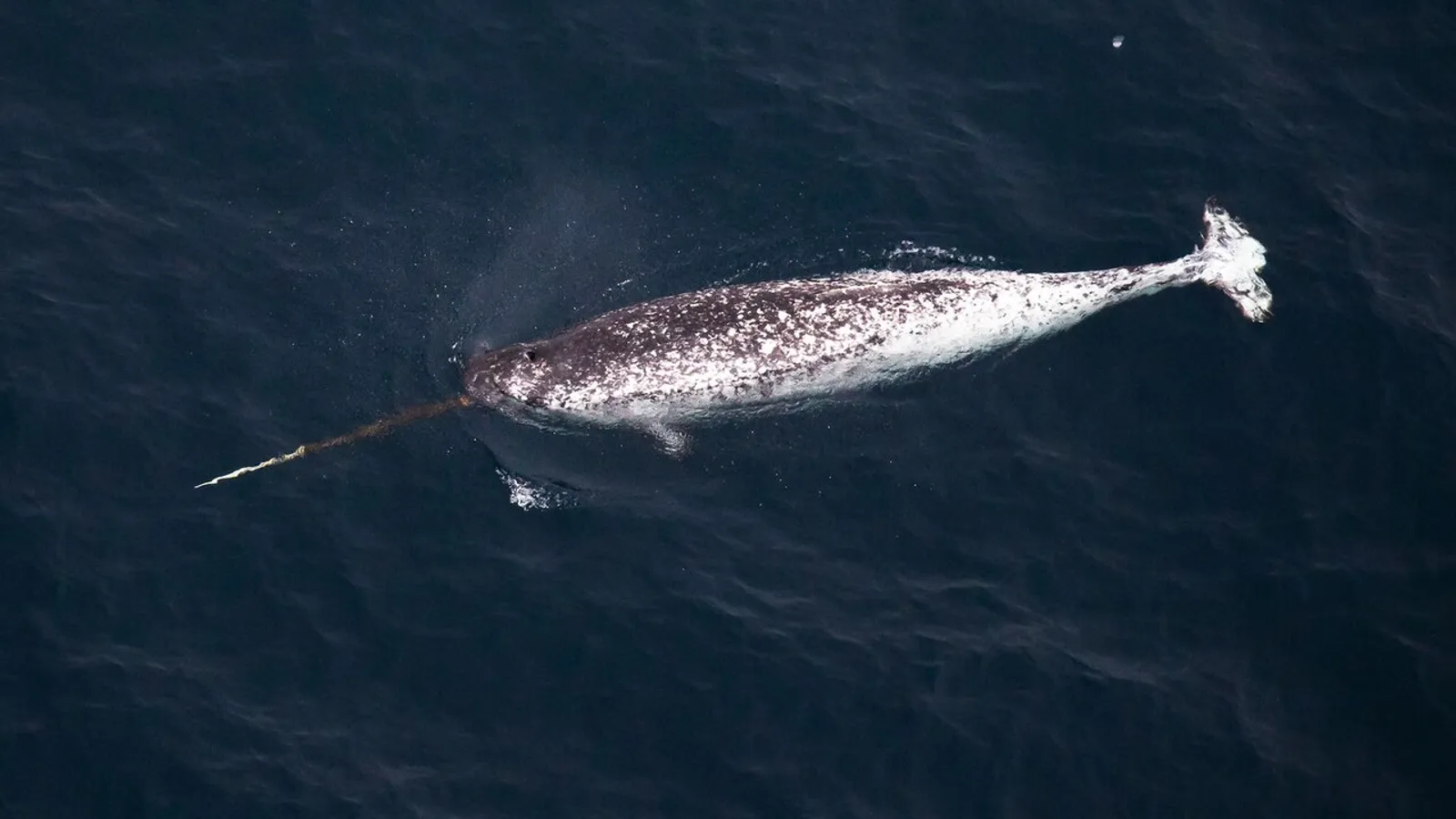
— Where the name comes from
The scientific name says the same thing twice in Greek: monódon, “one tooth”, and monókerōs, “one horn”. Narwhal comes instead from the Old Norse náhvalr, from nár, “corpse”, and hvalr, “whale”: the corpse whale, for the skin blotched grey and white that reminded the Vikings of a drowned man. An animal named three times, and never for what it is.
— Facts
- Group
- Mammals · Mammalia
- Order
- Cetaceans
- Habitat
- Deep Arctic waters, leads and polynyas in the pack ice
- Range
- The Atlantic Arctic: Greenland, eastern Canada, Svalbard, northern Russia
- Size
- 400–500 cm long excluding the tusk, 800–1,600 kg
- Diet
- Carnivore — halibut, polar cod, squid
- Lifespan
- 50 years, with individuals past 100
— Characteristics
- 01
The tusk is a left canine that pierces the lip and grows straight out to three metres.
- 02
It dives past 1,500 metres as often as twenty times a day, among the deepest dives of any cetacean.
- 03
It has no dorsal fin: in its place a low ridge, which lets it surface beneath the ice.
— What sets it apart
For centuries that tusk was sold in Europe as a unicorn’s horn, worth its weight in gold: Elizabeth I received one valued at the price of a castle, and it appears in court treasuries as a universal antidote to poison. The trade was held by Danish and Norwegian merchants, who knew the animal perfectly well and took good care not to say so. The unicorn myth survived into the Renaissance not in spite of zoology, but thanks to a supply chain with every interest in keeping it standing.
