
Beluga whale
Delphinapterus leucas
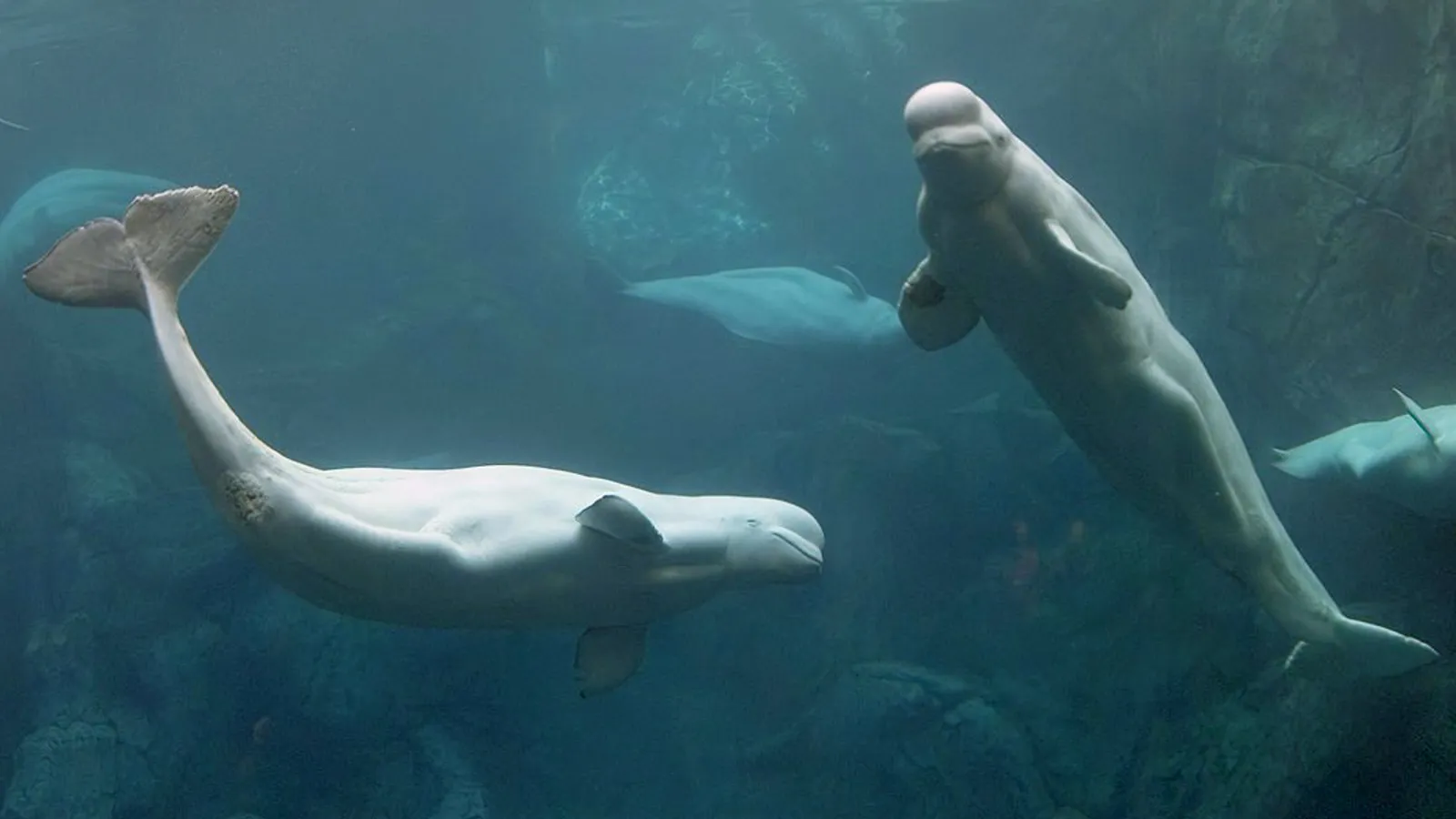
— Where the name comes from
Delphinapterus is Greek and Latin and means “dolphin without a fin”, for the missing dorsal; leucas comes from leukós, “white”. Beluga is Russian instead, from belyj, “white”, with an affectionate suffix: the little white one. The same word also names the Caspian sturgeon, and the two species have nothing in common but a pale colour and an ancient trade.
— Facts
- Group
- Mammals · Mammalia
- Order
- Cetaceans
- Habitat
- Arctic and sub-Arctic coastal waters, estuaries, leads in the pack ice
- Range
- The circumpolar Arctic: Alaska, Canada, Greenland, Svalbard, Russia; an isolated population in the St Lawrence
- Size
- 350–450 cm long, 700–1,600 kg
- Diet
- Carnivore — fish, squid, bottom-living crustaceans
- Lifespan
- 35–50 years
— Characteristics
- 01
Its neck vertebrae are not fused: it is the only cetacean that can turn its head sideways.
- 02
It reshapes the melon on its forehead, the lens of fat that focuses its ultrasound, by working it with muscle.
- 03
It is born dark grey and turns white only at five to eight years old.
— What sets it apart
The whalers called it the sea canary, and heard it singing through the wooden hull: whistles, chirps, bells, sounds that seem like speech. In 1984, at a naval base in California, a beluga named NOC began producing sounds with the cadence and frequency of a human voice — a diver climbed out of the tank convinced somebody had shouted at him to get out. The animal had altered the pressure in its own nasal cavities until it imitated a sound spectrum its body is not built to produce.
