
Harbour porpoise
Phocoena phocoena
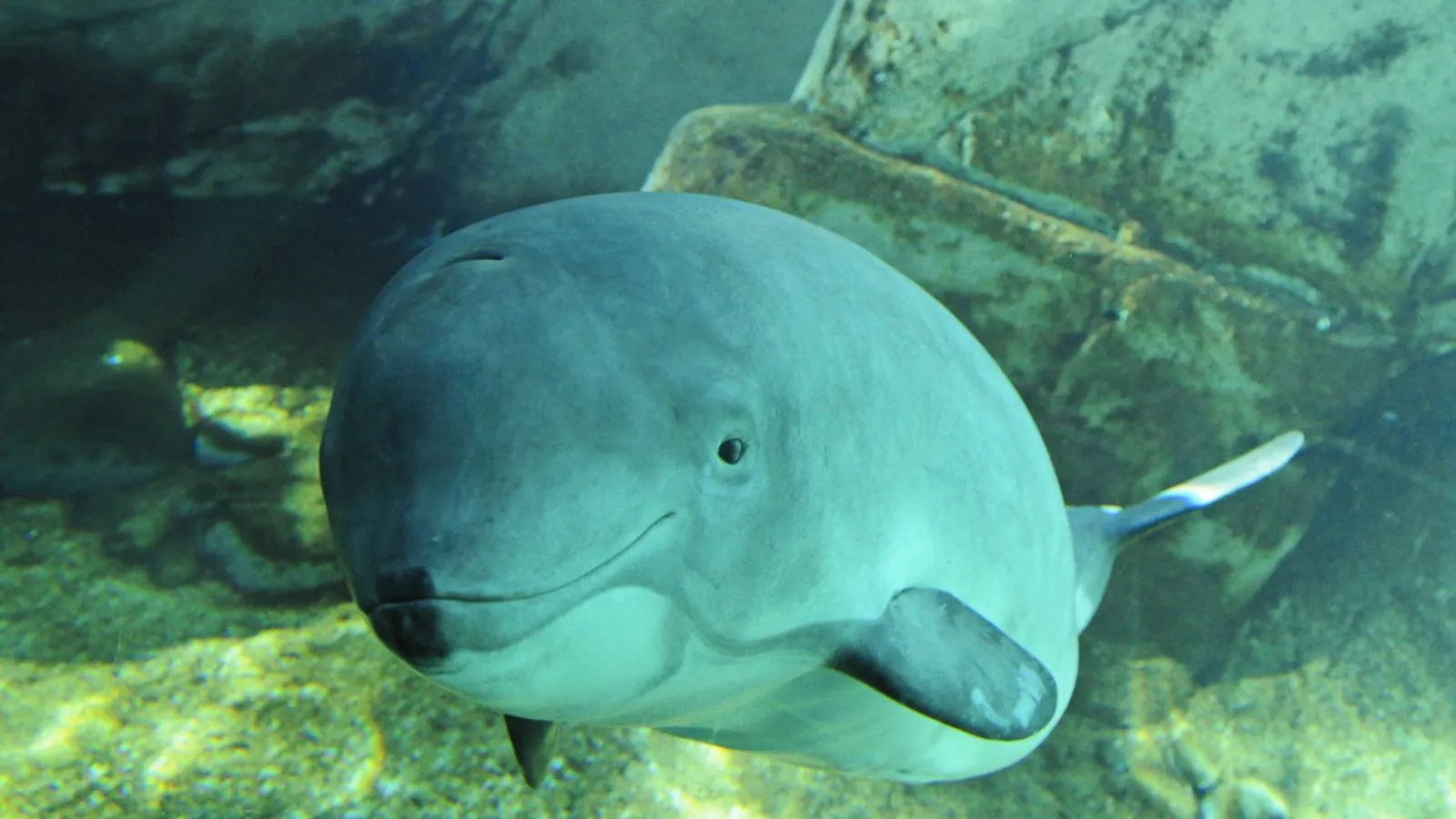
— Where the name comes from
Phocoena is the latinisation of the Greek phṓkaina, from phṓkē, “seal”: to the ancients it was a small seal, not a relative of the dolphin. The English porpoise tells of yet another way of seeing it — it comes from the Latin porcus piscis, “pig fish”, for the blunt, beakless snout. Three languages, three wrong animals: seal, pig, fish.
— Facts
- Group
- Mammals · Mammalia
- Order
- Cetaceans
- Habitat
- Shallow coastal waters, bays, estuaries, shelf seas
- Range
- The northern hemisphere: the North Atlantic and North Pacific, the Black Sea, the North Sea, the Baltic
- Size
- 140–190 cm long, 45–70 kg
- Diet
- Carnivore — herring, sprat, whiting, bottom-living cod family
- Lifespan
- 12–20 years
— Characteristics
- 01
It is the smallest cetacean of European seas and has spade-shaped teeth, not conical like a dolphin’s.
- 02
It cannot afford to fast: it must eat almost every hour, day and night.
- 03
It gives out up to a thousand clicks a second, at a frequency around 130 kHz, far above human hearing.
— What sets it apart
That very high frequency is not a technical detail but a forced choice of survival. Killer whales, which prey on porpoises, hear well up to about 100 kHz: by calling above that threshold the porpoise lights its world with sonar while staying silent to its predator’s ear. It is a band of silence cut out of the noise of the sea, and several small cetaceans have arrived at it by independent evolutionary routes. Discretion, here, is a frequency.
