
Gila monster
Heloderma suspectum
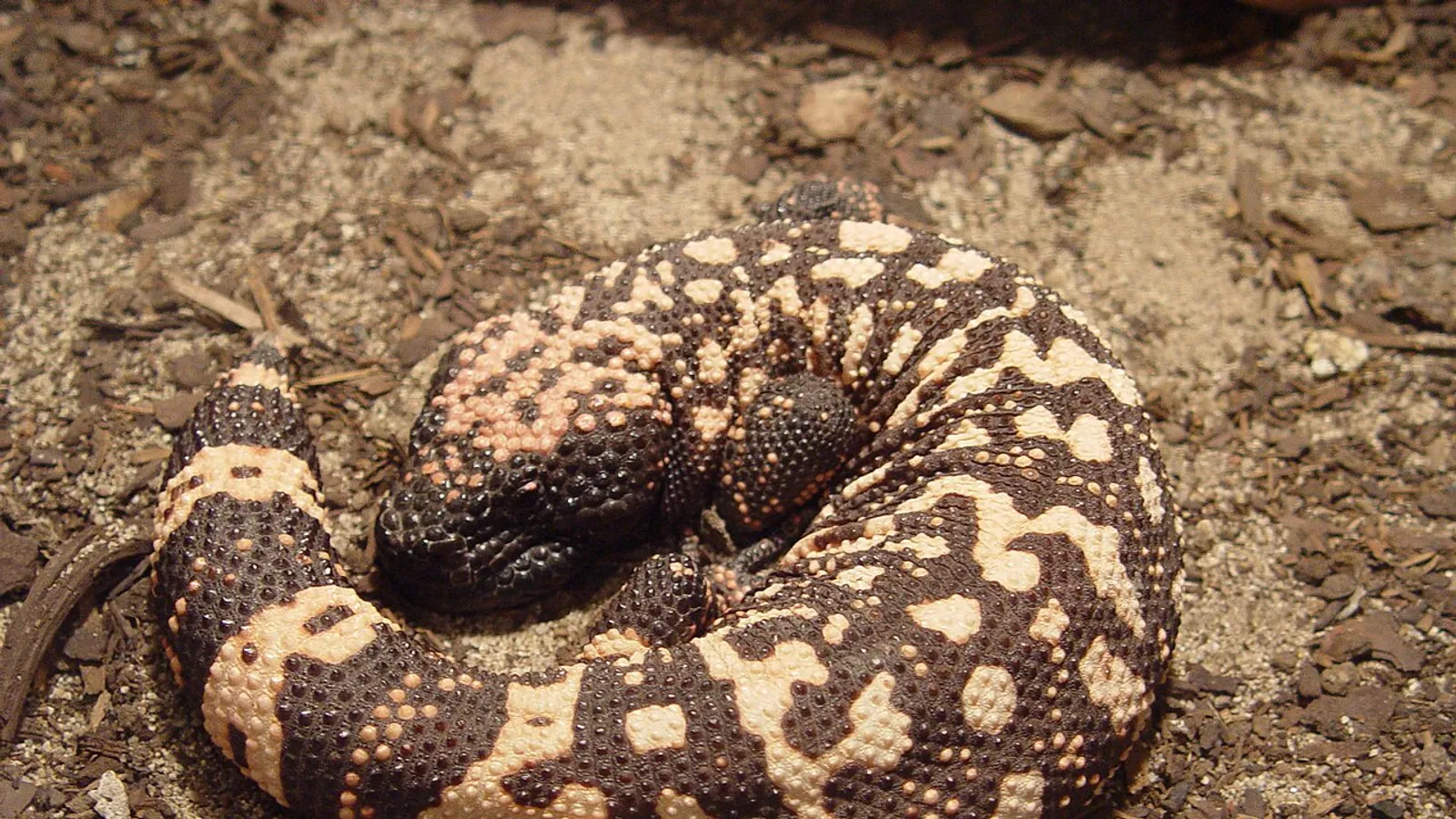
— Where the name comes from
Heloderma is Greek for “studded skin”, from hḗlos, nail, and dérma, skin: the hide is set with bead-like bones. Suspectum, Latin, “suspected”: the man who described it suspected, rightly, that it was venomous. The common name comes from the Gila river, in Arizona. It is one of the very few venomous lizards in the world.
— Facts
- Group
- Reptiles · Reptilia
- Order
- Squamates
- Habitat
- Desert, arid scrub, rocky slopes
- Range
- The south-western United States and north-western Mexico
- Size
- 30–60 cm, up to 2 kg
- Diet
- Carnivore — eggs, nestlings, small mammals
- Lifespan
- 20–30 years
— Characteristics
- 01
It is one of only two venomous lizards native to the Americas.
- 02
It injects venom by chewing, not in a quick strike: it hangs on and will not let go.
- 03
It stores fat in its stubby tail to survive long fasts.
— What sets it apart
Out of the Gila monster’s venom came a drug that millions of people now take: it contains a substance that regulates blood sugar, from which a class of medicines against diabetes and obesity has been derived. The lizard spends over ninety per cent of its life underground in its burrow, and eats only a few times a year, gorging: that molecule served it to handle huge, infrequent meals. A desert reptile has ended up teaching medicine how to tame human hunger.
