
Mexican free-tailed bat
Tadarida brasiliensis
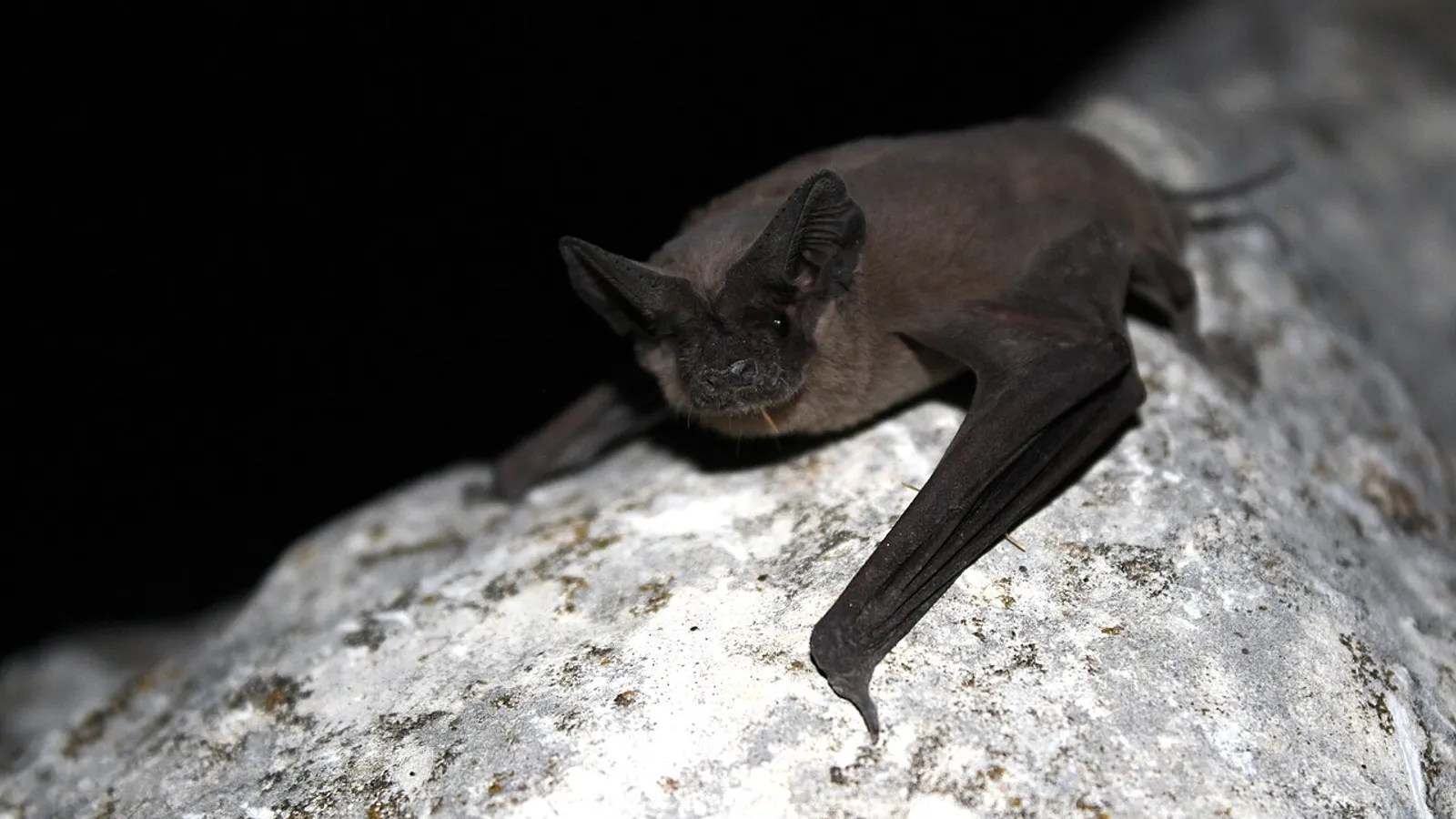
— Where the name comes from
Tadarida is a word Rafinesque invented in 1814 without explaining it, and nobody has ever managed to reconstruct its meaning: it is one of the rare genus names that mean nothing in any language. Brasiliensis names Brazil, where the species was described, though it is famous above all for its Texan colonies. “Molosso” is the family name and comes from the dog of the Molossians, the mastiff of Epirus, for the flattened face and hanging lips.
— Facts
- Group
- Mammals · Mammalia
- Order
- Bats
- Habitat
- Caves, bridges, attics; hunting very high, above cropland
- Range
- From the southern United States to Argentina and Chile
- Size
- 9 cm of body, 30 cm wingspan, 11–14 g
- Diet
- Insectivore — noctuid moths, in particular crop pests
- Lifespan
- 8 years on average, up to 18
— Characteristics
- 01
The colony at Bracken Cave, in Texas, reaches twenty million animals.
- 02
It climbs above three thousand metres to intercept high-altitude air currents.
- 03
It is the fastest animal in the world in level flight: over 160 km/h.
— What sets it apart
It jams rivals’ sonar on purpose. When another free-tailed bat is about to close on a moth, this species emits a specific ultrasonic signal that overlaps the final phase of its rival’s call and wrecks the distance calculation: the capture rate collapses, and the moth escapes. It is the first documented case of deliberate acoustic interference between animals, the biological equivalent of radar jamming, and it happens dozens of times a minute over the fields of Texas.
