
European free-tailed bat
Tadarida teniotis
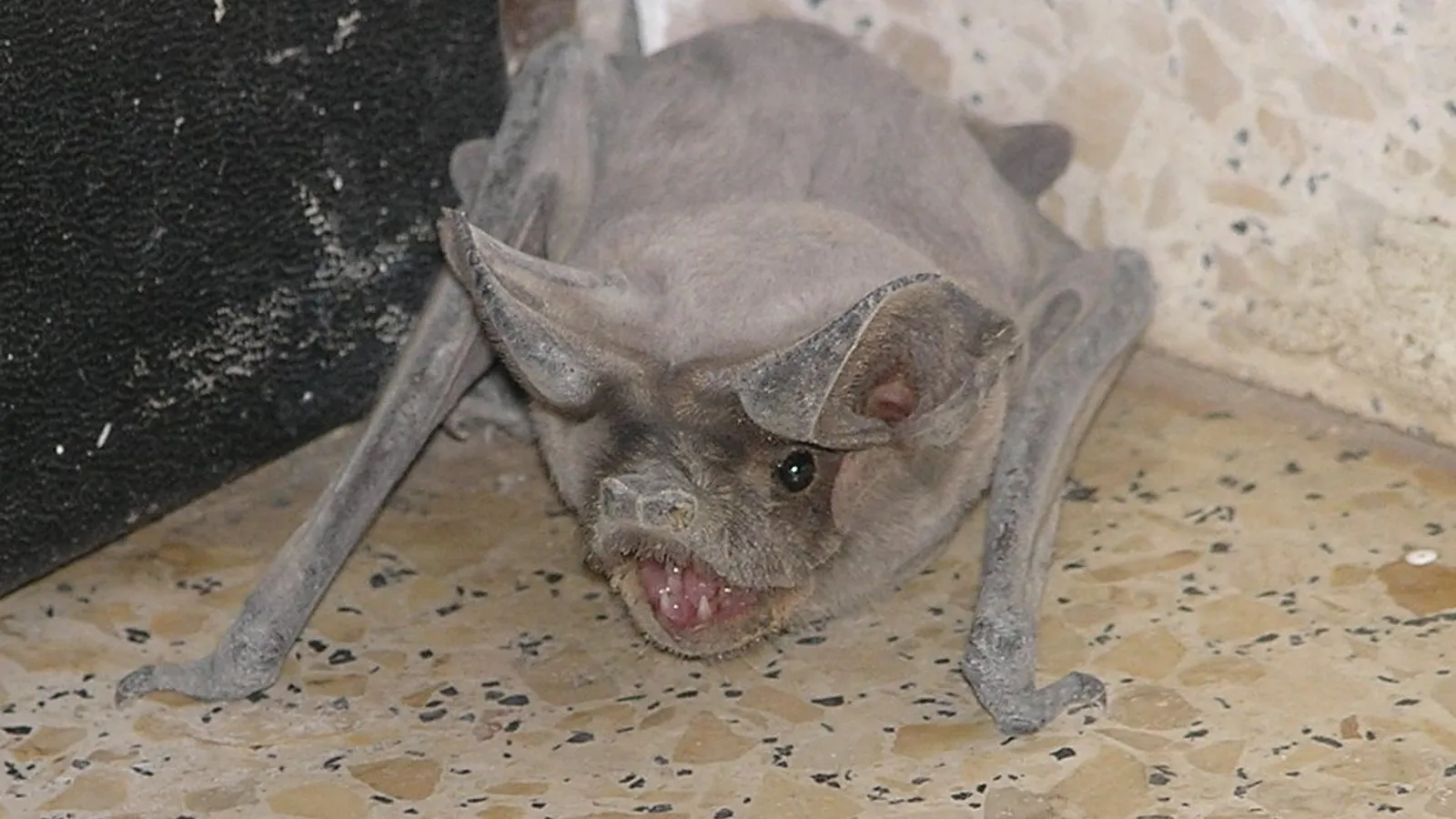
— Where the name comes from
Teniotis is “ribbon-eared”, from the Greek tainía, “band, fillet”, and oûs: the ears are large, rounded and joined at the base by a fold of skin that makes them look like a ribbon stretched across the forehead. The Italian common name recalls Giacinto Cestoni, the 17th-century naturalist from the Marche who, with Diacinto Cestoni, first understood that scabies is caused by a mite.
— Facts
- Group
- Mammals · Mammalia
- Order
- Bats
- Habitat
- Crevices in cliffs and large buildings; hunting in open sky, very high
- Range
- The Mediterranean basin, southern Asia as far as China and Japan
- Size
- 8–9 cm of body, 40 cm wingspan, 25–50 g
- Diet
- Insectivore — moths and other insects taken above 300 metres
- Lifespan
- Little known; at least 10 years
— Characteristics
- 01
It is the largest European bat by wingspan.
- 02
Its call is at so low a frequency as to be audible to the naked ear.
- 03
It roosts in cliff crevices and in the expansion joints of Mediterranean city buildings.
— What sets it apart
It is one of the very few European bats that can be heard without equipment. Its search call sits around 11–12 kHz, inside the band a young human ear can hear, and on summer evenings in Mediterranean cities it is that metallic “tick” coming from above that almost nobody connects to an animal. It hunts at hundreds of metres, where insects are carried on the currents: which is why it is heard and almost never seen.
