
Large-eared free-tailed bat
Otomops martiensseni
— Where the name comes from
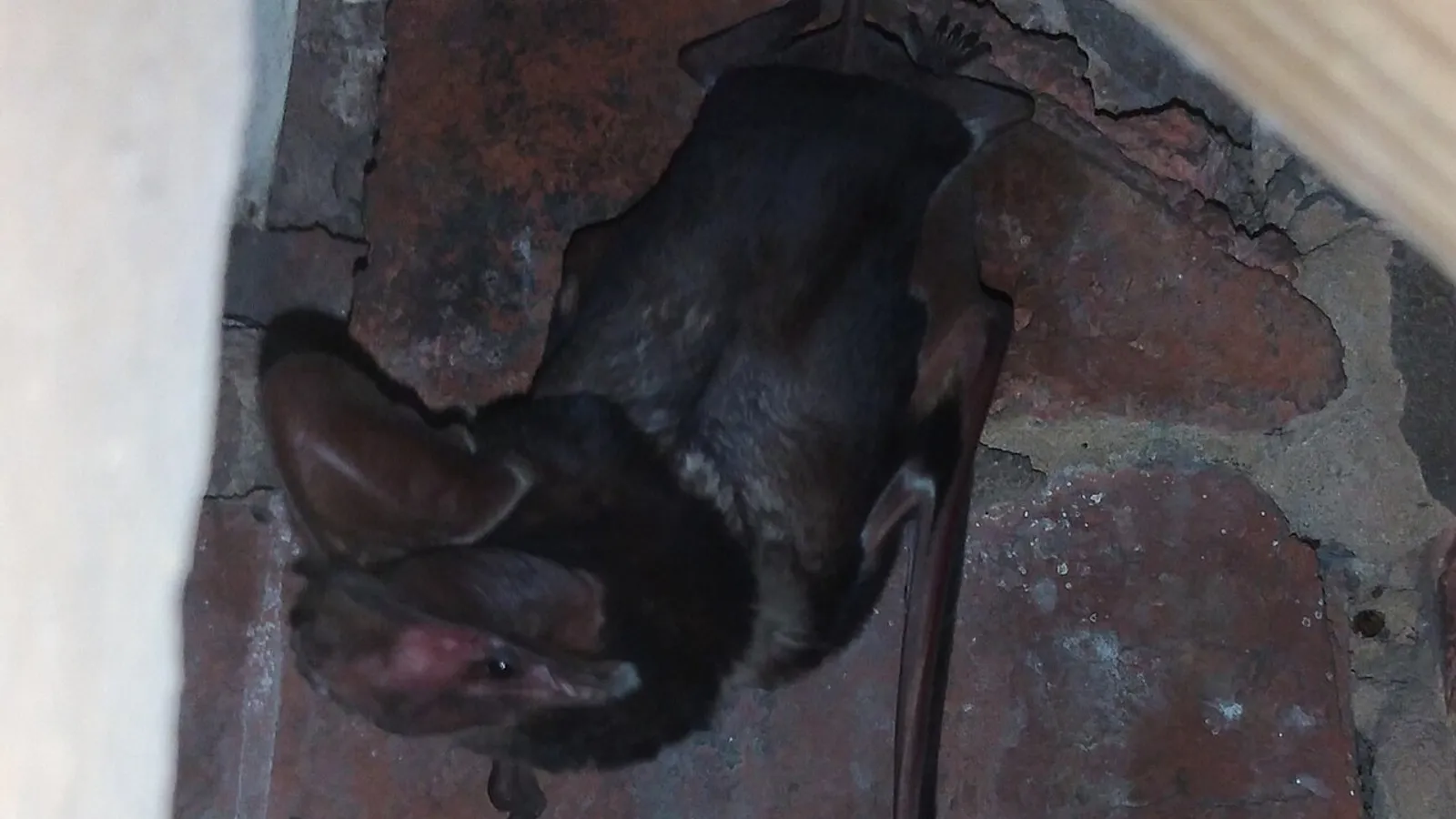
Otomops is “ear face”, from the Greek oûs, ōtós, and óps: the ears are enormous, fused together above the forehead and projected forward to form almost a visor covering half the muzzle. Martiensseni recalls a German collector active in East Africa in the early 20th century, of whom little is known beyond the name this animal carries.
— Facts
- Group
- Mammals · Mammalia
- Order
- Bats
- Habitat
- Crevices in cliffs and caves in mountain country; hunting in open sky
- Range
- Eastern and southern Africa, in very scattered populations
- Size
- 9–11 cm of body, 45 cm wingspan, 25–35 g
- Diet
- Insectivore — moths and beetles taken in high flight
- Lifespan
- Little known
— Characteristics
- 01
The joined ears form a visor that juts out beyond the tip of the muzzle.
- 02
It has very long, very narrow wings: it is built for speed, not for manoeuvring.
- 03
Known colonies are very few, and a single one in Kenya holds tens of thousands.
— What sets it apart
Almost everything we know of this species comes from one cave. The colony at Ithundu, in Kenya, holds the great majority of the individuals known in the world, and for decades was the only place to study it; the rest of the range consists of isolated records, often a single animal found dead. It is a situation that leaves the species extremely fragile for purely geographical reasons: one event at a single site could erase the documented part of the world population.
