
Giant African millipede
Archispirostreptus gigas
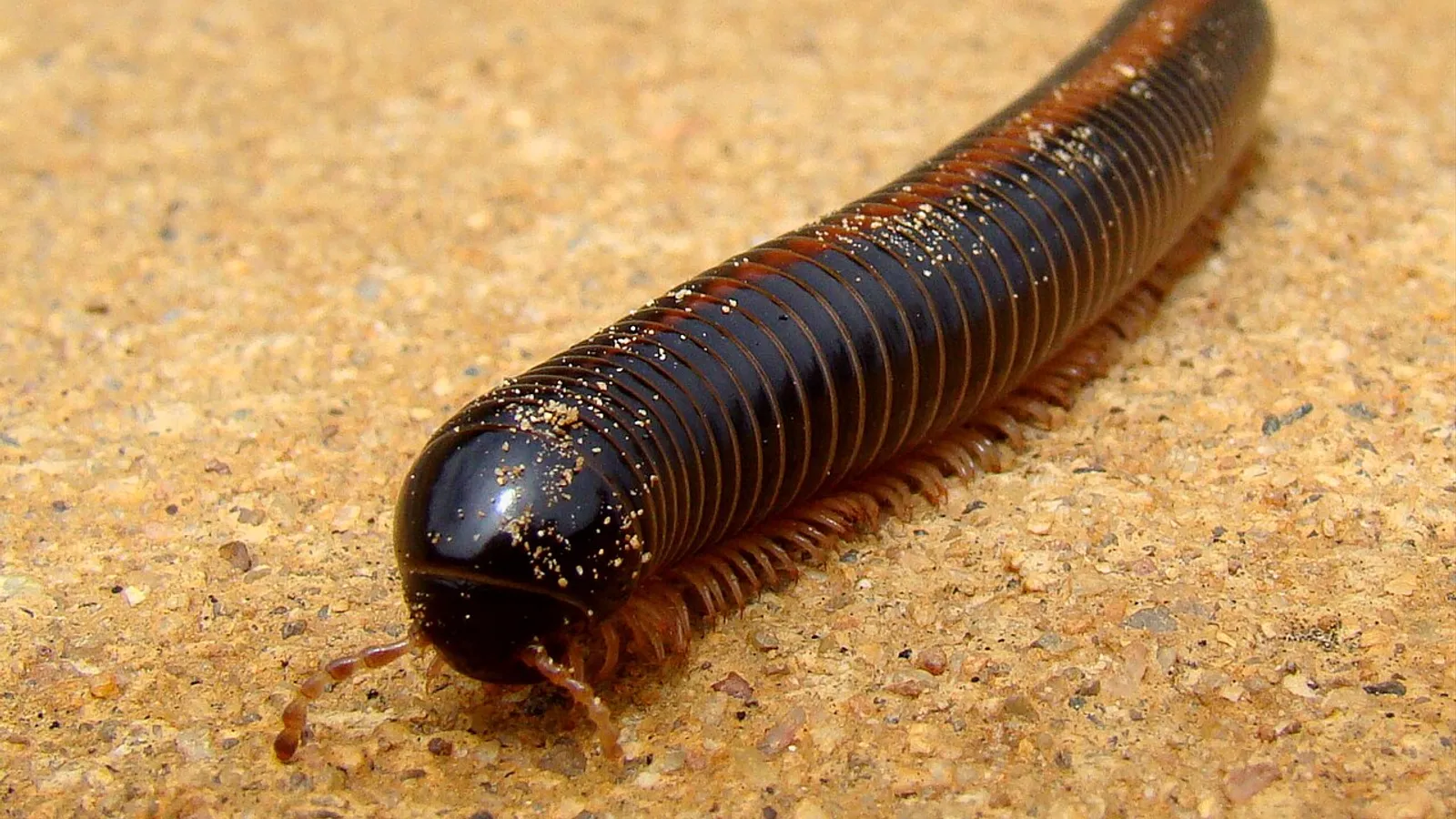
— Where the name comes from
The name assembles three Greek words: archi-, “first, founding”, speîra, the spiral, and streptós, “twisted”. It is therefore “the ancient one coiled in a spiral”, and describes the posture the animal takes when disturbed, rolling up with its head at the centre. The name of the millipede order, Diplopoda, says instead “double feet”: they have two pairs of legs per segment, not one.
— Facts
- Group
- Myriapods · Myriapoda
- Order
- Giant millipedes
- Habitat
- Leaf litter and rotting wood of forest and savannah
- Range
- East Africa, from Mozambique to Kenya
- Size
- Up to 33 cm
- Diet
- Dead leaves and decaying wood
- Lifespan
- 7–10 years
— Characteristics
- 01
It has around 256 legs, two pairs for every body segment.
- 02
It does not bite and has no venom: it coils up and secretes a fluid.
- 03
It carries mites in its body folds that clean it and travel with it.
— What sets it apart
No millipede has a thousand legs, and the word was a promise the group kept only in 2021, when an Australian mining borehole turned up Eumillipes persephone, an animal as thin as a thread with 1,306 legs: the first true millipede in history. This African species, among the largest in the world, stops at a little over 250. As for defence, it does not bite: it secretes from its flanks a fluid containing quinones and sometimes traces of cyanide, enough to deter a predator and to stain the fingers of anyone who picks it up for days.
