
Striped millipede
Ommatoiulus sabulosus
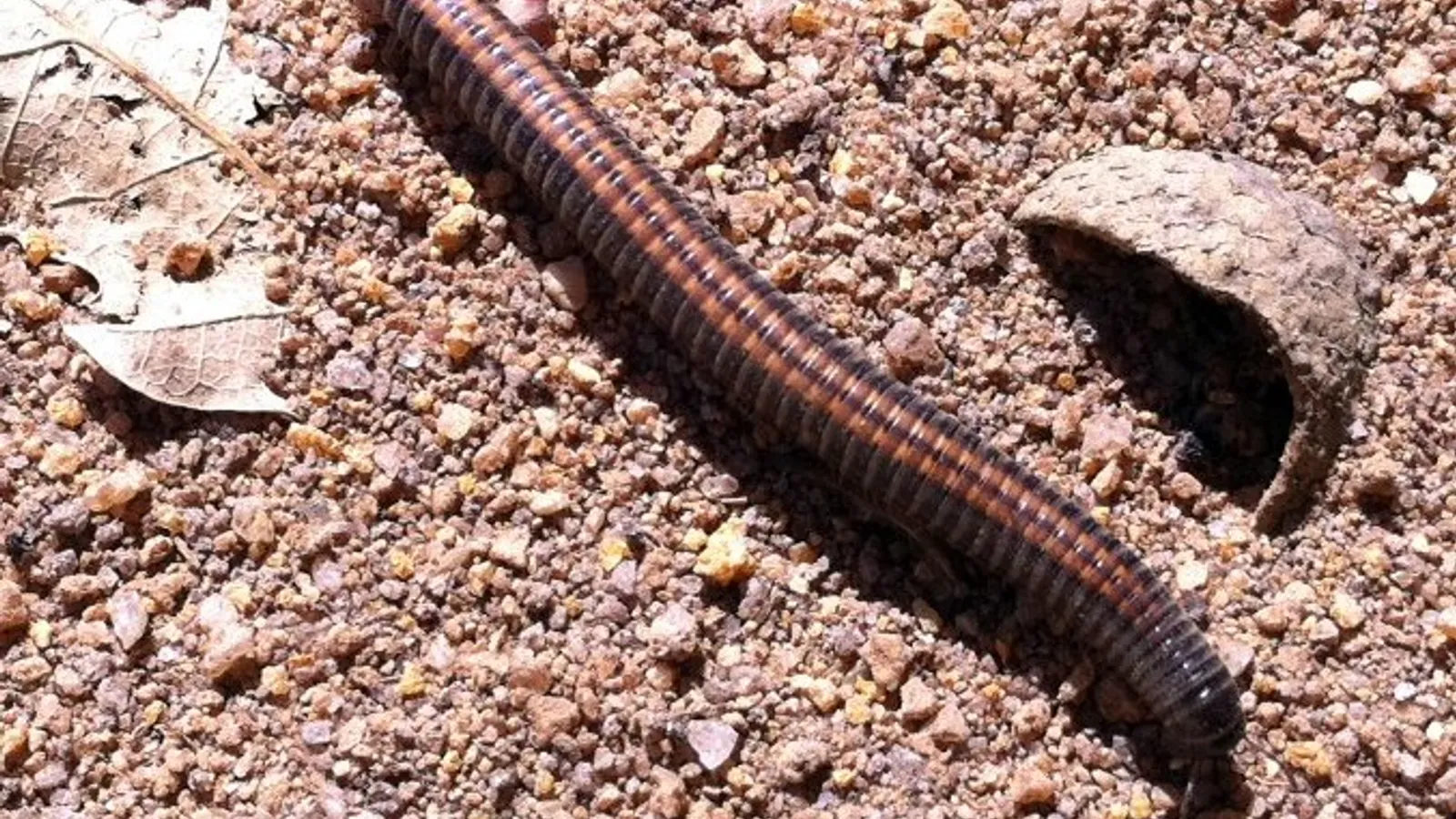
— Where the name comes from
Ioulos, inside the genus name, meant two things in Greek: the down of a first beard, and the millipede. The link is the dense regular row — of hairs or of legs — that moves all together, and the same word names the julids, the order these animals belong to. Sabulosus is Latin, “of the sand”, for the dry places where it is found.
— Facts
- Group
- Myriapods · Myriapoda
- Order
- Cylinder millipedes
- Habitat
- Sandy soils, heaths, dunes, dry clearings
- Range
- Western and northern Europe
- Size
- 20–30 mm
- Diet
- Dead leaves and decaying plant matter
- Lifespan
- 2–3 years
— Characteristics
- 01
Two orange stripes along the back make it recognisable at a glance.
- 02
It walks with a wave of legs running from tail to head.
- 03
It sometimes appears in mass migrations, thousands together.
— What sets it apart
The way it walks is a coordination problem no four-legged animal has to face. The legs do not move at random: they start from behind and lift in sequence, generating a visible wave that travels up the body — each leg starting a fraction of an instant after the one before, so the push is continuous rather than jerky. It is the best way to force through leaf litter pushing with the whole body, and it is why millipedes burrow as they advance while centipedes, which are predators and run, have long legs and few of them.
