
Common earthworm
Lumbricus terrestris
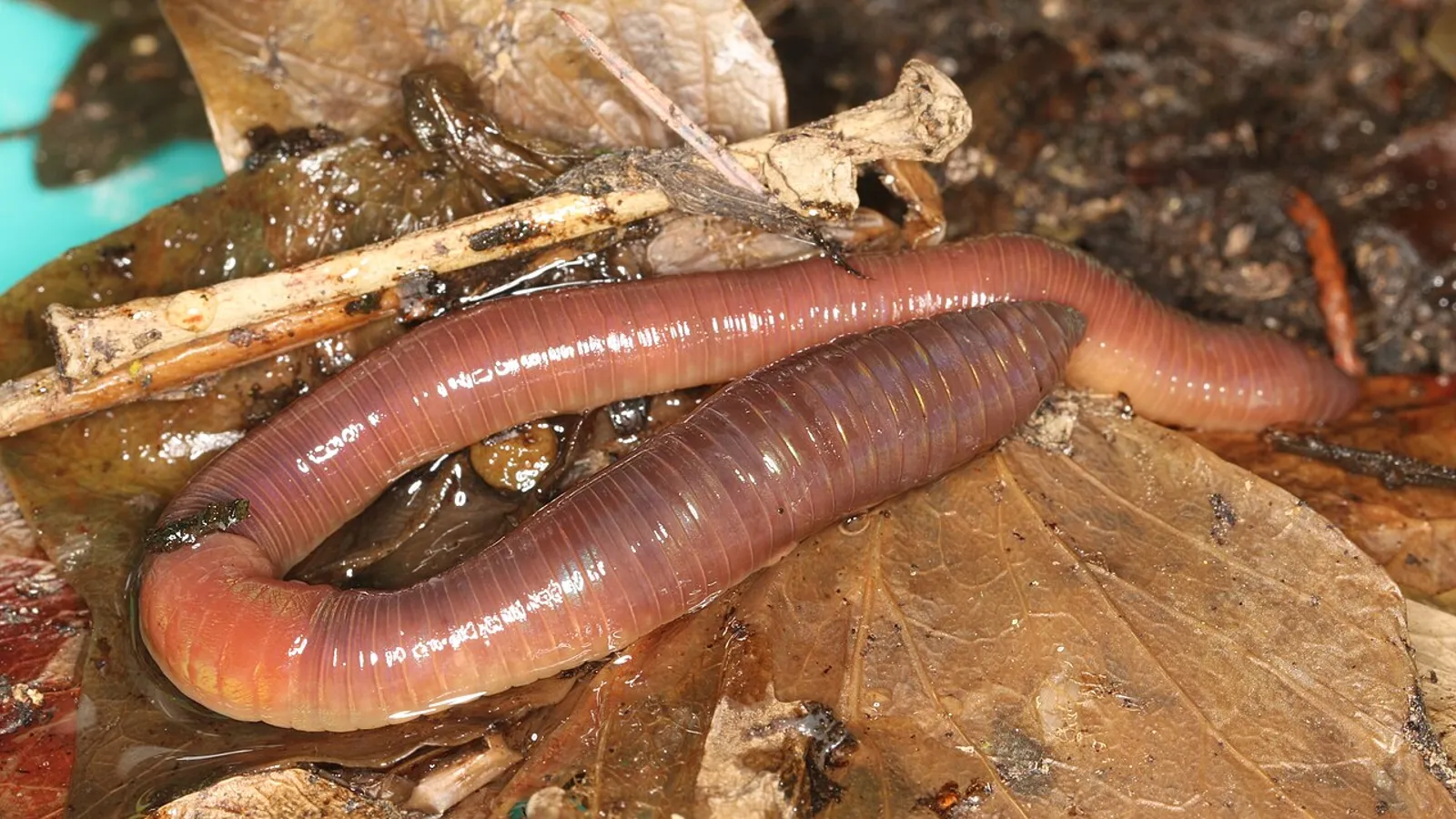
— Where the name comes from
Lumbricus is the Latin name for the worm, and from it comes the Italian lombrico. The same word ended up in anatomy: the four small muscles of the palm are called lumbricals because they looked like worms to whoever described them, and every medical student learns this animal’s name without knowing it. Terrestris says the rest.
— Facts
- Group
- Annelids · Annelida
- Order
- Earthworms
- Habitat
- Deep moist soils of meadows, woods and farmland
- Range
- European in origin; introduced across the temperate world
- Size
- 9–30 cm
- Diet
- Dead leaves and organic matter in the soil
- Lifespan
- 4–8 years
— Characteristics
- 01
It digs vertical burrows as much as two metres deep.
- 02
It has no eyes but light-sensitive cells scattered over the skin.
- 03
It is hermaphrodite: two individuals exchange sperm, mating at the surface.
— What sets it apart
Darwin’s last book, published in 1881 six months before he died, is devoted entirely to this animal. He had worked on it for forty years, measuring how much earth worms bring to the surface: he calculated that they shift tens of tonnes a year per hectare, and that the whole layer of England’s topsoil had already passed several times through their guts. He also observed that they pull leaves into their burrows by the tip, that is, by the end offering least resistance, and concluded that they possess some form of judgement. The book outsold the Origin of Species in its first years.
