
Red wiggler worm
Eisenia fetida
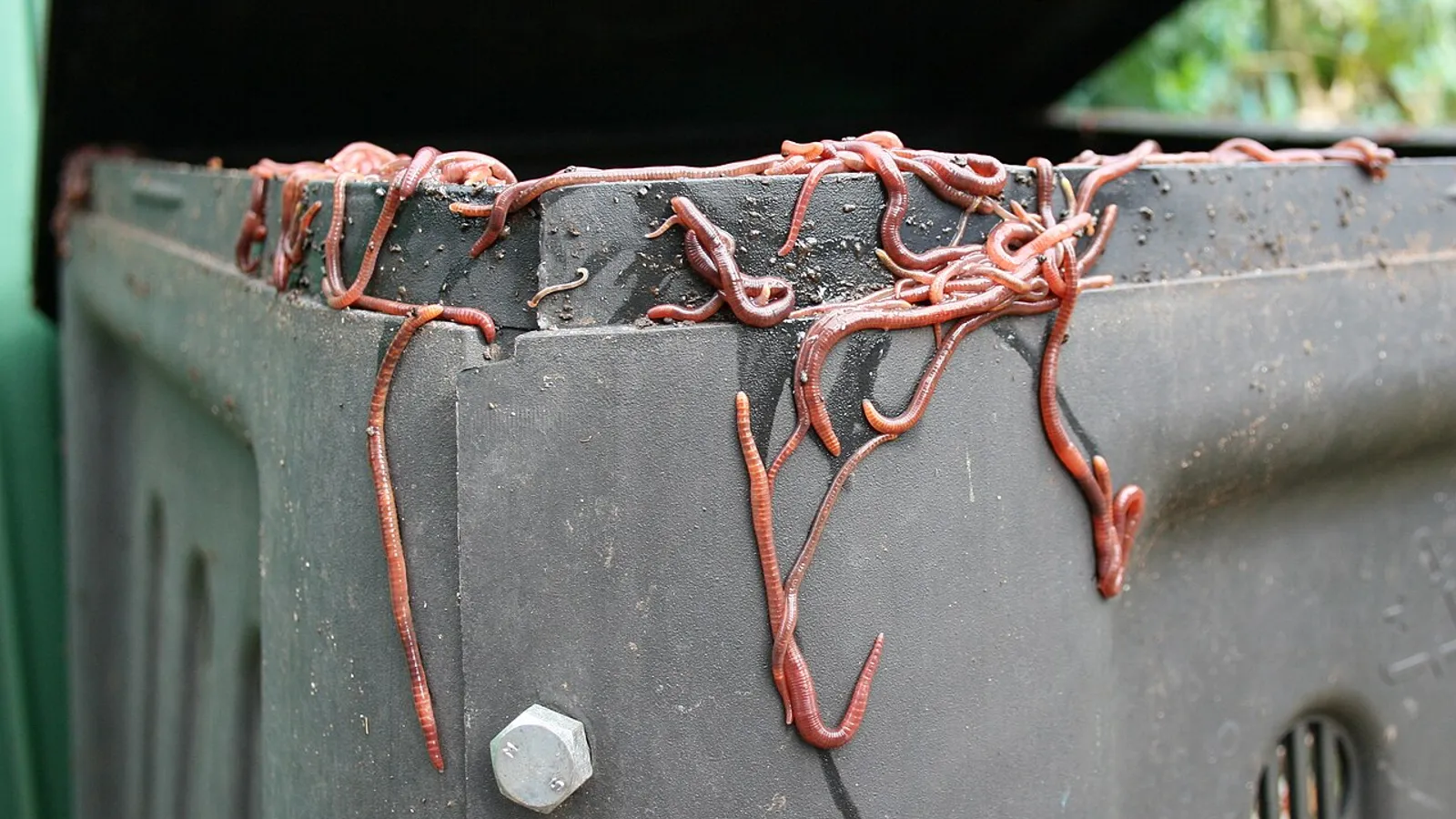
— Where the name comes from
Fetida means stinking, and it refers not to the manure it lives in but to the animal itself: handled too roughly it secretes from the pores of its back a yellowish fluid with an acrid smell, whose purpose is to make whoever has just picked it up spit it out. The genus remembers the Swedish-American naturalist Gustav Eisen. It is the worm of the compost bin, and no other earthworm resembles it in its trade.
— Facts
- Group
- Annelids · Annelida
- Order
- Earthworms
- Habitat
- Manure, compost, heaps of decaying leaves
- Range
- European in origin; today worldwide through vermiculture
- Size
- 5–10 cm
- Diet
- Decaying organic waste
- Lifespan
- 2–4 years
— Characteristics
- 01
It does not dig burrows: it lives in the surface layer of decaying matter.
- 02
It eats its own weight in waste every day.
- 03
Its numbers double within weeks given food and moisture.
— What sets it apart
It is the animal on which domestic composting rests. Unlike the common earthworm it neither digs nor lives in soil: it stays inside the decaying material, passes through it eating, and returns it as humus, and in a well-established bin a population turns a family’s kitchen waste in a matter of weeks. It is also one of the standard invertebrates of soil toxicology: international protocols prescribe measuring the effect of pesticides and contaminants on this species, because its cycle is short and its skin absorbs everything around it.
