
European medicinal leech
Hirudo medicinalis
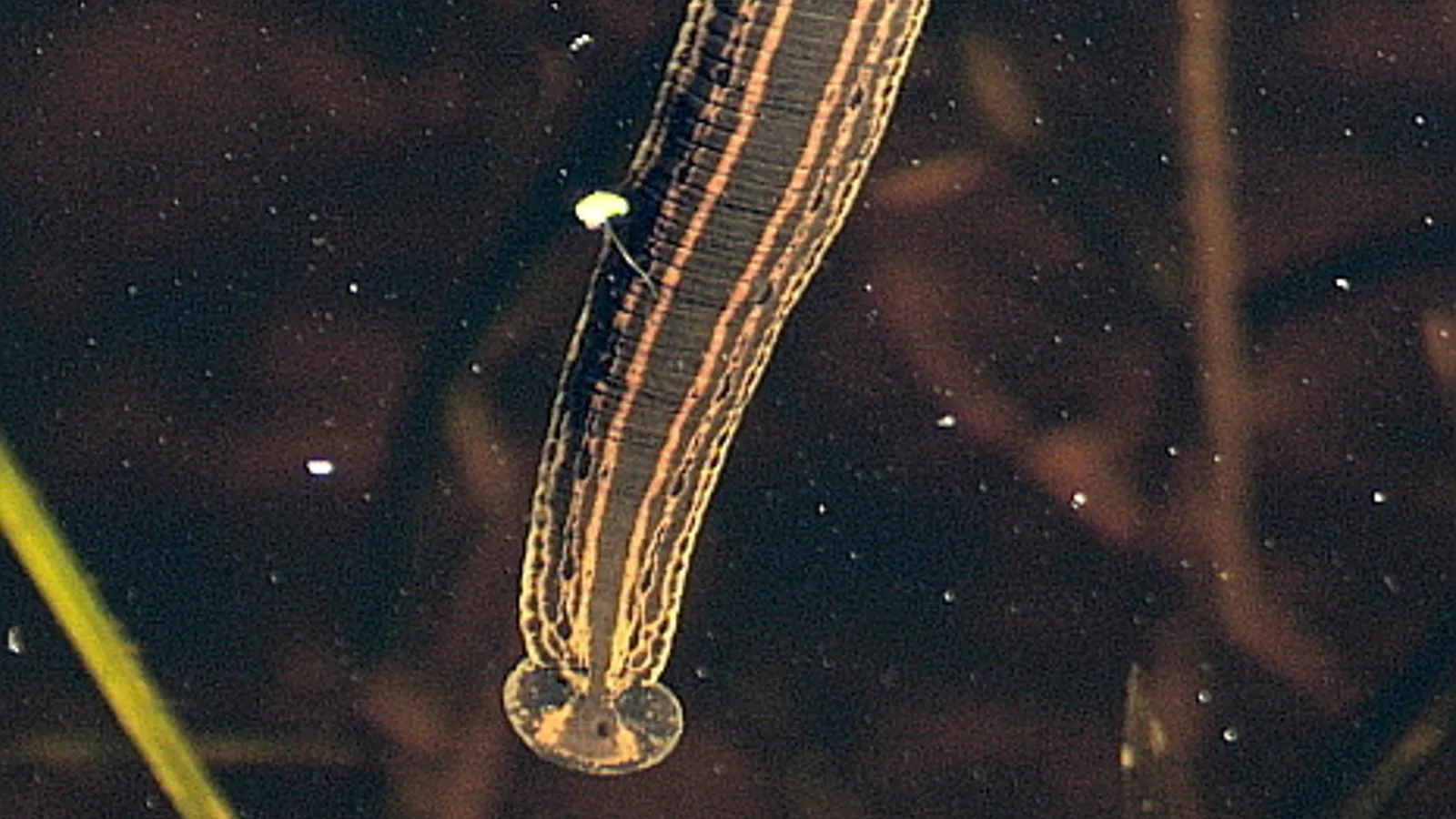
— Where the name comes from
Hirudo is the Latin name for the leech, and from the word comes hirudin, the anticoagulant it injects, isolated in 1884. The Italian sanguisuga is a literal description — it sucks blood — used for centuries in a figurative sense for anyone who lives off others. Medicinalis records the fact that this animal was for two thousand years a pharmacist’s instrument.
— Facts
- Group
- Annelids · Annelida
- Order
- Leeches
- Habitat
- Still fresh water with muddy bottoms
- Range
- Europe and western Asia
- Size
- 5–20 cm
- Diet
- The blood of amphibians and mammals
- Lifespan
- Up to 20 years
— Characteristics
- 01
It has three hundred teeth set on three Y-shaped jaws.
- 02
A single meal lasts it months, even a year.
- 03
Its saliva contains anaesthetic, vasodilator and anticoagulant together.
— What sets it apart
In the nineteenth century it was exploited almost to extinction: bloodletting medicine consumed millions a year — France alone imported tens of millions — and European populations never recovered, so that the species is now protected. Then it came back, and came back in earnest: reconstructive surgery uses it when a skin flap or a reattached finger congests because the veins have not yet regrown, and the leech drains the blood while its saliva keeps it flowing for hours. It is a licensed medical device, bred in dedicated laboratories.
