
Boreogadus
Boreogadus saida
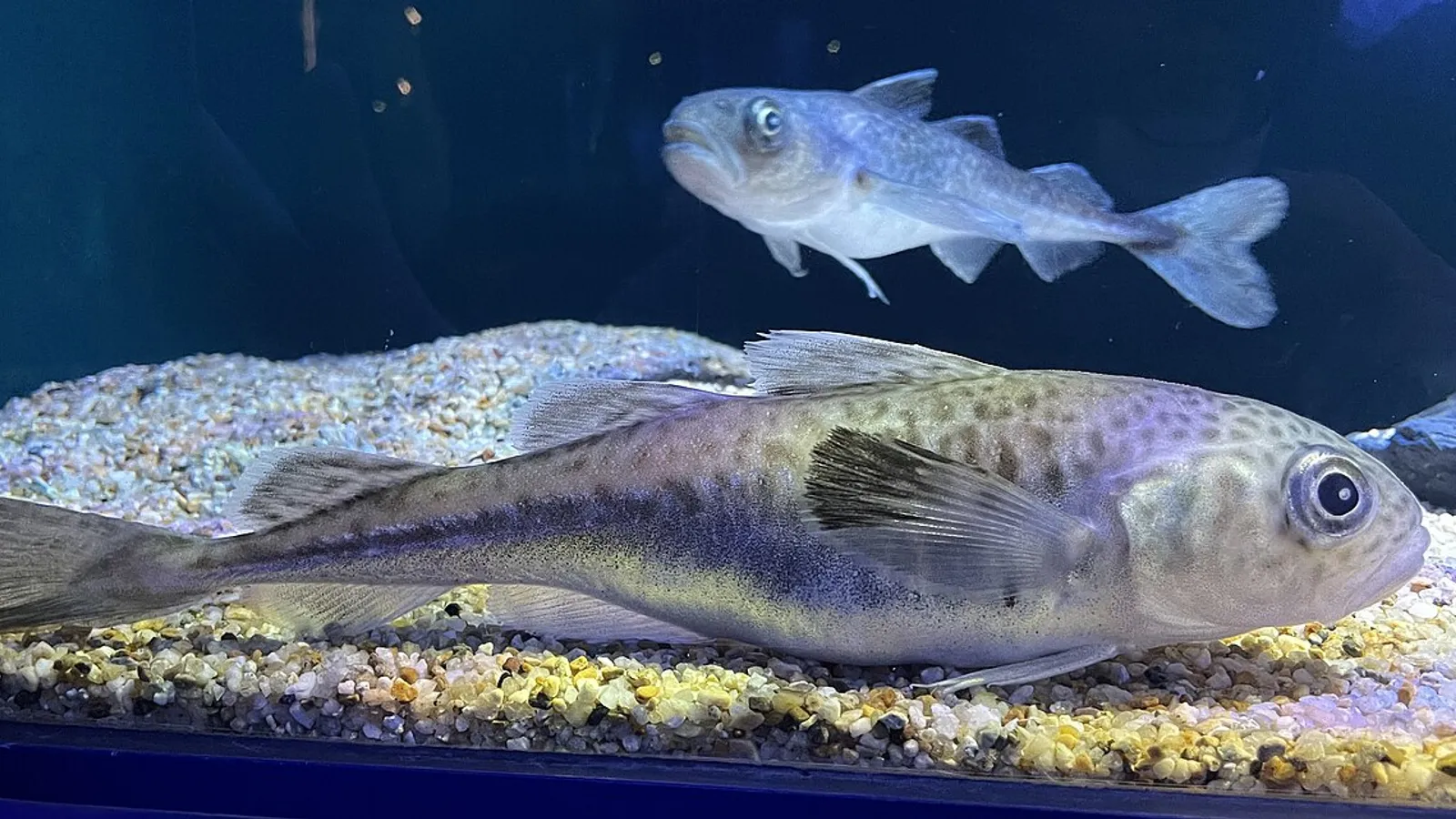
— Where the name comes from
Boreogadus is “northern cod”, from Boréas, the north wind, and gadus, the cod; saida comes from a local name in northern Russia. It is the fish that lives furthest north of all, under the Arctic ice, and it single-handedly supports much of that sea’s food chain.
— Facts
- Group
- Fish · Actinopterygii · Chondrichthyes
- Order
- Cods
- Habitat
- Arctic waters, often against the underside of the ice
- Range
- The Arctic Ocean and surrounding seas
- Size
- 15–25 cm, up to 40 cm; 50–200 g
- Diet
- Copepods, amphipods, Arctic krill
- Lifespan
- 7 years
— Characteristics
- 01
It lives below zero thanks to antifreeze proteins in its blood.
- 02
It shelters in the cavities on the underside of the pack ice.
- 03
It forms immense shoals, visible on sonar as clouds.
— What sets it apart
It is the step on which the Arctic rests. Seals, belugas, narwhals, seabirds and polar bears depend, directly or at one remove, on this small fish, which in turn eats the crustaceans of the plankton: without it the Arctic food chain has no middle link. In its blood circulate glycoproteins that bind to microscopic ice crystals and stop them growing — a biological antifreeze now studied for preserving organs for transplant and for cell culture.
