
Giant moray
Gymnothorax javanicus
— Where the name comes from
Gymnothorax is “naked chest”, from gymnós and thṓrax: the pectoral fins are entirely absent, and with them any trace of a shoulder. Javanicus names Java. It is the largest moray in the world by mass, and one of the few that will look a diver in the eye and not move.
— Facts
- Group
- Fish · Actinopterygii · Chondrichthyes
- Order
- Eels
- Habitat
- Crevices and caves of coral reefs down to 50 metres
- Range
- The tropical Indo-Pacific, from the Red Sea to Polynesia
- Size
- 150–250 cm, up to 300 cm; 20–30 kg
- Diet
- Fish, octopus, crustaceans
- Lifespan
- 30 years
— Characteristics
- 01
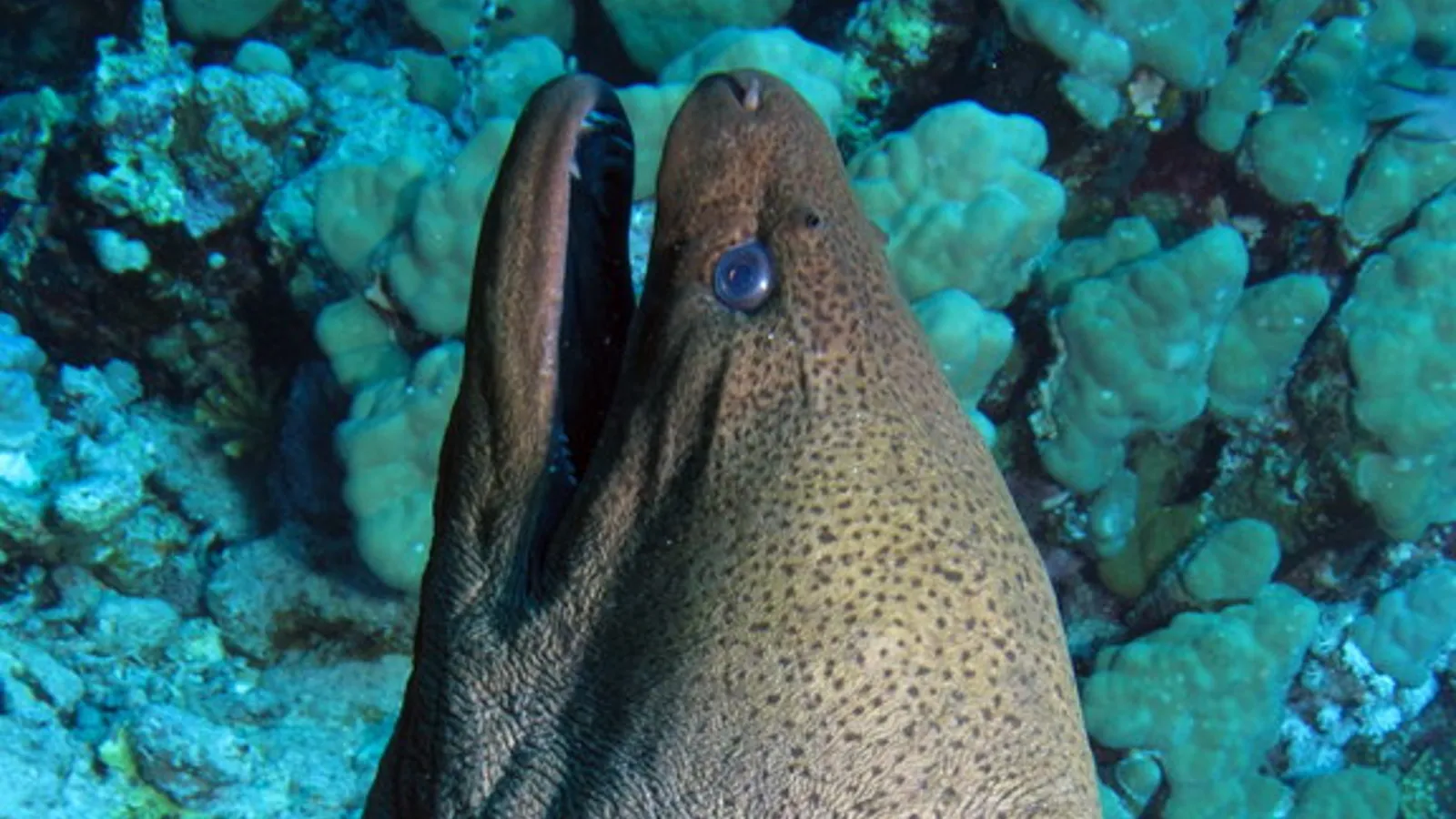
It opens and closes its mouth constantly: not a threat, but how it breathes.
- 02
Its eyesight is poor and it hunts mainly by smell.
- 03
Its flesh can contain dangerous levels of ciguatoxin.
— What sets it apart
It has two sets of jaws. In its throat, behind the visible ones, sits a second pair — the pharyngeal jaws — which in most fish serve only for grinding: in morays they instead shoot forward as far as the mouth, seize prey already bitten and drag it in. It is the answer to a particular problem: in a coral crevice there is no room to suck in water as other fish do, and so the moray, instead of drawing prey in, hauls it.
