
Common blackbird
Turdus merula
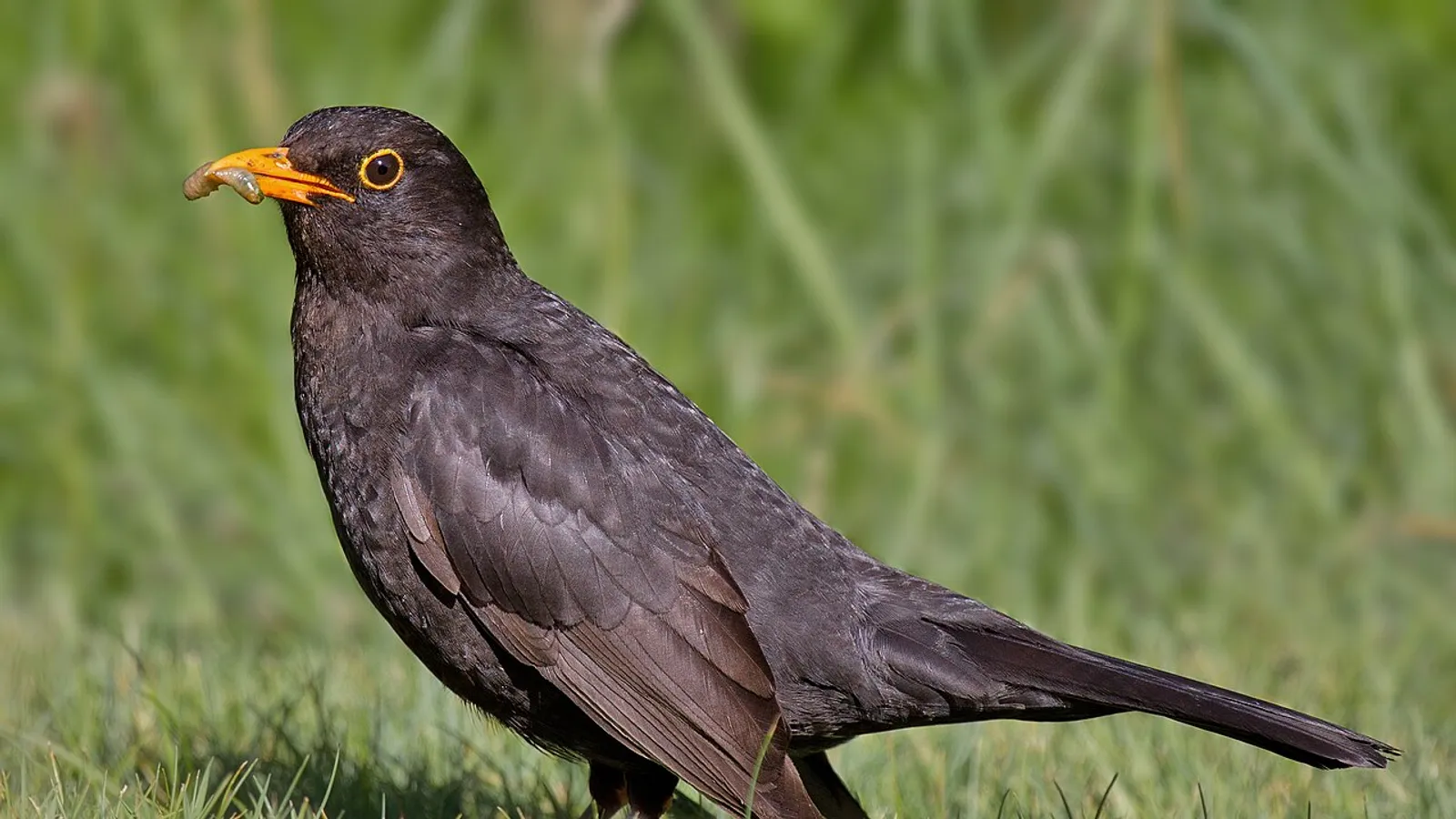
— Where the name comes from
Turdus is the thrush in Latin, merula the blackbird: the binomial says the same family twice over, because when Linnaeus wrote it the two names were still muddled synonyms. From merula come the Italian merlo, the French merle and the Spanish mirlo — and also the merlon of a battlement, which on the best etymology takes its name from the row of black birds perched along the wall.
— Facts
- Group
- Birds · Aves
- Order
- Passerines
- Habitat
- Woodland, gardens, town parks, hedgerows
- Range
- Europe, North Africa, western Asia; introduced to Australia
- Size
- 24–29 cm, wingspan 34–39 cm, 80–125 g
- Diet
- Earthworms, insects, berries, fallen fruit
- Lifespan
- 4 years in the wild, over 20 the record
— Characteristics
- 01
The male is black with an orange bill, the female brown and mottled.
- 02
It hunts earthworms with its head cocked: it listens rather than looks.
- 03
It sings from roofs and aerials from early February until July.
— What sets it apart
Until the nineteenth century it was an extremely shy woodland bird, and its conquest of the cities is documented year by year. It began in the parks of German towns around 1820 and spread west and north like a slow wave. Today’s urban blackbirds are measurably different from woodland ones: they let you come closer, they migrate less, they sing at a higher pitch to clear the traffic and they start before dawn, while the city is still quiet. It is one of the few animal urbanisations whose starting date we know.
