
Great tit
Parus major
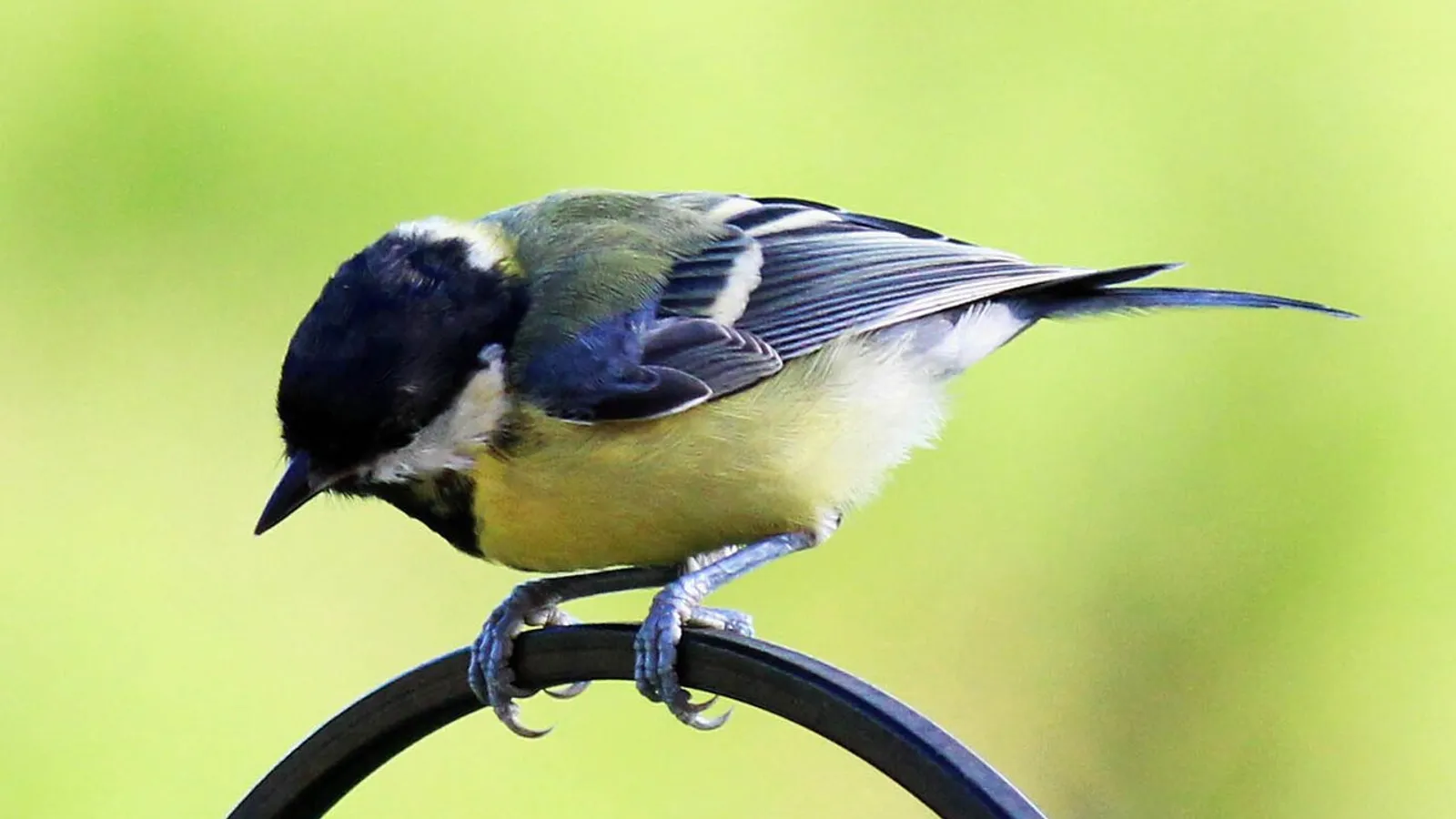
— Where the name comes from
Parus is the Latin name of the tits, major separating this one by size from its smaller relatives. The Italian name has nothing to do with cheerfulness: cincia is onomatopoeic, reproducing the call, and cinciallegra is the Tuscan form that adds an affectionate adjective to the noise. In English it is the great tit, where tit is no more than an old Germanic word for a small thing.
— Facts
- Group
- Birds · Aves
- Order
- Passerines
- Habitat
- Broadleaf woodland, gardens, parks, orchards
- Range
- All of Europe, North Africa and Asia as far as Japan
- Size
- 13–15 cm, wingspan 22–25 cm, 14–22 g
- Diet
- Insects, spiders, seeds, nuts, fat at bird tables
- Lifespan
- 3 years in the wild
— Characteristics
- 01
It wears a black tie down the breast: broad in the male, thin in the female.
- 02
It nests in cavities and takes readily to nest boxes.
- 03
In winter it forages in mixed flocks with other tits, goldcrests and nuthatches.
— What sets it apart
It is the most studied wild bird in the world. In Wytham Woods, outside Oxford, every great tit born since 1947 has been ringed, weighed and followed: nearly eighty years of consecutive generations, the ornithological equivalent of the laboratory fruit fly. From that wood comes much of what we know about how birds choose a mate, about how laying dates are shifting with the climate, and about the fact that personality — bold or shy — is heritable even in an animal of eighteen grams.
