
Eurasian blue tit
Cyanistes caeruleus
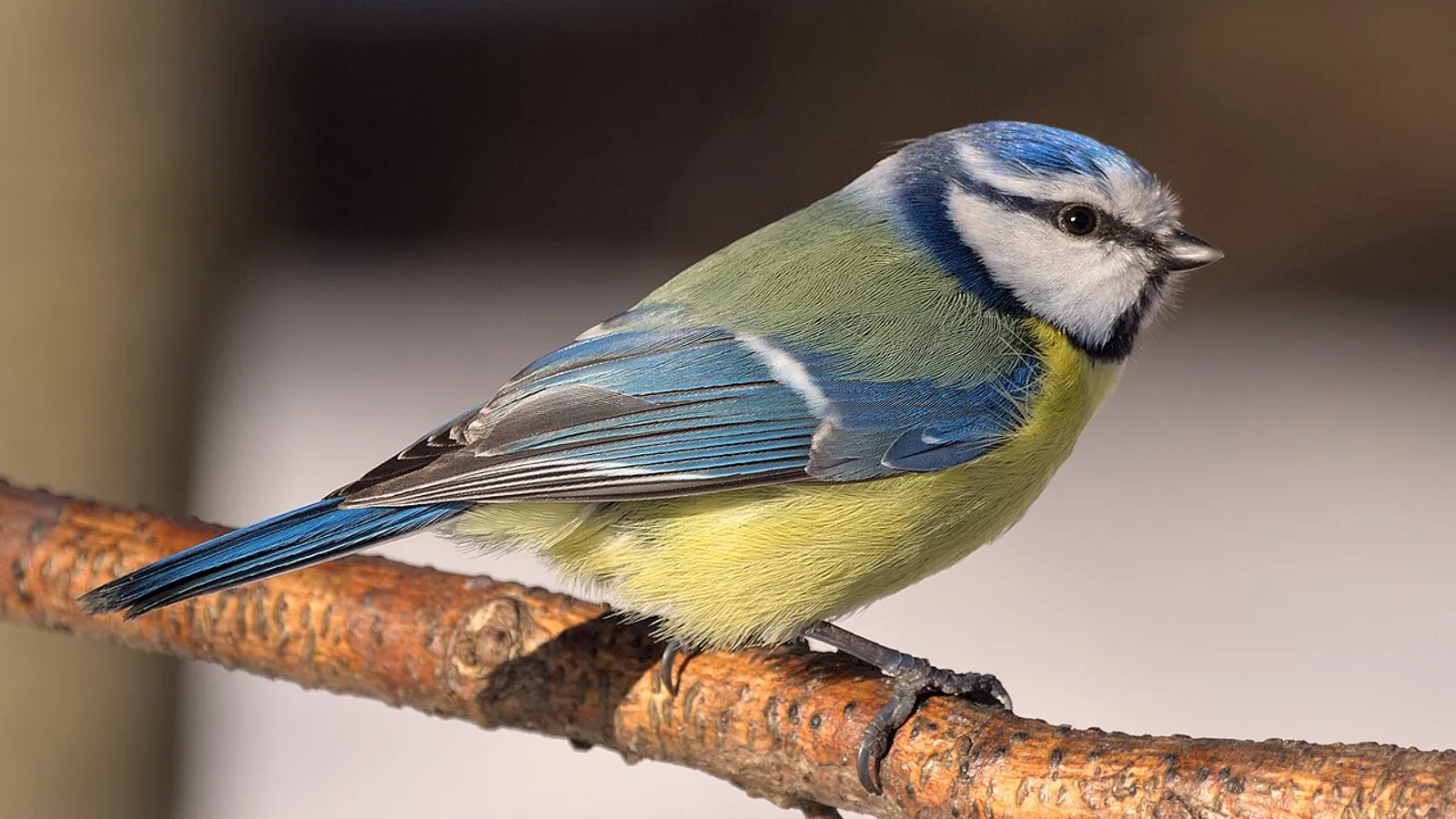
— Where the name comes from
The name says blue twice over: Cyanistes comes from the Greek kýanos, the dark blue of enamel, and caeruleus is the Latin of the sky. A redundancy one forgives in anyone who has seen this bird’s crown in sunlight. Until a few years ago it sat in the genus Parus with the other tits: genetics separated it.
— Facts
- Group
- Birds · Aves
- Order
- Passerines
- Habitat
- Oak woodland, gardens, parks, hedgerows
- Range
- Europe and North Africa, as far as Iran
- Size
- 10–12 cm, wingspan 17–20 cm, 9–12 g
- Diet
- Caterpillars, aphids, spiders, seeds, nectar
- Lifespan
- 3 years in the wild
— Characteristics
- 01
It hangs upside down from twigs to reach the caterpillars beneath the leaves.
- 02
It lays up to sixteen eggs, the largest clutch of any European bird.
- 03
It times hatching to the peak of oak caterpillars, which lasts ten days.
— What sets it apart
In 1920s England blue tits learned to open the foil caps of the milk bottles left on doorsteps, and the discovery travelled from town to town like a piece of news. Ornithologists plotted its spread on a map and watched a wave move out from Southampton: it is the first documented case of animal culture in Europe, a behaviour invented once and then copied. The whole thing ended by itself when milk stopped being delivered to the door.
