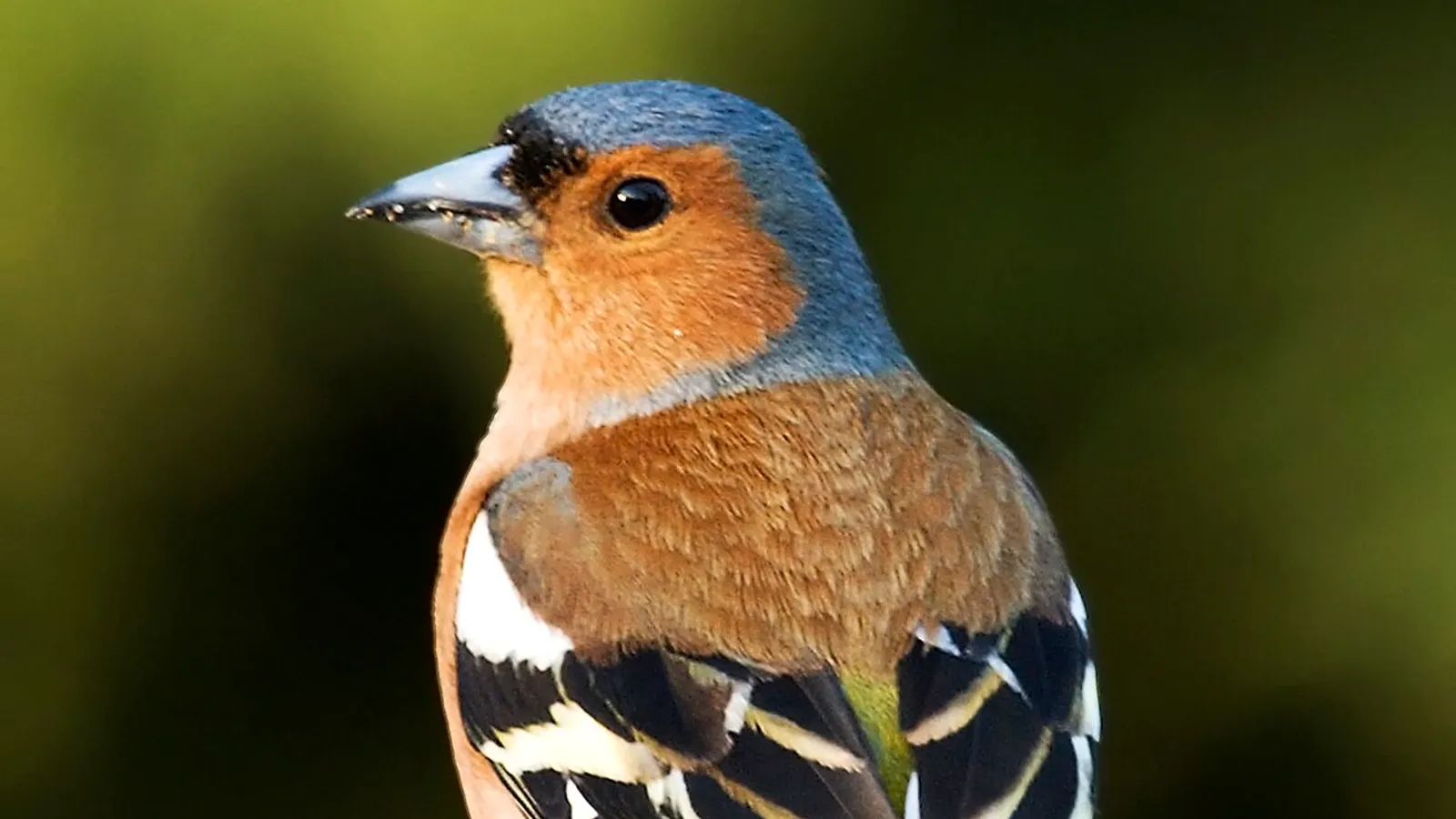
Eurasian chaffinch
Fringilla coelebs
— Where the name comes from
Coelebs in Latin means “bachelor”, and it is a joke of Linnaeus’s. In Sweden the females winter further south than the males, so what was left on the snow around Uppsala were flocks of males alone: Linnaeus noticed and christened the species “the unmarried finch”. Fringilla is the Latin name of the bird, onomatopoeic in origin, and the source of the Italian fringuello.
— Facts
- Group
- Birds · Aves
- Order
- Passerines
- Habitat
- Woodland, gardens, parks, wooded farmland
- Range
- Europe, North Africa, western Asia
- Size
- 14–16 cm, wingspan 24–28 cm, 18–29 g
- Diet
- Seeds, beech mast, insects in spring
- Lifespan
- 3 years in the wild
— Characteristics
- 01
The song always ends with a flourish, like a signature.
- 02
The nest is a cup of moss and lichen camouflaged against the branch.
- 03
In winter it forms large flocks on ploughed fields.
— What sets it apart
Its song has dialects, and it is learned. In the 1950s William Thorpe raised chaffinches in acoustic isolation and found that, never having heard an adult, they produced only a shapeless sketch: the structure is innate, the melody must be learned from a tutor within the first year. From there came the comparison between birdsong and human language, which still holds: both have a critical window, both have local accents, and in both cases whoever grows up hearing nobody never learns it properly.