
European goldfinch
Carduelis carduelis
— Where the name comes from
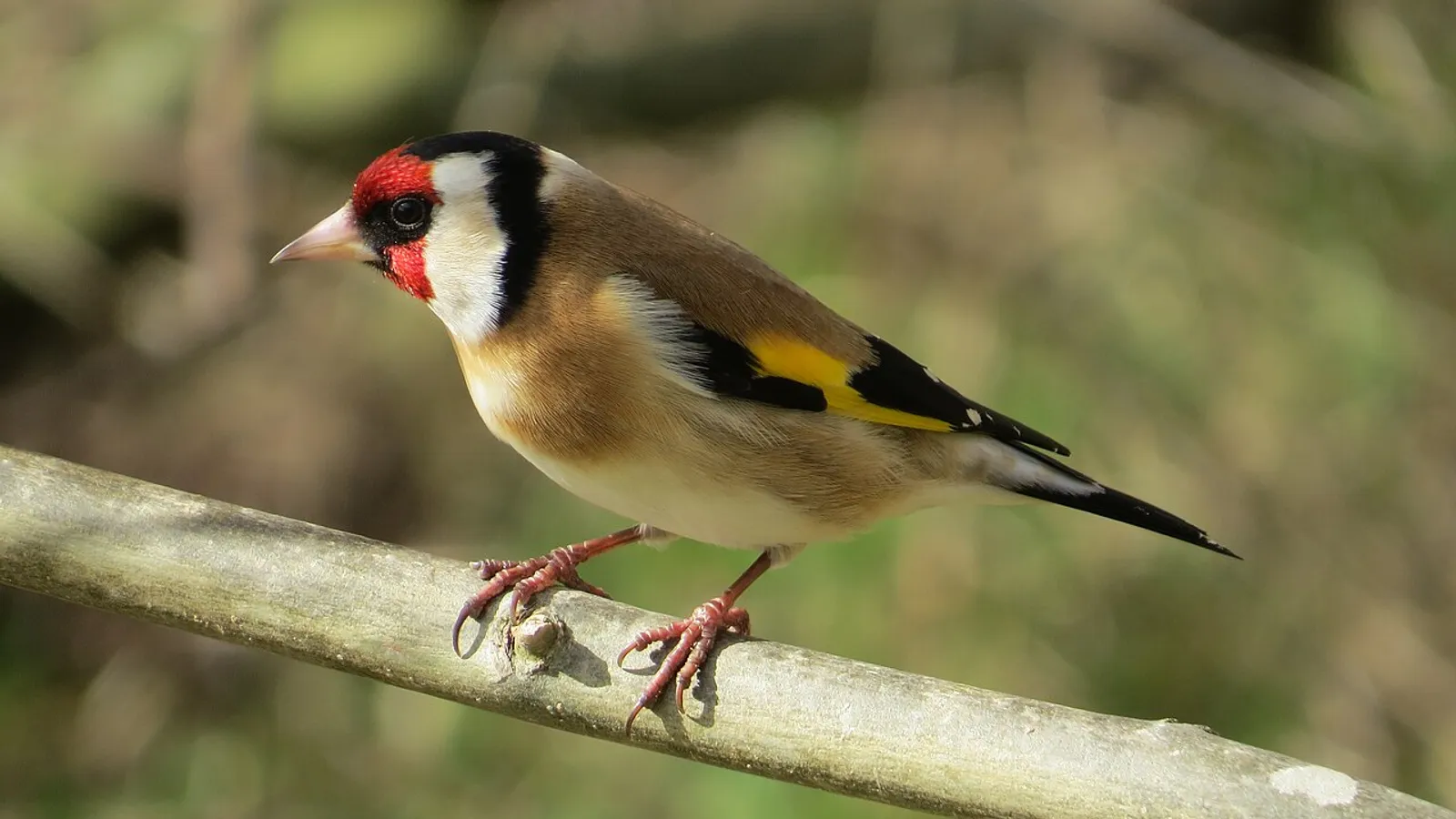
Carduelis comes from carduus, the thistle: this is the bird that opens the spiny heads to take the seeds, which almost no other European passerine can do. The Italian name is the same Latin word by way of the vernacular. The tapered bill and the red face are the tools of the trade: it slips the bill between the spines without touching them.
— Facts
- Group
- Birds · Aves
- Order
- Passerines
- Habitat
- Waste ground, orchards, gardens, roadsides with thistles
- Range
- Europe, North Africa, Central Asia; introduced to Australia and South America
- Size
- 12–13 cm, wingspan 21–25 cm, 14–19 g
- Diet
- Thistle, sunflower, birch and alder seeds
- Lifespan
- 3 years in the wild
— Characteristics
- 01
It has a red face, black wings with a gold band, and a bounding flight.
- 02
It hangs upside down from thistles as if from a vertical wall.
- 03
In winter it moves in small parties that call constantly in flight.
— What sets it apart
In Renaissance painting it appears in the hands of the Christ Child more than five hundred times. The red of its face was read as a drop of the blood of the Passion, and the thistle spines it feeds on recalled the crown: putting a goldfinch between a newborn’s fingers was announcing how the story would end. Whoever looks today at Raphael’s Madonna of the Goldfinch sees a pretty little bird; whoever looked at it in the sixteenth century saw a prophecy.
