
Humpback whale
Megaptera novaeangliae
— Where the name comes from
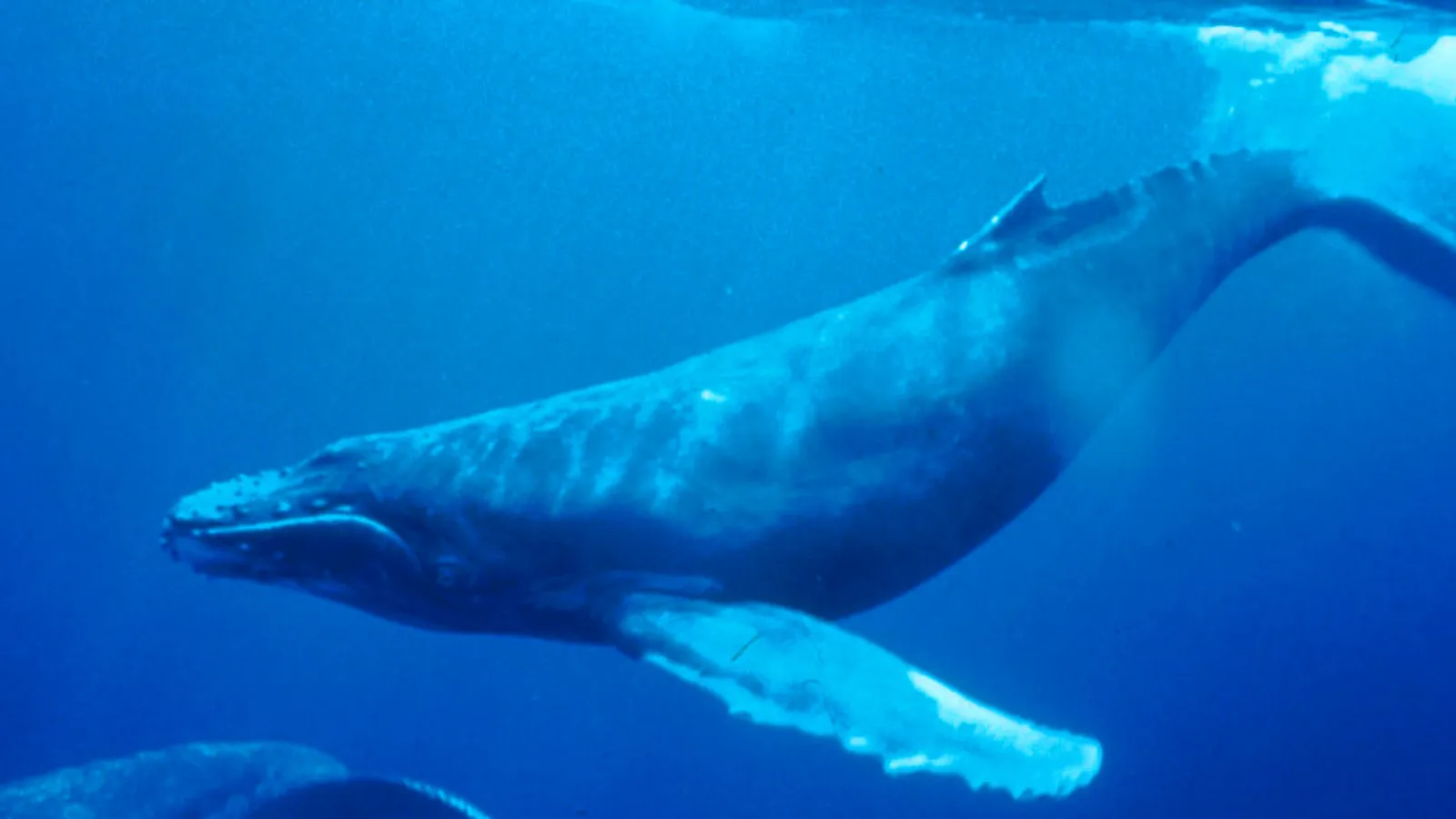
Megaptera is Greek for “great wings”, from méga, large, and pterón, wing: the outsized pectoral fins, a third of the body long. Novaeangliae, “of New England”, where it was described. In English it is the humpback, for the way it arches its back as it dives.
— Facts
- Group
- Mammals · Mammalia
- Order
- Cetaceans
- Habitat
- Open ocean and coastal waters; it migrates between poles and tropics
- Range
- Every ocean in the world
- Size
- 13–16 m, 25,000–30,000 kg
- Diet
- Filter feeder — krill and small shoaling fish
- Lifespan
- 45–90 years
— Characteristics
- 01
The males sing complex songs lasting up to half an hour and repeated for hours.
- 02
It makes one of the longest migrations of any mammal: up to 8,000 km between breeding and feeding grounds.
- 03
It hunts in groups, blowing “bubble nets” that pack fish into tight columns.
— What sets it apart
Humpback song is a fashion that travels: every male in a population sings the same tune in a given year, but the song changes from season to season, and new versions spread from one ocean to another like a hit record. A phrase born off Australia can turn up months later in Polynesian waters. It is one of the rare animal “cultures” that spreads on a planetary scale.
