
Immortal jellyfish
Turritopsis dohrnii
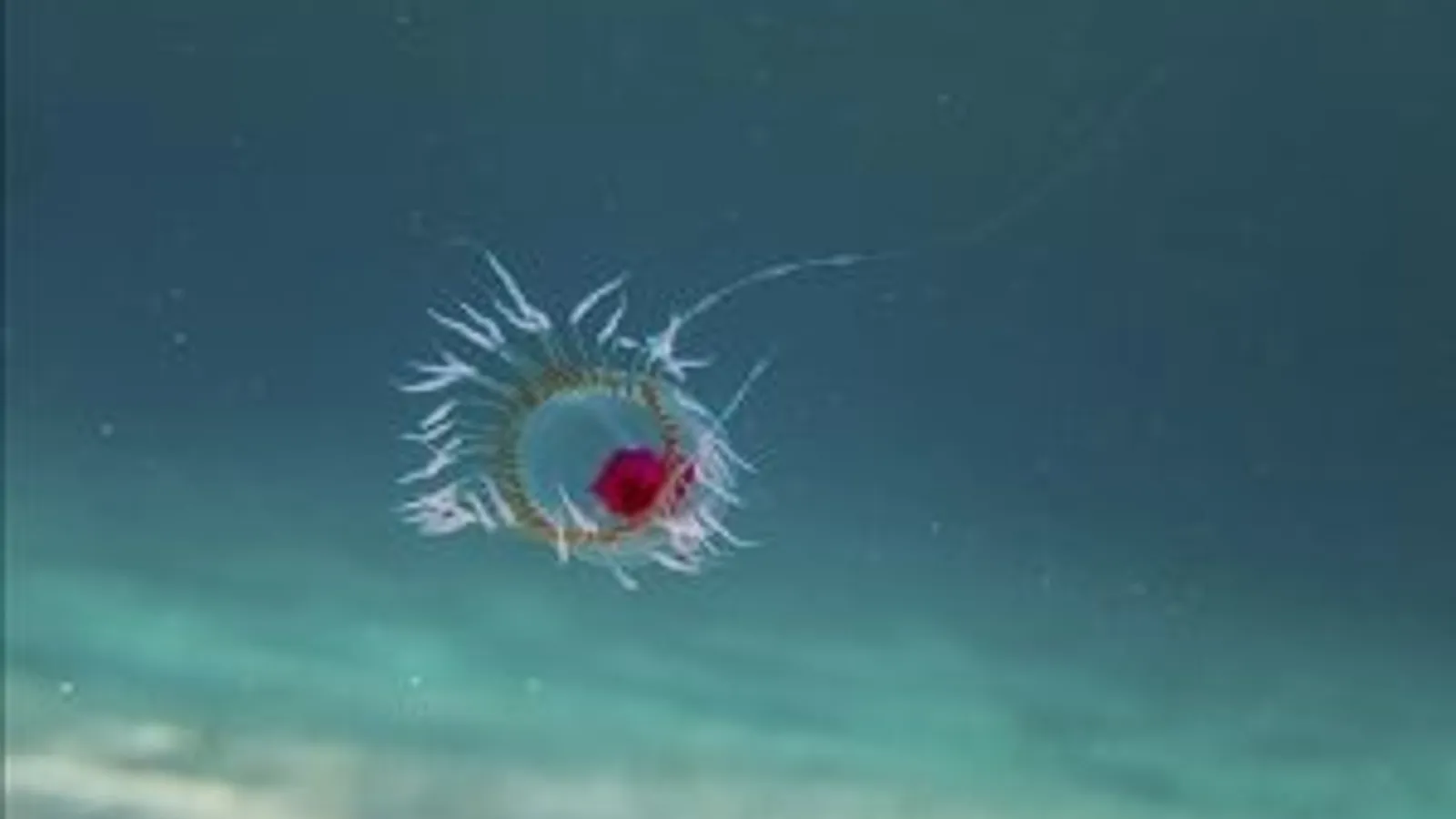
— Where the name comes from
Medusa is the Gorgon with snakes for hair: the name was given for the crown of tentacles. Turritopsis means “tower-like”; dohrnii honours Anton Dohrn, founder of the Zoological Station in Naples, where the species was described.
— Facts
- Group
- Cnidarians · Cnidaria
- Order
- Hydrozoans
- Habitat
- Temperate coastal waters
- Range
- Native to the Mediterranean, now found in all warm seas
- Size
- 4–5 mm across
- Diet
- Plankton
- Lifespan
- Potentially indefinite
— Characteristics
- 01
Smaller than a little fingernail.
- 02
It has neither brain nor heart; the body is 95% water.
- 03
It alternates a fixed polyp phase with a free-swimming medusa phase.
— What sets it apart
When injured, starved or aged, the adult medusa settles on the bottom, resorbs its tentacles and reverts to the polyp stage, from which it buds new, genetically identical medusae. Cells that had already specialised change identity: transdifferentiation. It is not immortal in the strict sense — it gets eaten, it gets sick — but it has no obligatory senescence. It is the only animal known that can run its own life cycle backwards.
